
Guatemalan police and military forces attempted to block 4,000 Honduran migrants from heading north toward Mexico and the U.S. border on Jan. 17. The group confronted a caravan of migrants on a highway in southeastern Guatemala. The police tried to force back the migrants with batons and tear gas but were unsuccessful, as the Honduran migrants broke through them.
Tunisian Protests Sparked on Arab Spring Anniversary

On Jan. 15, protesters took to the streets in Tunis, the capital city of Tunisia. Just under two weeks later, demonstrations have spread to at least 15 locations in the country. Protesters, reportedly organized by left-wing and human rights groups, have made broad demands for economic aid and an end to political corruption. They have been met with an enforced lockdown, widespread arrests and public acknowledgment of economic strife by political leaders.
Thai Monarchy Makes Anti-Defamation Arrests

Anchan Preelert, a 63-year-old Thai woman, was sentenced to 43 years in prison for alleged defamation against the monarchy of Thailand on Jan. 19, 2020. The former government official was first arrested in 2015 under the lese-majeste law for posting defamatory content on social media sites, according to The Guardian. The use of this anti-defamation law and the timing of the sentencing draws attention to the government’s reaction against the protests that have been sweeping the country.
Farmer Protests in New Delhi

Pictured above: India protest 2020. Photo courtesy of Wikimedia.
By Aditi Parashar ’22
Staff Writer
Tens of thousands of farmers from around India made their way to New Delhi 11 days ago, cutting off almost all entry points into the capital, according to The New York Times. The Dilli Chalo (“Let’s go to Delhi”) march is a protest against three agricultural bills passed in September 2020 that aim to make changes to the farming system and threaten the way 146 million farmers in India do business. According to the BBC, the protesters arriving in Delhi were accosted with water cannons, tear gas and violence by many paramilitary and police forces who tried to hold them back.
The reforms would change key aspects of how produce is sold, priced and stored. The new policies would replace the Mandi system in which the government heavily regulates the prices at which agricultural products can be sold. While the Indian government claims that these reforms are necessary to salvage the agriculture industry, many of those employed by the industry — 40 percent of the workforce — quickly began to protest the changes.
The government has said that the new regulations will provide opportunities for farmers, with Indian Prime Minister Narendra Modi calling it a “watershed moment.” He also said that the new laws provide farmers more autonomy to set their own prices as well as to sell directly to private businesses, reported CNN.
The farmers, however, remain adamant that the new laws are anti-farmer and pro-corporation by subjecting the farmers to the free market from which they have been protected for decades.
Mewa Singh, one of the many protesters, told The New York Times, “Our land is our mother. It was passed on to us from our parents, who got it from their parents, and now Modi wants to acquire it and give it away to his rich friends.”
According to the Indian Express, the protesters want the government to either repeal their newly passed legislation or guarantee farmers a minimum support price for their crops by passing new legislation.
The minimum support price is one of the biggest support structures to farming in India. It aims to set a guaranteed minimum price for commodities by farmers no matter the market conditions, which protects the community from fluctuations in price and imperfections in the market.
Economists as well as agricultural experts have shown support for the farmers’ demand for a minimum assured price mechanism. Devinder Sharma, an independent agricultural expert, told The New York Times, “There is no evidence in the world where the market price has benefited farmers.”
Additionally, farmers believe that the new laws “will open agricultural sale and marketing outside the notified Agricultural Produce Market Committee (APMC) mandis for farmers, remove the barriers to inter-state trade, and provide a framework for electronic trading of agricultural produce,” according to the Indian Express. However, since state governments will be unable to procure market fees outside of the APMC market systems, farmers are afraid that this will end the current system, leaving them at the mercy of corporations that are then free to exploit them and their production capabilities.
Many critics are apprehensive about how formal contractual obligations will work in the public arena due to the unorganized nature of the agriculture sector. Critics fear that farmers will be locked into contracts out of necessity and face a lack of resources for legal proceedings with major private corporations, found The Hindu.
“I don’t believe anyone is buying the idea that these bills exist to help the farmers,” Kusha Chopra ’21 said. “The farmers are smart and know that the bills have been passed in Parliament to fill the never-ending greed of our dear prime minister’s friends. To leave an already complicated sector which sees so many suicides due to debt and unemployment at the hands of large corporations and [at the] behest of the free market is openly careless and foolish.”
Since the farmers have arrived in Delhi, there have been a series of talks between them and the government. As of Dec. 9, no resolution has been reached.
“I think it is extremely sad, not only the way the farmers are having to fight for their livelihood in a country that thrives because of them, but also the way the government and its lapdog media has tried to discredit their hardships and movement,” Shreya Nair ’22, a Mount Holyoke student from India, said. “To call peaceful protesters, who are the reason you have food on your table, terrorists and anti-national on national television has [been] a new low, even for our sell-out media outlets,” Nair added.
The protesting farmers now have huge camps around Delhi’s border and are prepared to stay. They said they will not leave before the government repeals the “black law,” reported the BBC. The protesters say they are “prepared for a long battle — with trolleys full of rice and grains, and pots and pans to cook their own food,” the BBC continued.
Cuban Government Refuses To Conduct Talks With Dissenting Artists

Photo courtesy of Wikimedia.
By Madhavi Rao ’24
Staff Writer
Cuba experienced a rare expression of dissent from the public in the 21st century on Friday, Nov. 27. About 300 artists and activists gathered outside the Cuban Ministry of Culture to protest the imprisonment of Denis Solís Gonzáles, a member of the dissenting San Isidro Movement. A few of the collected protesters who were challenging the violation of artists’ freedom of expression in the country were invited to have a dialogue with government officials. However, later in the week, the Cuban government made it clear that communication would not continue.
Gonzáles was imprisoned for his comments against a police officer who broke into his home, describing him as a “chicken in uniform,” triggering protests, according to The Washington Post. On Nov. 9, Gonzáles was detained and sentenced to eight months in a maximum security prison for the crime of “contempt,” as reported by Amnesty International. Erika Guevara-Rosas, the Americas director of Amnesty, said, “No one should be imprisoned for ‘contempt’ against a public official, a provision of the criminal code that Amnesty International and other human rights organizations have consistently called on the Cuban authorities to repeal.”
Gonzáles’ imprisonment was met with outrage from the rest of the SIM, a collection of artists, academics, journalists and musicians who actively resist the Cuban government. Founded in 2018 by Luis Manuel Otero Alcántara, the movement was created to fight the oppressive communist government in Cuba. Following Gonzáles’ arrest, the SIM assembled together to protest, ultimately resulting in a hunger strike against the violation of their civil liberties. According to Al-Jazeera, on Thursday, Nov. 26, the SIM headquarters were raided by police, who cited COVID-19 restrictions.
“The recent protests are remarkable, considering the authoritarian government’s tight controls on dissent,” Maahi Jaiswaal ’24, an economics and politics double major who has lived in Cuba, said. “With the little that I remember about living in Cuba, I can affirm that art and dance was a major aspect of Cuba’s rich culture. It is apt that the artists behind the art are due freedom of expression in their profession, and with the way that the world is progressing, the Cuban authorities should look into their demands before the talent has to be forcibly removed,” Jaiswaal added.
The protest was attended and supported by many famous artists and performers in Cuba.
Along with the release of Gonzáles and other jailed protesters, the crowd demanded the government respect their freedom of expression. This is in light of laws such as Decree 349, which prohibited artists from performing in public or private spaces without the approval of the Ministry of Culture, per a statement released by Amnesty International. The censorship decree essentially decides who qualifies as an artist and who doesn’t.
Initially, the government had agreed to listen to the protesters’ demands on Nov. 27, with officials agreeing to review Gonzáles’ case and hold future talks to understand the artists’ frustrations. However, at a rally on Nov. 29, Cuban President Miguel Díaz-Canel described the protests as an “imperialist reality show,” saying that the protests were led by the United States. The culture ministry similarly defaulted on its promise, saying it would “not meet with people who have direct contact and receive financing, logistical support and propagandistic backing from the U.S. government,” according to Reuters.
Lisett Bonilla ’22, an international relations and economics double major, said of the issue, “I believe this is a crucial time for Cuban society. Freedom of expression is essential to everyone and a human right.” She went on to describe how the situation could be improved, saying, “I urge U.S. institutions to support these artists who are opposing the grip of an authoritarian system. Cuba is also going through an economic crisis and ignoring these issues can have horrible repercussions for Cuban society overall as well as its relations with the U.S.”
Language Resource Center International Recipe Swap
By Amelia Luo ’23
Staff Writer & Photographer
From Dec. 1, 2020 to Jan. 15, 2021, the Language Resource Center is hosting an online recipe swap for Mount Holyoke community members to share their favorite recipes and holiday traditions. This activity will take place via a shared Google Doc, which is accessible to everyone interested.
In the document, people can link or type out their recipes as well as comment on the recipes provided by others. This activity aims to encourage people to try different dishes from around the world while connecting them with different languages and cultural communities.
Jean Janecki, the Language Resource Center coordinator and liaison, said, “I have been saddened by the emptiness in the LRC and missing all our students, staff and faculty that share the love for different languages and cultures. I am always looking for ways to keep our community connected and even more so now in our remote world.”
Inspired by a recipe swap hosted by LITS and other colleges’ online activities, Janecki chose food as the theme of this activity. “Since food is something we have in common, I thought it would be nice to see what others enjoy around the world and even better if the dishes, stories and recipes could be shared. All MHC students, staff and faculty are welcome to submit their recipes, along with photos, and it would be great to have some videos too,” Janecki said.
Ina Dombrowski ’24, who participated in the recipe exchange, shared her recipe for Laugenbrötchen, or pretzel buns.
“I was very excited to participate in the international recipe swap, especially since I love to travel, I love all kinds of food and I love learning about other cultures. I chose to share my [Laugenbrötchen] recipe since they are my go-to-bake when I’m craving some comfort food from Germany, where half of my family is from,” Dombrowski said.
Due to the busy time of year, Dombrowski has yet to test out the other recipes but is excited to try them soon. “Baking and cooking things outside of my own experience and comfort zone [is] one of my hobbies, even if the recipes don’t turn out the way they were supposed to,” she said.
Janecki shared that she hopes to eventually organize the recipes into a website. “When we are allowed to meet in person, [I want to] have a celebration of cultures featuring some of the dishes. I submitted the first recipe, beef empanadas since my family has an Argentine background and this is one of our favorite fiesta foods.”
These recipes can be found in the Google Doc to be read or attempted as a break after or during finals.
Scotland Becomes the First Country To Make Sanitary Products Free

Pictured above: Scottish Parliament. Photo courtesy of Wikimedia.
By Jocelyn Zhou ’23
Staff Writer
Scotland passed the Period Products Free Provision Bill on Nov. 25, 2020, to make sanitary products free to all who need them.
As The New York Times reported, under this legislation, the government will set up a countrywide initiative in collaboration with local authorities to allow anyone who needs period products to get them free of charge.
The bill aims to tackle the issue of “period poverty,” which refers to the inadequate access many have to sanitary products when they need them.
People who experience menstruation often regard it as a difficult experience because of poverty, homelessness, abusive relationships and some health conditions, according to The New York Times. Gender identity is also a barrier to access, as some transgender people cannot obtain sanitary products, especially given that they are statistically more likely to experience poverty, according to a report by the National LGBTQ Task Force. According to The Guardian, these disparities have only increased during the COVID-19 pandemic.
“I think this is great support for low-income [people] who can’t afford sanitary products,” Gerel Battogtokh ’21, an international relations major, said.
“I believe everyone who is in need of daily necessities like disposable sanitary products should have access to it,” Jamie Day ’22 said. “Making it free will stop users from having to compromise [for] their health and overall comfort.”
The Period Products (Free Provision) (Scotland) Bill requires local authorities and education providers to ensure period products are obtainable free of charge. The bill’s financial memorandum states that “it is intended to remove any barriers which stop women, girls and trans people accessing period products.” However, it will be up to local authorities to decide how and to whom these resources are made available — a discrepancy that may allow transphobia to make this distribution inaccessible.
According to NPR, the Scottish government has estimated the measure will cost 24 million pounds (about $32 million) a year.
After the vote, Nicola Sturgeon, Scotland’s first minister, remarked on Twitter, “Proud to vote for this groundbreaking legislation, making Scotland the first country in the world to provide free period products for all who need them. An important policy for women and girls.”
Two years ago, Scotland made another first by providing free period products in schools, colleges and universities through a government program.
“This can be really a good example for other developed countries [on] how to help marginalized women. [The] next step would be free contraception products,” Battogtokh said.
In response to the bill’s passage, Mount Holyoke students reflected on their experience of obtaining free sanitary products in school.
“I have seen free access to sanitary products provided in the MHC bathrooms and appreciate the College’s efforts in making sanitary products available to everyone. MHC seems to be aware of the different backgrounds of each student and [evens] the [gap] in terms of availability to resources, and I admire that,” Day said.
Chinese Language Table
Graphic by Anjali Rao-Herel ‘22
By Sophie Soloway ’23
Global Editor
The Chinese Language Table has moved to a remote space this year. In past years, the group met over a shared meal featuring a traditional Chinese dish, but this year, event organizers have adapted to ensure that students still have an engaging space to practice the Chinese language. Students gather weekly to practice their speaking abilities with peers and TAs as well as discuss current events related to their studies.
Jamie Day ’22, a double major in biology and East Asian studies at Mount Holyoke, talked about what she most appreciates about the event. “I enjoy talking about Chinese culture and … implementing my newly learned vocabulary from that [day’s] Chinese lecture,” she said. “I get the rare opportunity to speak with native speakers and see other peers my age struggle with me to [perfect] a very tonal-heavy language.”
In fact, some participants prefer the move to a remote setting. Day has participated in the Chinese Language Table since her sophomore year but has noticed that some aspects are better on a virtual platform. “Being virtual has made it easier for me personally. Before MHC went remote, [the] Chinese [Language Table] was during dinner time, and I was unable to make it at most times. The [dining] hall would be loud and made it hard to have one-on-one conversations,” she commented.
Remote participation allows some students to have more individualized practice, as well. Day said, “Now, during our [Zoom] gatherings, the students [are] divided up into chat rooms and paired up with a professor or a TA. This [is] an improvement in terms of the learning environment.”
Day described her new routine with the table, saying, “As a third-year Chinese student, I will usually come in with a Chinese newspaper article that I need help reading through for an assignment. When in my private chat room, I can get some quality tutoring and get all my questions answered effectively!”
Day reflected that what she loves most about the Chinese Language Table is “the chance to keep in touch with my previous Chinese teachers that I don’t have classes with anymore, or meeting other professors in the Chinese department that I will likely take courses with in the future!”
The Chinese Language Table meets every Tuesday from 11:30 a.m. to 12:30 p.m. EST and is open to students of all language levels. Contact Professor Alice Kao at akao@mtholyoke.edu to participate.
US Plans To Withdraw From Afghanistan
By Amelia Luo ’23
Staff Writer & Photographer
On Nov. 17, 2020, acting Defense Secretary Christopher Miller announced that the United States would reduce troop levels in Afghanistan by mid-January. This withdrawal would bring the number of troops stationed from 4,500 to 2,500, accelerating troops’ removal during President Donald Trump’s final days in office. The acceleration aims to fulfill Trump’s pledge to bring forces home, though it has been met with many objections from senior military officials who would prefer a slower pullout. Some U.S. allies have warned of the danger of withdrawing under current conditions, according to The Washington Post.
The U.S. and the Taliban signed a peace deal on Feb. 29, 2020, which contains four major agreements: one, to convene the Intra-Afghan negotiation; two, for a cease-fire among the U.S., Taliban and Afghan forces to be put on the Intra-Afghan agenda; three, the withdrawal of foreign forces and reduction of U.S. military troops from 12,000 to 8,600 within the first 135 days; and four, that no groups or individuals use Afghanistan soil to threaten the security of the U.S. and its allies. Since signing this deal, the U.S. has closed at least 10 bases across Afghanistan. However, very little information on the final remaining sites and the actual situation of these military bases in Afghanistan after their closures have been made known to the public.
Despite the fast-approaching deadline, many withdrawal process plans remain murky. Ashley Jackson, an expert on the militant group with the Overseas Development Institute, told The Washington Post that the closing of U.S. bases also hands Taliban fighters both symbolic and tangible victories. Kayla Olds ’23, a politics major, suggested that “the decision is irresponsible, the timing is bad, and it will do much more harm than good by potentially making the situation worse for the people in Afghanistan.”
Lucia Xie ’23, a double major in politics and history, remarked that “The United States has been involved in the Afghan conflict for nearly two decades, but it appears to be a stalemate that cannot be resolved in the short term.” Xie continued, “I think the U.S. withdrawal can be an appropriate decision because the U.S. has spent a lot of wasted time and resources on the Afghanistan problem. This process, of course, has not significantly advanced America’s counterterrorism efforts.”
The withdrawal of U.S. troops from Afghanistan and the closing of military bases is part of the deal that the U.S. signed with the Taliban. However, the Taliban has not yet met the requirements to reduce violent attacks against Afghan government forces, nor have they broken ties with international terrorist organizations such as al-Qaida. If the U.S. chose to withdraw now, it would further weaken an already fragile Afghan government. Despite this, the Afghan security forces are well supplied and funded by foreign economics, so the pullout of the U.S. troops would not necessarily cause a complete collapse in Afghanistan.
Miller suggested that the U.S. would be ready to respond if conditions in Afghanistan change. Analysts and Afghan officials also suggested that U.S. troops are collapsing forces into bigger military bases to have a larger number of forces ready to secure various small outposts. This would also help bring U.S. troops closer to medical facilities, making it easier to evacuate the country if necessary. American military presence in Afghanistan was seen as an essential reason for the Taliban to keep its side of the deal and negotiate. However, this speedy pullout is sending signals to the Taliban that the U.S. is leaving the region regardless of the insurgency. According to The New York Times, immediately after the Pentagon’s announcement of the withdrawal plan, mortar shells and rockets were fired in several places in Baghdad, including areas near the U.S. Embassy, killing a child and leaving five civilians wounded.
Trump’s determination was met with alarm from the U.S.’ NATO allies. NATO’s Secretary-General Jens Stoltenberg warned that “the price for leaving too soon or in an uncoordinated way could be very high.” According to the New York Times, allied nations have stated that they will reconsider their presence in Afghanistan if the U.S. withdraws, a decision which will likely change regional occupations.
Leader in Iranian Nuclear Science Killed

Pictured above: Mohsen Fakhrizadeh. Photo courtesy of Wikimedia.
By Sophie Soloway ’23
Global Editor
Iran’s top nuclear scientist, Mohsen Fakhrizadeh, was killed in an attack in his vehicle on Friday, Nov. 27. After a reported gun attack in northern Iran, hospital workers unsuccessfully attempted to revive the prominent figure.
Fakhrizadeh was the head of Iran’s Research and Innovation Organization and was widely regarded as a national hero for his work with the country’s nuclear program, both before and after the Iranian government officially ended it. According to Senior Fellow at Carnegie Endowment for International Peace Karim Sadjadpour, “Fakhrizadeh likely knew more about Iran’s nuclear program than any living human. Losing his leadership, knowledge and institutional memory is undoubtedly a blow to the Islamic Republic.” Protests quickly emerged in Iran, reflecting the significance of the loss for the country.
Officials have not yet pinpointed the individual responsible for the attack. However, on Saturday, Nov. 28, Iran’s President Hassan Rouhani accused Israeli leadership of being responsible for the scientist’s death. According to The New York Times, three unnamed American officials have made similar statements.
Having had a critical role in the nation’s development of nuclear technology, Fakhrizadeh has long been a person of interest to the Israeli intelligence agency, Mossad, as well as to U.S. intelligence agencies. The U.S. and Israel are allies and have historically vehemently opposed Iran’s nuclear program, as Israel specifically views Iran as its largest regional threat. Although Fakhrizadeh denied that the purpose of Iran’s nuclear program was related to building nuclear arms, documents stolen by Israel in early 2018 suggested otherwise.
When Israeli agents stole approximately 50,000 pages and 163 discs of information on Jan. 31, 2018, they concluded that the Iran nuclear program was ongoing and dedicated to developing nuclear weapons. Israel’s Prime Minister Benjamin Netanyahu released this information days before U.S. President Donald Trump pulled out of a nuclear deal with Iran.
As of Friday, Nov. 27, Netanyahu’s administration has not officially responded to Rouhani’s claims that Israel played a role in the murder of Fakhrizadeh.
The assassination might provoke further conflict in the region. Rouhani has pledged to retaliate against those responsible for the murder. Fakhrizadeh’s assassination was also compared to the U.S.’ January airstrike on Qasem Soleimani, an Iranian operations leader. This previous attack is largely considered to have increased tensions between Iran and the U.S. since Trump’s withdrawal from the Iran nuclear deal in 2018. As the U.S. presidency enters a transitional period, this attack may impact President-elect Joe Biden’s plans to alter relations with Iran.
Carrie Lewis ’23, a Mount Holyoke student interested in international relations, noted that “because of the United State’s military support for Israel and their previous attack on [the] Iranian leader [Soleimani], this might block progress between the relationship between Iran and the United States, especially under Biden.”
Biden has long stated that his administration plans to return to the Obama-era nuclear deal with Iran that Trump undid. Given the salient relationship between the U.S. and Israel and both nations’ suspected roles in assassinating high-profile officials, this recent attack is expected to make a nuclear deal with Iran significantly harder to achieve for the president-elect. As protests mourning Fakhrizadeh’s death continue in Iran and more Iranian officials place blame on the U.S.-Israel alliance, concerns regarding the future of these regional relationships mount.
Helen Roane ’23, an international relations major, said, “I think it’s really interesting how Israel really put itself in the middle of an international conflict over Iran’s nuclear program. Because it seems like they are counting on the United States support, which is not guaranteed with a Biden presidency that is looking perhaps for a more diplomatic resolution to such issues. Either way, it remains an impactful action that clearly says that the government of Israel is not afraid of taking actions to stand for what they think protects their national interest.
Quick Quarantine Snacks from China
By Madhavi Rao ’24
Staff Writer
Staying at home all day has many of us reaching for quick treats to tide us over. Some of the Chinese students at Mount Holyoke shared how these snacks might look for them.
Many of these snacks seem to be on the sweeter side. Yonglin Huang ’24 said that her favorite snack is a walnut shortcake. According to Huang, “It is a Chinese traditional snack made of walnuts, lard and flour. It tastes like walnut cookies but is much more crispy than normal cookies.” China Sichuan Food, a food blog dedicated to sharing “traditional authentic Chinese food,” shared that the walnut shortcake (or cookie) is a popular dessert for both kids and adults in the country.

Pictured above: Walnut Shortcake
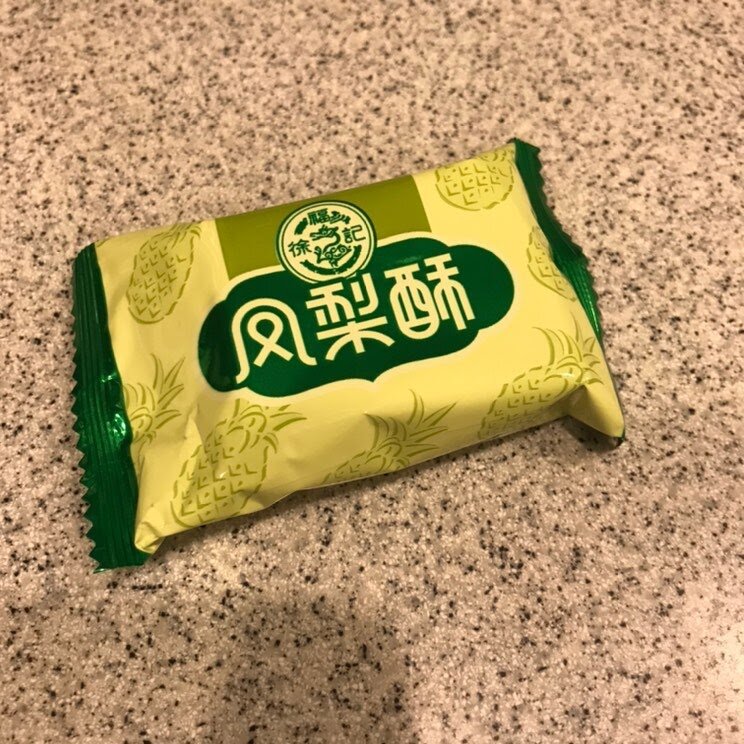
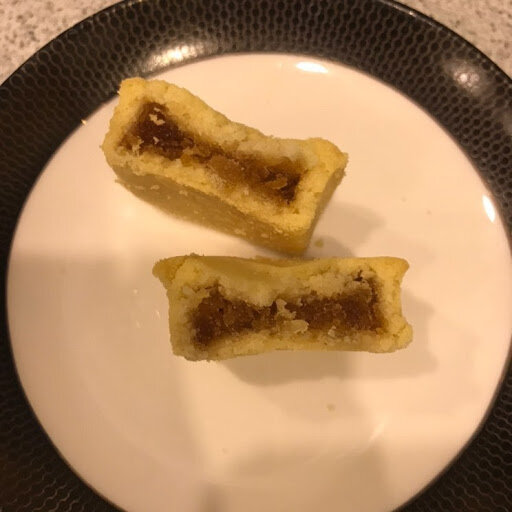
Lisa Sun ’24 also shared a favorite quarantine snack: pineapple cake. “It has pineapple filling and a cookie-ish shell. It is originally from the south part of China,” Sun said.
Yuxi Zhu ’22, however, tends to like savoury snacks which are on the spicier side. She described one such snack - broad beans. “They are salted, crispy and have an umami flavour. They are my favorite because most of the Chinese snacks are sweet, such as cookies and chocolate, and the salty flavor makes them stand out.”
“I also love Latiao which stands out because it combines the spicy and sweet flavours, and is chewy”. Latiao are spicy sticks made of gluten, according to the Global Times, an English language Chinese newspaper. Zhu went on to explain: “Since I am at home in quarantine, I can drink lots of water if they are too spicy for me.”
Presidential Impeachment in Peru
By Aditi Parashar ’22
Staff Writer
On Nov. 9, Peruvian President Martín Vizcarra was impeached by the country’s Congress following allegations of bribery during his time as governor, reported Reuters. The Congress, which is dominated by opposition members, was led by Manuel Merino, and marks their second attempt since May to oust Vizcarra. Merino, a member of the center-right Popular Action Party who had been Congress’ head, was interim president from Nov. 10 to Nov. 15, when he resigned, reported The Guardian. Peru has now found its third president in the span of a week in Francisco Sagasti.
The impeachment of Vizcarra, a popular centrist leader with widespread public support due to his anti-corruption reforms, brings political turmoil to Peru at a time when the nation is trying to recover from one of the worst economic recessions it has ever seen, caused by the COVID-19 pandemic. Al-Jazeera reports that Vizcarra rejected the accusations of corruption as “baseless” and “false.” However, he did not challenge the decision and stated he was willing to respond to any criminal charges.
In various cities across the country, Peruvians took to the streets in thousands following Vizcarra’s impeachment, setting off some of the largest protests the country has seen in decades, according to Reuters. Sonia Julca, an economist from the University of Callao, cited the reason for protests as, “The people are against this government led by Merino.” Protesters were found shouting slogans and carrying signs reading “Merino, you are not my president” and “Merino impostor.” Al-Jazeera found that many of the protesters waved signs that accused Congress of carrying out a coup.
While the protests started out in a peaceful manner, by nightfall there were police clashes, leading to the deaths of two young protesters and the injury of dozens more, reported Reuters.
“I ask Mr. Merino to evaluate his immediate resignation,” said President Congress Luis Valdez after an emergency Congress session, reported Al-Jazeera. The National Assembly of Peru has also released a statement asking for Merino’s resignation, claiming that he was “politically responsible for the acts of violence.”
Following the violence with the police, all of the Cabinet ministers announced their resignations. Soon after, Merino himself resigned after only five days in power.
Clarissa Gomez, one of many on the streets celebrating Merino’s resignation, told Reuters, “Merino has resigned because his hands are stained with blood, with the blood of our children.”
“Merino’s resignation will be good for the turmoil Peru has seen in the last week. However, people will still not have complete confidence in Congress just yet, and a democracy cannot exist at its prime without the people believing in it. The new president has his work cut out for him,” Shanze Hasan ’21, an international relations major, said.
After Merino’s abrupt resignation, the legislature of Peru elected Sagasti to be the new interim president. Sagasti is an industrial engineer by profession and a “member of the only political party that voted against the ousting of popular former president Martín Vizcarra a week ago,” The Guardian reported.
Soon after his swearing-in, Sagasti said, “It is absolutely necessary to remain calm, but do not confuse this with passivity, conformity or resignation.” According to Al-Jazeera, he also paid respects to the two men who had died in the protests as a result of police brutality, saying, “We can’t bring them back to life but we can stop this from happening again.” He has also said that he is willing to include ministers from Vizcarra’s government in his Cabinet.
Amman Syed ’22, an economics major, noted the importance of Sagasti’s willingness to include members of Vizcarra’s Cabinet. “Vizcarra’s Cabinet had star Finance Minister María Antonieta Alva. Her handling of … COVID-19 during this time of recession has been a major factor in keeping Peru from being worse off. I hope Sagasti sees that the recession Peru is facing needs someone like her to steer them in the right direction,” Syed said.
Palestinian Prisoner Ends over 100-Day Hunger Strike
By Saman Bhat ’22 & Amelia Luo ’23
Global Editor & Staff Writer, Photographer
Maher al-Akhras, currently a Palestinian prisoner, has ended his over three-month-long hunger strike after Israeli forces agreed to grant him freedom on Nov. 26, rather than renewing his sentence. Beginning on July 27 of this year, the day he was detained, the 49-year-old father of six went on a hunger strike for more than 100 days. According to The Guardian, he lost over 90 pounds.
Al-Akhras was arrested and detained under what is known as “administrative detention,” a controversial policy that Israel implements to legally detain Palestinians for indefinite periods due to suspicion of undisclosed security offenses. These detentions can last for years without trial. According to Al-Jazeera, Israel claims that the “procedure allows authorities to hold suspects and prevent attacks while continuing to gather evidence.” However, some critics think the country is abusing its power through this practice. Amnesty International, along with several other Palestinian rights groups, have claimed that Israel’s administrative detention policy is a human rights violation, as it obstructs Palestinian peoples’ right to due process.
According to a Time magazine article written in 2016, Israel has imprisoned nearly 4,000 people under administrative detention over the past decade, with only 35 of them being Jewish. This procedure heavily targets Palestinian citizens, as over 350 Palestinians — including two minors — were being held in Isreali prisons under the policy as of August 2020, as reported by the Israeli Information Center for Human Rights in the Occupied Territories. This violates international humanitarian laws, as Article 76 of the fourth Geneva Convention states that protected people under occupation should be detained only in the occupied territory.
One anonymous Mount Holyoke student noted that administrative detention has a historic connection to colonization, writing, “I think that the parallels between the methods of administrative detention taken by Israel and the colonization efforts made by Great Britain in the past highlight the fact that Israel is clearly colonizing Palestine.”
According to the Shin Bet, Israel’s security agency, al-Akhras was arrested because information suggested that he was an active member of the Islamic Jihad Movement and was involved in “activities that endanger public safety.” Michael Lynk, a special rapporteur on the situation of human rights in Palestinian territories, called for al-Akhras’s immediate release. In a report to the United Nations Human Right Council, he said that “Israeli security forces who arrested and detained Mr. Al-Akhras have not provided any persuasive evidence in an open hearing to justify its allegations that he is a genuine security threat.”
The Shin Bet also suggested that al-Akhras had been arrested five times previously for the same reason, but the involvement was denied by al-Akhras’ family and by al-Akhras himself, who claimed not to have any involvement in “security activity.” According to the International Association for Democratic Lawyers, two of al-Akhras’s previous arrests were under the same circumstances he is now facing. Al-Akhras was held for 16 and 11 months during 2009-2011 and 2018, respectively. He was not charged with a crime or given a trial either time.
Mount Holyoke’s Palestine Solidarity Group commented on how al-Akras’ situation is far from unique, but has brought global attention to the true nature of Israeli detention. They stated, “The Israeli prison system is an inhumane and violent tool of the illegal occupation of Palestine. Maher al-Akhras’ 103-day hunger strike has brought the conditions faced by Palestinian political prisoners to the eyes of the world, but he is far from the first or the last Palestinian to experience this violence.”
Al-Akhras is not the only Palestinian prisoner that has been detained for long periods of time due to questionable circumstances. In 2016, a Palestinian journalist named Muhammad al-Qiq was freed from six months of administrative detention after a 94-day hunger strike. Time magazine reported that “75 percent of administrative detainees are held for longer than six months without trial, and 40 percent for more than a year. Just 5 percent of Palestinians held in administrative detention are indicted at the end of their detention.”
Anat Matar, a Tel Aviv University philosophy professor who coordinates the Israeli Committee on Palestinian Prisoners advocacy group, told The Guardian about how the goal of al-Akhras’ hunger strike was not just his immediate release but also to highlight the injustices and suffering caused by administrative detention. She said, “The point for us is to protest administrative detention. What he wants is to move the discussion from his own case to the general one, and that is why he pays with his own life.”
According to Al-Jazeera, many Palestinian prisoners state that they have been subjected to torture and violence while in custody. As a result, these Palestinian detainees stage protests, including hunger strikes, against their prison conditions. This form of protest seems to be an effective tool in undermining Israeli occupation. “A hunger strike offers a rare opportunity to take back control. It is a paradoxical move, asserting the essence of your freedom by denying your oppressor control over your body,” Sally Abed wrote for The Nation.
Al-Akhras was set to be transferred back to a prison medical facility on Oct. 23, but submitted an urgent petition against the transfer. The interim order was granted by the court. According to The Times of Israel, there were concerns from Physicians for Human Rights that the prison medical facility might engage in forced treatment or feeding, which a public hospital would not do.
Al-Akhras’ family stated that he would be in Kaplan hospital until Nov. 16, and would then be transferred to an Arab hospital in east Jerusalem for another 10 days.
The Palestine Solidarity Group stated that they are “overjoyed that al-Akhras won his freedom.” They added, “We know that freedom for one man does not solve the collective punishment that Palestinians face on a daily basis at the hands of the Israeli occupation. We stand in solidarity with Maher al-Akhras and all imprisoned Palestinians and are committed to working against carceral systems in Palestine, in the U.S. (Turtle Island) and across the world.”
Korean Language Table
Graphic by Anjali Rao-Herel ‘22
By Amelia Luo ’23
Staff Writer & Photographer
This year, due to remote learning, the Korean Language Table is being hosted through Zoom. Although different from the traditional language table experience, students are adapting, finding new and innovative ways to celebrate Korean language and culture virtually.
“The table’s goal is to make students more motivated in learning Korean as their second language … because sometimes it’s hard to start learning a new language,” Chloe Choi ’21, the host of the Korean Language Table, said. This is Choi’s first year working as a Korean language assistant and third year as a language tutor.
“The Korean language assistant [and] tutor job is always pleasant because I can meet many students who’re interested [in] or even love the culture where I’m from,” she said.
Each week, the language table has different themes. In the first module, they covered the national holidays of Korea; in the current module, they are learning more about Korea’s culture, history and geography.
Choi expressed her initial worries with holding Korean Language Table on Zoom. “In the beginning, I was a little afraid of using Zoom since I was a bit worried about … less motivation [from] students,” she said. “Fortunately, everyone is very passionate and active in the events.”
Clare Heywood ’21, who is also a Korean language mentor, sees the event as a bridge that connects a small community. “I find that it’s a very lovely way for those learning Korean at the moment or those people who have taken Korean courses at Mount Holyoke in the past to connect with the language in a small and community-based manner each week,” Heywood said. “I’m incredibly glad they’re still being held through the pandemic, and that I can continue to meet a wide array of Mount Holyoke students with similar interests as well as offer them my support as an upperclassman.”
Ayesha Khalid ’23 expressed excitement about how the language table has influenced her study of Korean. “I took Intro Korean in the first module, but I am still attending Korean Language Tables in the second module,” Khalid said. “The breakout room discussions are very engaging, and it is really fun to talk about Korean culture even if our class peers are far from each other and doing it virtually. The experience is very lively and [we’re all] inclusive of each other.”
“It would be even more fun if Korean Language Table takes place in person over the upcoming semesters,” Khalid added.
Venesia Delancy ’22 hasn’t missed a single Korean Language Table since the semester started. This surprised Delancy, who said, “Given the circumstances, I'm glad we’ve been able to transform the language table into something that still engages us and the students during these times.”
The virtual Korean Language Table is hosted weekly on Thursdays from 8:30 p.m. to 9:30 p.m. EST. Anyone interested in learning about Korean language or culture is welcome to join. The event is made accessible to all levels of Korean speakers, as well as people who have no background in the language at all. For the Zoom link, please contact Professor Kyae-Sung Park (kspark@mtholyoke.edu).
England Locks Down To Prevent ‘Medical and Moral Disaster’

Pictured above: Big Ben in London, England. Photo courtesy of WikiMedia.
By Sophie Soloway ’23 and Aditi Parashar ’22
Global Editor & Staff Writer
British Prime Minister Boris Johnson announced on Oct. 31 that England will be going into its second national lockdown to help limit the spread of COVID-19. The lockdown began on Nov. 5 and is set to end on Dec. 2. According to the BBC, England had 21,915 confirmed COVID-19 cases as of Oct. 31, bringing the total since the beginning of the pandemic to 1,011,660.
In his press conference, Johnson announced that the second national lockdown was the only way England could prevent a “medical and moral disaster” for the British National Health Service, reported the BBC.
Johnson also said “no responsible prime minister” could ignore figures that suggested deaths would reach “several thousand a day,” with a “‘peak of mortality’ worse than the country saw in April.” Without the lockdown in place, members of the NHS would have been forced to choose which patients would live and which would die, Johnson said.
This lockdown is similar to Britain’s first national lockdown in the spring, with spaces like pubs, restaurants, gyms and nonessential shops closing for four weeks. People have also been asked to work from home if their jobs allow. However, unlike in the spring, educational institutions like schools, colleges and universities are allowed to stay open during this lockdown.
Leader of the Labour Party Sir Keir Starmer supported the second lockdown while emphasizing the fact that this is a decision the Tory government “should have taken weeks ago.” The Labour Party had been pushing for a shorter lockdown weeks earlier to no avail, reported The New York Times.
The Print, an Indian publication, reported that Johnson was resisting introducing nationwide restrictions, even with growing pressure. Johnson cited “disastrous” consequences for the U.K.’s finances, calling it the “nuclear” option and instead suggesting a three-tiered system targeting local areas in England before announcing the new lockdown.
Shanze Hasan ’21, an international relations major, said, “While the second lockdown is important to reduce the burgeoning number of coronavirus cases, the delay due to the Johnson government’s resistance will mean a longer lockdown to counteract the rise in cases England has seen recently.”
The second lockdown also has economic implications. According to The New York Times, even in the spring lockdown, Britain was much slower than its neighbors in shutting down its economy, which led to the lockdown lasting longer than initially intended. It also saw one of the worst second quarter recessions in Europe. Many opposition leaders and economists believe this delayed lockdown is the government making the same mistake again.
Amman Syed ’22, an economics major, said, “The projected unemployment peak numbers have gone up and economic growth has gone down. However, a lockdown in any country would see the same results. What the U.K. needs to do is focus on how long they continue to supplement loss of income so that when the economy opens up again, the jolt to the economy is not massive.”
The U.K. is not the only country in Europe with rising cases. According to NBC News, Germany and France have both documented record numbers of daily COVID-19 cases within the past week. Italy, one of the countries worst hit by the pandemic in its early stages, has also placed new restrictions on citizens in an effort to curb rising cases.
The New York Times reported that the Czech Republic, Belgium, Hungary and Poland have also seen a steady increase in hospitalizations, placing Europe’s hospitals at a shortage of healthcare providers and supplies. As the U.K. enters its new lockdown, many of its neighboring countries must contend with very similar realities.
Mass Shooting in Vienna Labeled a Terrorist Attack

Pictured above: Vienna, Austria. Photo courtesy of WikiMedia.
By Madhavi Rao ’24
Staff Writer
A mass shooting took place outside of a synagogue in Vienna, the capital city of Austria, on Nov. 2. A large crowd had gathered at the city center a few hours before the imposition of a nationwide lockdown against the coronavirus pandemic when the shooting occurred, according to Al-Jazeera. The gunman, Kujtim Fejzulai, 20, is said to have previously attempted to join the Islamic State terrorist organization, causing some leaders to believe that this was a terrorist attack.
The shooting resulted in the deaths of four people: a German university student, a North Macedonian man and a middle-aged Austrian man and woman. The assault prompted a quick response from the Vienna police, who set up roadblocks around the city. Nine minutes after the shooting began, Fejzulai was killed by the police. There has been speculation that the shooting was premeditated and carried out by a group of gunmen, but, as reported by BBC News, the Austrian police determined that Fejzulai acted alone after inspecting the mobile phone footage taken by witnesses.
Fejzulai, a citizen of both Austria and Macedonia, was arrested in 2019 and sentenced to 22 months in jail for attempting to migrate to Syria to join IS. The Islamic State has claimed responsibility for the attack without providing evidence for this claim. As reported by The New York Times, the organization has a history of falsely taking responsibility for assaults that were carried out by individuals.
Assistant Professor of International Relations and Politics Christopher Mitchell echoed this reporting. “It’s actually not uncommon for terrorist groups to take credit for attacks they were not actually involved in,” he said. “Even if it later comes out that they were not involved, they get ‘free’ publicity when their claim is reported, which helps draw attention to the group and their message.”
Austrian President Alexander Van der Bellen and Austria’s Chancellor Sebastian Kurtz have both condemned the shooting, which they describe as an attack on democracy, according to The Guardian. Kurtz expressed that the assault was “clearly an Islamist terrorist attack” in his address to the nation on Nov. 3.
“It was an attack out of hatred — hatred for our fundamental values, hatred for our way of life, hatred for our democracy in which all people have equal rights and dignity,” Kurtz stated. “We must be aware that this is not a conflict between Christians and Muslims or between Austrians and migrants. No, this is a fight between the many people who believe in peace and those few who want war.”
Chair of German and Jewish Studies at Mount Holyoke Karen Remmler described how the nature of these comments could affect the general European attitude toward migrants. “European Muslims are of course a diverse set of communities and yet they find themselves targeted after recent terrorist attacks in France and Austria, even as Muslim religious and community leaders vehemently condemn any form of violence committed by self-identified Islamist groups,” Remmler said. “When state leaders, such as Emmanuel Macron (France) or Sebastian Kurz (Austria) label the acts of terror as ‘Islamist,’ they open the gate for anti-Muslim sentiment,” she added.
Remmler elaborated that the comments themselves are not to blame; rather, the use of such comments to advance a certain narrative is. “Even as Kurz and Marcron labeled the acts of terror as ‘Islamist,’ they were also quick to condemn any acts of violence toward Muslims in their countries,” she explained. “In contrast, groups on the political right are quick to use the attacks to express their anti-immigrant and anti-Muslim sentiments and call for a renewal of nationalist values and allegiances.”
Mitchell seconded Remmler’s comments, detailing how these events might lead to policies that will disproportionately impact Europe’s Muslim population. “The greater danger, however, is that we see an increase in attention to a far-right narrative about the danger to Europe from a Muslim ‘other’ and and emphasis on an exclusionary European identity that rejects multiculturalism,” he explained. “This far-right populist trend has been an undercurrent in European politics for decades now, though such groups had seen a setback as attention had focused more on responses to the coronavirus.”
Mitchell explained that groups might use these attacks as a way of advancing their message, adding, “This will not have an immediate and direct policy effect on Europe’s Muslims, though it may lead to retaliatory violence and, in the longer run, may lead to greater electoral gains for far-right groups, which would then have policy consequences.”
Lockdown Treats From Across the Globe
By Madhavi Rao ‘24
Staff Writer
During the pandemic and resulting online classes, many students are taking refuge in food and quick snacks. For Vietnamese students at Mount Holyoke, these treats can take a variety of forms.
A popular snack is Vietnamese fresh spring rolls (gỏi cuốn). According to Celia Tran ’23, a member of the Mount Holyoke Vietnamese Student Association, “Gỏi cuốn consists of thin vermicelli noodles, pork slices, shrimp, basil and lettuce all tightly wrapped in rice paper (bánh tráng). Gỏi cuốn is a healthy and affordable dish [of] all balanced proteins and vitamins dipped in a hoisin-based sauce. A cool go-to for anyone out there who craves a fulfilling yet tasty snack.”

Tran’s favorite snack - gỏi cuốn.
Another popular Vietnamese snack food is Hảo Hảo, a brand of instant noodles. Anh Tran Nguyen Chau (Amy) ’23 described how she likes to pair the noodles with eggs and Welsh onion.
“This dish reminds me of when I was 5 or 6; my grandma used to make [them] for us after we got home from kindergarten,” she said. “It is also a food that I craved the most when studying in MoHo. I’m really glad to be back home now and enjoy all the food I want.”
A third Vietnamese snack favored by Mount Holyoke students is rice paper. As described by Dan Khanh Vo (Aurora) ’23, “From where I live, rice paper is [a] go-to street food,” Vo said. “You can see it everywhere on the street, and it is delectable (at least for me)! To get a full combo, we mix in some other ingredients such as dried shrimp, peanut[s], chili powder and many other add-ons.”
On the sweeter end of Vietnamese snacks lies AFC Biscuits, a brand of vegetable crackers. “In Vietnam, especially the southern part, as kids and teenagers, we eat this nonstop,” Vo said. “They also come in many flavors, and my favorite one is matcha.” She added that another snack food favorite is chocolate, saying, “Everyone loves chocolate — anyone and anywhere!”
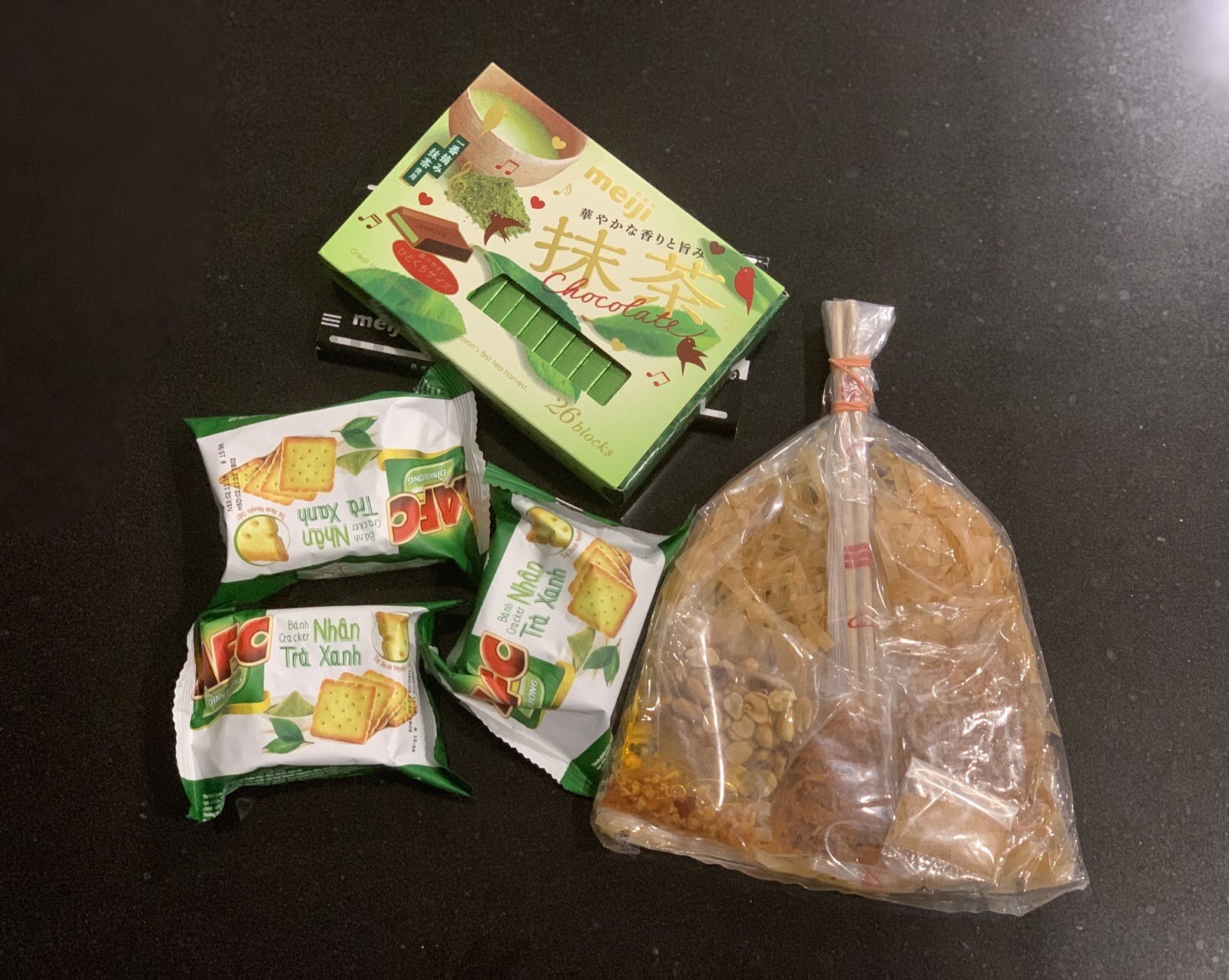
Dan Khanh Vo shares her favorite snacks: AFC Biscuits and chocolate.
Pope Francis Approves Same-Sex Marriage

Pictured above: Pope Francis. Photo courtesy of WikiMedia.
By Amelia Luo ’23
Staff Writer & Photographer
In the documentary “Francesco” — which premiered on Oct. 21 at the Rome Film Festival — Pope Francis expressed his support for same-sex civil unions, stating that gay people are also the children of God. Pope Francis’ remarks, different from the traditional teachings of the church, might bridge the gap between the church and its recognition of the LGBTQ+ community.
“Francesco,” directed by Evgeny Afineevsky, documents Pope Francis’ (born Jorge Mario Bergoglio) papacy for the past seven-and-a-half years, including his views on the environment, poverty, migration, inequality and more.
In the film, Pope Francis states, “Homosexual people have a right to be in a family. They are children of God and have a right to a family. Nobody should be thrown out or be made miserable over it. What we have to create is a civil union law. That way they are legally covered. I stood up for that.” This interview was the first time that Pope Francis has publicly stated his unequivocal support for same-sex civil unions after taking on the papacy.
For years, the Pope has not given a definitive answer about their views on same-sex unions. In 2013, when asked about homosexuality on a flight back to Brazil, he answered, “If a person is gay and seeks God and has good will, who am I to judge?” Yet in 2016, he flat out rejected same-sex marriage in his book “Amoris Laetitia” (The Joy of Love), claiming that it is in no way equal to marriage between a man and a woman. That being said, he still voiced support for people who are in nontraditional relationships such as single parents, unmarried straight couples and gay people who live together.
According to The New York Times, public support from Pope Francis has “the potential to shift debates about the legal status of same-sex couples in nations around the globe,” mitigating the relationship of the Catholic Church to the LGBTQ+ community.
Rose Lu ’23, a gender studies major at Mount Holyoke, remarked on how external societal factors play a large role in influencing people’s personal beliefs. “I believe that social structure [and] culture and people’s ideas are interlinked,” she said. “I always thought that if followers can accept other things that are forbidden in the Bible such as divorce and masturbation, then they shouldn’t exclude the LGBTQ[+] group.”
Pope Francis has made increasingly progressive comments and decisions during his papacy. On Oct. 25, he appointed the first African American cardinal to the Catholic Church’s highest governing body in history. Archbishop Wilton Gregory is a Chicago native and the first American named to the College of Cardinals since 2016.
Critics from both sides have commented on Pope Francis’ recent remarks. Since traditional Catholic teachings condemn and prohibit homosexual acts, conservatives have criticized him for “diluting” the church’s doctrine and reversing years of its teachings.
Others point out that while Pope Francis has helped shift the tone of the church on the topic of homosexuality, there has been little action involved in actually changing its teaching or policies.
Carrie Lewis ’23 expanded on this sentiment. “I think for Catholics in the LGBTQ+ community it’s a big step forward to accepting them fully for their sexuality,” Lewis said, noting that the Pope’s statement likely will not reverse homophobia within the religion. “For the Catholic community itself, I would be curious to see how this is introduced at the parish level. I wonder if they’ll begin to teach this new ‘dogma’ in Catholic schools.”
According to NBC, the Vatican is still firm in its claim that marriage is an “indissoluble union between man and woman,” thus making same-sex marriage unacceptable.
Chileans Vote for New Constitution

Pictured above: Chilean protests. Photo courtesy of WikiMedia
By Sophie Soloway ’23
Global Editor
On Sunday, Oct. 25, 78.3 percent of Chilean citizens voted in a referendum in favor of a new national constitution. This majority decision follows a year of protests in Chile largely centered around calls for major changes to the country’s democratic process and leadership. According to The Guardian, this national vote was the first step in meeting protesters’ demands and beginning a new chapter for the country.
Helen Roane ’23, international relations major at Mount Holyoke, reflected on the referendum.“I think it is really important that Chileans have taken this step [toward] creating a more democratic government and ensuring that their voices can be heard in the future,” Roane said. “It feels especially hopeful in the context of living through the current United States election, where people are concerned about their votes counting or having their opinions heard.”
In October 2019, it was announced that metro fare prices would be raised in Chile. The announcement was immediately met with disdain from citizens who claimed that this would make public transit inaccessible to the majority of Chileans. While this planned price hike was canceled just two days after its announcement, economic protests have persisted well into 2020. Beginning with intentional turnstile-hopping and soon culminating in a declared state of emergency, these protests quickly widened to encompass the extremely high rate of wealth inequality and rising living costs in Chile.
One of the largest demands that emerged from the diverse array of protesters was that for a new constitution. The current legislation was created in 1980 under Augusto Pinochet, who is widely recognized as a dictator in the country’s history. Although changes have been made to that constitution, its relation to Pinochet’s rule holds weight in citizens’ eyes.
According to Assistant Professor of Politics Cora Fernandez Anderson, “Since 1990 with the transition to democracy, the political regime changed but most of the economic reforms were left intact. As protesters were saying these days, ‘It is not about the 30 pesos (the increase of the subway fare), it’s about the last 30 years,’ about the lack of change brought by democracy, about the increasing social injustice and inequality that democracy was not able to address.”
“The privatization of health and education done by Pinochet is still in place, and it is not surprising that students have been at the forefront of protests,” Fernandez Anderson continued.
Fernandez Anderson also spoke to the increased influence of student protests in Chile. “The student movement in Chile is very strong; [it] emerged first around 2010 and had other peaks of mobilization, and while the initial protests were about the subway fare this time, students were fast to make these protests about something bigger than an increase of the price of transportation but throw light into the structural injustices present in the country,” she explained.
In November 2019, political leaders voted to approve a public referendum on the subject of maintaining or demolishing the fraught constitution. However, the COVID-19 pandemic delayed its implementation. On Sunday, voters were finally able to vocalize their hopes for the country in the voting booths. 50.9 percent of eligible voters cast their votes, marking increased voter turnout from the most recent presidential election, according to The Guardian.
“This shows that the population has not participated actively in previous elections because of a deep crisis of representation,” Fernandez Anderson explained. “Existing parties were not giving real options, neoliberalism had been embraced by all parties and alternatives to this economic model were [off] the table. Political parties were not able to channel people’s discontent, voting turnout was low, and people found the streets as a way of expressing their frustration and their search for alternatives. The referendum and the decision to reform the constitution seems to show the political system acknowledged its crisis and is on the way to create a hopefully more legitimate political system in which people feel better represented and taken care of.”
Voters will return to the booths in April 2021, when a vote for new assembly members is scheduled to take place. Yet another referendum will be held in the first half of 2022 in order to approve or disapprove of the proposed constitution that will be written by these newly elected officials.
Fernandez Anderson noted that these votes will have a wide range of topics, including whether or not to remain a presidential system or change to a “parliamentarian or semi-parliamentarian system.” They are also considering the decentralization and regionalization of the country.
Additionally, “A big issue will be to define the relationship with the Indigenous people, mostly the Mapuche [people] who have been demanding rights for decades,” according to Fernandez Anderson. The role of the state in the economy will be another controversial issue, along with its role in guaranteeing social rights such as health, education, housing and more, Fernandez Anderson explained.
As the country awaits these upcoming elections, they also await a decision that would shape Chile’s political future. “I think this is a moment for Chile to rethink their whole political system and in the spirit of the protests push for a deepening of democracy, take advantage of this moment to put everything under scrutiny,” Fernandez Anderson said. “This is a foundational moment for this country and I hope they will take it as such.”
Practice Your Spanish With Tus Amigos

Graphic by Anjali Rao-Herel ‘22
By Jocelyn Zhou ‘22
Staff Writer
Every Monday and Wednesday, members of the Spanish department, Spanish speakers and Spanish learners gather around the virtual Cafecito de Espanol, or Spanish Language Table. This table is held for Spanish learners of all levels to come together and embrace the Spanish language, according to one organizer, Emma Sullivan ’22. Due to the COVID-19 pandemic, the table meeting is being held over Zoom this year.
During the meeting, students meet one another and practice conversational Spanish, as opposed to the more formal and academic Spanish spoken in the classroom.
Sullivan talked about how the Spanish Table tries to make everyone feel comfortable and welcome when speaking the language. “We make sure that we speak slowly and that we have a cheat sheet with key words and phrases,” Sullivan said. “Usually one of us will work more closely with the student[s] who are at a lower level to make sure they understand and can get something out of … Spanish Table.” Along with Sullivan, Elizabeth Belka ’22, Katie Milligan ’22, Rahael George ’21, Cydney Hambrick ’22 and Allie Benguiat ’22 attended this week’s table.
“I attend the cafecitos to practice and strengthen my Spanish in an informal setting,” Hambrick said. “I could not fit [a] Spanish [class] in my first module so this was a great way to keep my skills up. I also plan on studying abroad, so this is an awesome opportunity to learn more colloquial phrases and vocabulary beforehand,” she added.
The table usually starts with iceberg questions to help everyone engage in the conversation. There are no specific topics to discuss, but this year, there is a lesson plan for each Zoom call.
“We have talked about music from the Spanish-speaking world, the evolution of beauty [and] hairstyles in different Spanish-speaking countries, Indigenous peoples in Latin America, Mexican Independence Day, different styles of dance, slang from different countries,” and more, Sullivan said.
Benguiat encouraged people to come have fun at Spanish Table. “It's just fun to talk and watch videos together,” Benguiat said. “I hope we can play games like Pictionary together in Spanish in the future.”
Cafecito de Espanol meets from 4:30 p.m to 6 p.m. EST every Monday and Wednesday. More information about the event can be found on the Mount Holyoke College events calendar.