Letter to the Editor - Dismantling Racism: Our Collective Responsibility

Here’s what the Dance department is doing.

We’ve heard from Kijua Sanders-McMurtry and Sonya Stephens about the recent killings of George Floyd, Breonna Taylor, Tony McDade and so many others. We have also heard from our academic department — have you heard from yours? While the initial email that we received from our faculty fell short, it helped catalyze conversations among students in the dance department that have been long overdue.

At the Five College Dance town hall listening session, Kiara Badillo ’20 (Hampshire College) brought up the key point that this is not the start of the conversation — what’s changing now is who is in the room and who is listening. As protests began to gain more visibility on social media, Miranda Lawson ’22 messaged our dance group chat to stress the importance of continuing our outrage and action past this initial wave. The next day, we received an email from Five College Dance announcing an online dance festival. The email included no mention of the recent police murders and the protests. Soukeyna Abbott ’20 messaged the chat to urge us to write replies to FCD and its director, Alex Ripp, denouncing this insensitive and hurtful lack of recognition of current events and ongoing racism in the dance field. Lawson called our attention to the absence of teachers of color from the festival schedule. On Wednesday, June 3, we received an email from the Mount Holyoke dance department offering “support and solidarity” yet failing to back those sentiments with action. After Olivia Lowe ’21 replied all to denounce the hollow statement, many students sent emails to Chair of Dance Charles Flachs, cc’ing all dance faculty. After Sophie Clingan ’22 met with Ripp on the morning of June 4, they sent a summary of what they learned to the group chat and called for a meeting among the students in the dance department to discuss next steps.

In this two-hour-long meeting attended by many Mount Holyoke dance majors and minors, hard conversations were had. In our department, as well as across the Western world, focus is often laid heavily on the importance of modern and ballet, yet we fail to recognize the contributions of BIPOC to these forms. Meanwhile, dances of the African diaspora and other non-Western dances fall to the wayside. This is not surprising when our department does not have any full-time faculty of color. Discussing concrete examples of racism, as well as unveiling the trauma and hurt our Black friends and peers of color had experienced, brought us to a list of actionable demands for our department. 

These ideas are not perfect. Certainly, they need more funding than we have — and transparency about said funding is a crucial item on our list. How can we advocate for the hiring of faculty and staff of color, or bringing in a variety of dance companies to perform, when we don’t know where the money is coming from or going to? We want a dance history class that doesn’t focus on white narratives. We want more levels of hip-hop, house, West African and other non-Western dance forms. We want full-time professors of color in our department. We want a stronger connection to people outside our department, specifically with the dance organizations on campus that, it is worth noting, have more students of color than we do in our department. The racism in our department must be dismantled at the same speed at which we invite students of diverse racial and dance backgrounds to participate in our community. 

The intersection of racism and dance was acknowledged by the overarching body of FCD only after numerous frustrated emails were sent. As disheartening as that is, it makes it absolutely clear that the student communities at Mount Holyoke need to get in touch with their respective departments as well. Higher education is an institution built on racist ideologies and white supremacy. Each academic department must actively work to dismantle this foundation. While we are sharing what is happening in the dance department, that is not the only place these conversations are or should be occurring. Did your professors reach out to you when the protests began? Are they having conversations about the classes they teach and the resources they promote, as well as what they may be leaving out? Are you joining your academic community to make a push against the implicit racism that all white students on our campus engage in daily? As white people writing this op-ed, we are working to straddle the tension between not expecting BIPOC students to do the emotional labor of educating us about these issues, while also recognizing that we can’t know what changes to advocate for without listening to the lived experiences of our peers. When BIPOC share their experiences, we need to value the time and energy that takes by amplifying their voices and concerns and demanding action and accountability from those in power. 

On June 16, MHC dance faculty and students gathered for a smaller discussion. These exchanges are an encouraging sign of change to come, yet reveal how much work there is to be done. This is not the beginning of the conversation. Many of us are just showing up. What is your way in? 

- Sophie Clingan ’22 and Izzy Kalodner ’21

Letter to the Editor - Low voter turnout: An urgent national crisis

Amid the current public health crisis and racial justice protests across the country, the U.S. is facing an additional problem: a significant decline in voter registration. According to a recent USA Today article, new voter registration is down 70 percent in comparison to this time four years ago, a substantial decrease that will have serious repercussions for the presidential elections in November. Low voter turnout among young people is not a new phenomenon, because despite being the largest age demographic in the country, people aged 18 to 29 vote at rates 30 percent lower than other age groups on average. This discrepancy needs to be addressed immediately, for young people deserve to express how a plethora of political issues uniquely impact their age group. 

While it is improbable that all young people across the nation will be given easy access to voting resources, outreach on college and university campuses is an effective place to start. It is key that campuses create active voting coalitions to ensure that voting is easy and safe, as well as engage students with the democratic process as a whole. It is imperative that members of the administration, faculty, staff and student organizations work together to actively promote voter registration resources and encourage students to have their opinions represented on Election Day.

Young people will inherit the political decisions made by elected officials, and the effects of these decisions have the potential to drastically impact our lives, for better or for worse. We deserve to have our opinions heard. We must vote.

Kate Murray

Mount Holyoke Student

Student PIRGs Summer Intern

Letter to the Editor: Voting at MHC

My generation, 18-to 21-year-olds, make up the highest eligible voter population in the country, but have the lowest voting rate. Before COVID-19 took over, organizations like Student Public Interest Research Groups (PIRGs) were focusing on campaigns like the New Voters Project on college campuses to motivate students to vote. What can we do to fix this while still making sure people are voting safely?

At Mount Holyoke, in 2018, our campus had a 59.9 percent voter turnout, which means that over 700 students did not vote. For our school, that is more than an entire class year! It is time for our campus to get as excited for voting as we do when we hear “Baby’s starting Mount Holyoke College in the fall.” Our international students will be affected by whatever policy or official is in office so those who have the ability to vote, should!

The state of our college is unknown right now but elections will still take place in the fall even if we are virtually learning. Reach out to your local congressman about how you can vote safely in your hometown.

I vote because it is my right. It is my way of having a voice at an age where I can’t run for office. Mount Holyoke is a place of inclusion and where leaders are educated so our campus should work on being the leading college with voter turnout in the Pioneer Valley. 


Jaxzia Perez

Mount Holyoke Student

Student PIRGs Summer Intern

Staff Editorial: A Statement on Police Brutality and National Protests

As the number of civilians protesting police brutality against Black people and people of color continues to increase, we find that we, too, cannot stay silent. The systemic police killings of countless Black Americans — including the recent murders of George Floyd, Breonna Taylor and Tony McDade — have gone unchecked for far too long, and police officers have continuously been applauded and excused for their violent and lethal actions.

Biological tests reduce subjectivity in mental illness

Biological tests reduce subjectivity in mental illness

Every once in a while, I hear concerns that biological testing for mental illness undermines the emotional struggles of those who live with it. There are warnings against chalking these struggles up to the disregulation of neurotransmitters (the chemicals in our brains which dictate psychological responses).

Dining hall dish names are culturally appropriative

If Dining Services would like to continue using these names, I recommend that they do research into the cooking practices of these cultures in order to include cultural backgrounds in a respectful and inclusive manner. Refusing to do so does the opposite; it takes ownership of a less dominant culture without being mindful of their unique customs and practices.

Celebrities should retain their humanity in death

Celebrities should retain their humanity in death

The way we address these issues is also important and at times this accountability is actually glorified bullying. Posting on Instagram about things celebrities did wrong in their lives does not have a positive impact, and doing so on the day they pass away is cruel to their friends, loved ones and fans.

Common swear words are rooted in misogyny

Common swear words are rooted in misogyny

Swear words have become an integral part of our everyday vocabulary to vent out our anger and frustration, or to use as an offensive insult. For instance, I often find myself swearing while driving in traffic or when stubbing my toe. A subset of the swear words commonly used are sexist and derogatory to women. Removing gendered profanity from modern culture is imperative — it’s alright to swear and vent frustration, but it can be done without disrespecting women.

Bernie Sanders is not the Donald Trump of the left

Bernie Sanders is not the Donald Trump of the left

There’s a popular theory among moderate observers of the democratic primary that Bernie Sanders is just as much of a populist as Trump in his supposed pandering to the working class. To say that Trump and Bernie are the same sides of a different coin, or that their strategies are somehow similar, ignores the diligent, honest work that Sanders has put into his political career, as well as the lives the Trump administration has endangered with his policies.

Children should be free to explore gender identity

Children should be free to explore gender identity

Children begin understanding and categorizing gender around the age of two to three, and, as per Lawrence Kohlberg’s theory of gender identity development, they then move from understanding their own identities to the larger landscape, associating what behaviors go with what identity. Developmental psychologist Laura Zimmerman discusses how childhood experiences play a role in this gender development.

Critical thinking-based education should be valued

Critical thinking-based education should be valued

Secondary education prioritizes practicality at the expense of an education in critical thinking. At this extreme, education becomes a mad scramble for high test scores and other quantitative, yet superficial, indicators of thorough teaching.

Study breaks aid student productivity, not stifle it

Study breaks aid student productivity, not stifle it

According to the American Psychological Association (APA), American college students are among the most stressed people in the world. While Mount Holyoke makes an active effort to alleviate students’ stress with its wellness program, a change in students’ mindsets is necessary for these services to be effective.

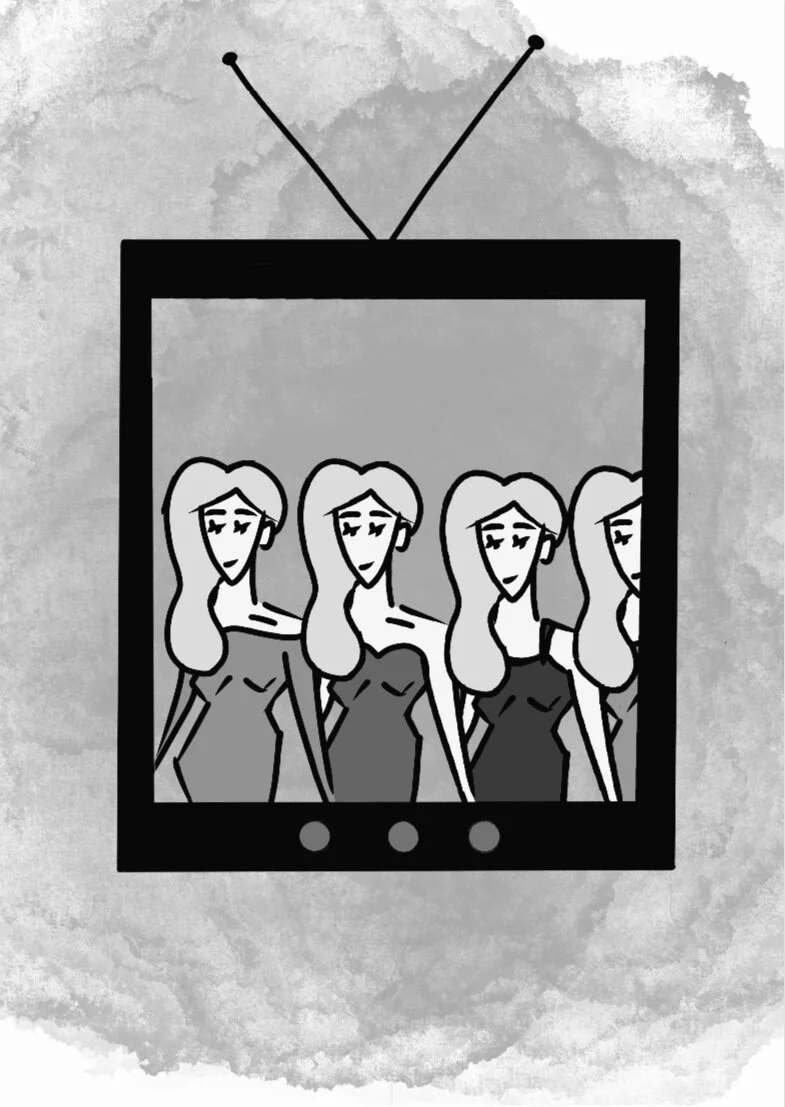
Reality TV shows suffer from a lack of body inclusivity

Reality TV shows suffer from a lack of body inclusivity

Reality TV shows provide alluring and indulgent entertainment. From shows like “The Bachelor” to “Keeping up with the Kardashians” and “Love Island,” they project a glamorous world which draws viewers in and sometimes inspires emulation. This harbors danger: lurking behind the glamor of these shows, there are misleading stereotypes which can often influence judgments as well. Reality shows should attempt to break past these barriers and promote diversity and inclusion of all body types.

Award shows will never be diverse. So why watch?

The award show season has just wrapped up for this year, with the Academy Awards rounding out as the finale. Award shows naturally inspire disappointment, spurring a plethora of “biggest snubs and winners” articles and heated debates. However, with the excitement of the awards, this year’s persistent lack of diversity went almost unnoticed.

MA rideshare tax bill will hurt financially disprivileged students

Last month, Massachusetts Governor Charlie Baker proposed a one dollar per trip tax on ridesharing companies such as Lyft and Uber. While the fee is intended to help those serviced by the Massachusetts Bay Transportation Authority (MBTA), which is set to receive 70 percent of revenue generated, it will hurt students in remote areas like Western Massachusetts, who rely on ridesharing apps.

College marketing uses idealized media references

Colleges have found a way into the movie industry, with many beloved on-screen characters attending or being associated with different universities. Colleges control their on-screen characters and use this as a marketing strategy. However these representations are not a complete and honest representation of what these colleges are.

Pornography should be blocked at Mount Holyoke

In the age of the internet, pornography usage and distribution has skyrocketed. College students are no strangers to PornHub and its contemporaries, which has sparked debate across college campuses like Notre Dame, Georgetown, Harvard and Princeton: should access to porn sites be restricted on school wifi?