
By Aspen Pearson ‘28
STAFF WRITER
“The Devil Wears Prada 2”, starring Anne Hathaway, Meryl Streep and Emily Blunt, is an insightful and surprisingly refreshing sequel to the cult classic “The Devil Wears Prada.” While it’s not a film that necessarily demanded a sequel, there’s something compelling about the way it expands our view of the fashion industry as it exists today. It engages pretty directly with modern anxieties — artificial intelligence, the death of print media and the rise of fast fashion — which makes it feel like it actually has something to say rather than just relying on nostalgia. It feels like a movie with its own point of view, instead of just a cash grab from a big studio.
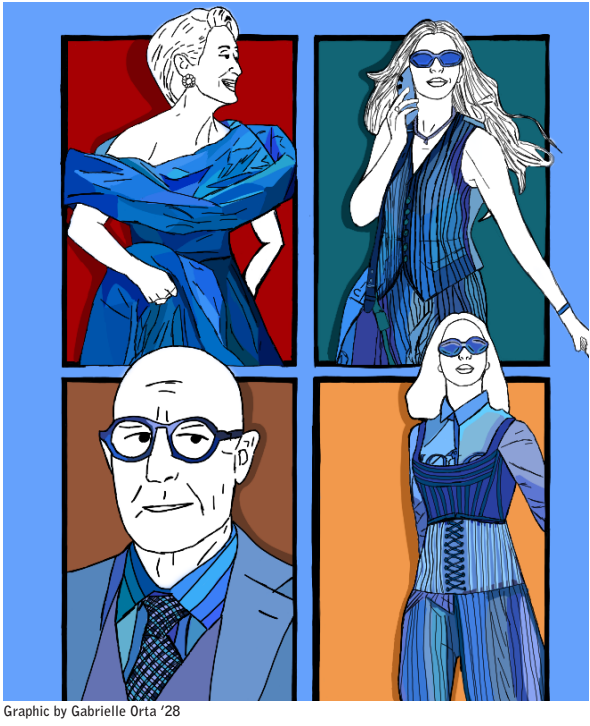
Fans of the first film return to it for its glamorous clothes, sharp wit and complex relationships. The sequel keeps these elements intact: The costuming is chic, stylish and bold. While maybe not as instantly iconic as the first, the looks still carry strong storytelling, and nothing ever feels dull or careless. Simone Ashley’s character, Amari, has some of the best looks in the movie. My personal favorite was her Monse UFO-printed mini dress.
The movie is also just as witty as ever. Miranda continues to dominate the screen with sharp, cutting one-liners, and the film does a great job of keeping the complexity of its women intact. Miranda, in particular, feels more human here with a shift from the colder boss persona in the first film. The audience gets glimpses of joy, sadness, and vulnerability, but none of it undercuts who she fundamentally is. She never loses her edge or her commitment to her work, and importantly, she’s never framed as “weak” for having emotions in the way women in media often are.
The romance subplots with the male love interests feels unnecessary. It reads like an afterthought, as if the movie felt obligated to insert a traditional romcom structure rather than trusting the audience to stay invested in the women themselves. The male characters are not particularly compelling; the only romance that feels somewhat necessary is Emily’s, mainly to move the plot forward. Andy and Miranda both having boyfriends, however, feels inauthentic and distracting.
What really stands out about this sequel is its awareness of the fashion industry and its genuine respect for the craft behind it. There’s a balance between admiration and realism; it doesn’t pretend the industry is in a great place, but it also never loses respect for it. It engages directly with fast fashion, the loss of prestige in fashion, and a culture that increasingly prioritizes performance over quality. The film faces that shift head-on, especially in how it shows fashion becoming more tied to profit and reputation than artistry. But even while it’s critical, it still holds onto what makes fashion compelling in the first place: the creativity, the labor and the idea that clothes can still be treated as art, even in a system that often forgets that.
Ultimately, The Devil Wears Prada 2 doesn’t try to replicate the original, and that’s what makes it work. It’s less about the fantasy of fashion and more about what it looks like now: Messier, more self-aware and more uncertain. It doesn’t hit everything perfectly, but there’s something refreshing about a sequel that isn’t just chasing nostalgia. Instead, it sits with how much the industry has changed, and what gets lost when fashion becomes more about profit than art.
Madeleine Diesl ’28 contributed fact-checking.