Women of Belarus March Against ‘Europe’s Last Dictator’

Image courtesy of WikiMedia

Image courtesy of WikiMedia

By Madhavi Rao ’24

Staff Writer

On Sept. 19, approximately 2,000 women marched through Minsk, the capital city of Belarus, as a part of more than six weeks of protests against the results of the recent presidential election, which has caused unrest across the country. Dissent has been targeted towards what is seen as the fraudulent reelection of the long-standing president, Alexander Lukashenko.

Lukashenko, who is also known as “Europe’s last dictator,” has ruled since 1994. The title was awarded to him following the dissolution of presidential term limits, years of voter fraud and his lead in arresting any challengers to his presidency. As reported by The Washington Post, these ploys have come to be seen as “the pitiful acts of a tyrant who has no legitimacy and clings desperately to power.” 

In regard to the months of protests, Lukashenko’s government has responded with a brutal crackdown. Since the wave of unrest began in August, more than 10,000 peaceful protesters have been arrested, according to U.N. Special Rapporteur Anaïs Marin. Middle Eastern news network Al-Jazeera has reported that the detained protesters are subjected to torture and abuse in custody, resulting in the deaths of several protesters. 

This abusive treatment of protesters is a driving force for the Women’s March in Minsk. Irina K. Palyukovich, a protester at the march, told The New York Times, “Women can do a lot, they can fight against a dictator. Men cannot do that not because they are weak, but they are more vulnerable. They are being beaten more often.”  

Around 2,000 women marched around the capital city on Sept. 19, carrying red and white opposition flags and demanding the removal of Lukashenko from his position. This was confronted with more state-sanctioned violence, as approximately 300 protesters were dragged into vans and forcibly detained. Step Vaessen, reporting for Al-Jazeera, stated that Lukashenko’s response to the protests was to “treat everyone as violently as possible,” crushing dissent by “making sure that people are so scared and intimidated that they will stop these protests.” 

In a statement released before the march, opposition candidate Svetlana Tikhanovskaya advocated for the “brave women of Belarus.” Tikhanovskaya, a former teacher, ran for president in the place of her husband, Sergei Tikhanovskaya, who was jailed for being a vocal supporter of the opposition. Of the three female leaders of the opposition, two — Tikhanovskaya and Veronika Tsepkalo — have fled the country. The conditions of their departure to Lithuania closely following the election results are said to have been under duress from the Belarusian government. 

The third leader of the opposition, Maria Kolesnikova, who previously ripped up her passport to avoid deportation to Ukraine, has been arrested for “actions aimed at undermining Belarusian national security,” according to NBC. Kolesnikova was last seen being pushed into a minibus by masked men in Minsk. Her current whereabouts are unknown. 

Lukashenko has faced little opposition during his rule, but the government’s mismanagement of the COVID-19 pandemic, along with grievances about the economy, have led to a strong wave of dissent among the public. According to BBC News, Tikhanovskaya says that she won 60-70 percent of the vote in places it was counted properly. Lukashenko’s reelection, with an alleged 80 percent majority, caused outrage across the country. 

Assistant Professor of International Relations and Politics Christopher Mitchell commented on Lukashenko’s regime. “What these events show is just how delicate a position Lukashenko finds himself in,” Mitchell said. “His dictatorship has largely survived because he’s enjoyed the support of Vladimir Putin. However, this has put Belarus in a position where it frequently bends to Russia’s will, inflaming resentment among a segment of the population.” 

Mitchell continued, “To manage this, Lukashenko has gently pushed back against Putin to look more assertive, and Putin has been reluctant to get involved directly to support him.”

Alejandra German Chavarin ’23, a history and politics double major, believes that the protests are a valid reaction to the electoral issues. “The ‘president’ Mr. Lukashenko hasn't been considered a legitimate leader by many countries including the U.S,” Chavarin said. “This uproar deserves attention because it obviously points at wide dissatisfaction amongst the citizens, one that would make the alleged 80 percent of votes that Mr. Lukashenko received questionable.”

A fresh wave of protests broke out after Lukashenko was sworn in at a secret inauguration on Sept. 23. The Moscow Times reported that unlike previous inaugurations, the ceremony was not shown on live TV. Instead, photographs of Lukashenko swearing-in and a transcript of his inaugural address were published by the state-run news agency, BelTA. 

Ales Belyatsky, head of the human rights group Viasna, said to The Moscow Times, “If the inauguration had been announced in advance, 200,000 demonstrators would have gathered outside his palace.” In a statement, Tikhanovskaya called the ceremony “a farce.” The United States and several European countries such as Germany have refused to recognize Lukashenko’s presidency. 

Mitchell said concerning the inauguration, “Lukashenko's best strategy is to wait out the opposition and hope that they lose intensity with time. Therefore, any large public display of asserting his authority runs the risk of reviving the opposition, and he can no longer count on Putin to support him.”

Escalation in Border Conflicts Leads to Deteriorating Relationship Between India and China

Graphic courtesy of WikiMedia Commons

Graphic courtesy of WikiMedia Commons

By Amelia Luo ’23

Staff Writer

India and China, two nuclear-armed countries, have been fighting over the disputed border in the Himalayan region, the McMahon Line, since 1914. The McMahon Line is an ill-defined border constituted by rivers, lakes and snowcaps, according to the BBC. The instability of the bodies of water causes the border to shift year to year and has led to several armed confrontations between India and China, including one this year.

On June 15, heightened tensions triggered a clash between the two countries, leaving 20 Indian soldiers and an unknown number of Chinese soldiers dead. This was the first fatal clash between India and China since 1975, according to the BBC. 

The details of the clash are unclear. India accused China of “provocative military movements” near the border, while China denied these charges, claiming that it was India’s troops that engaged in “open provocation and caused the border situation to become tense,” according to The Guardian.  

After the 1962 war, both sides engaged in a competition of building infrastructures such as roads, telephone lines and airstrips. This infrastructure formed what is now called the Line of Actual Control. The LAC was intended to create a demarcation line in the hopes of easing tensions between the two countries. 
In 1996, China and India signed a treaty barring firearms and other explosives along the LAC. Senior Colonel Zhang Shuili, a spokesperson for the People's Liberation Army, stated that India's move “seriously violated related agreements reached by both sides, stirred up tensions in the region ... and is very vile in nature,” according to the BBC. In rebuttal, India’s government released a statement claiming that although the Indian army is “committed to maintaining peace,” they were also “determined to protect [their] national integrity and sovereignty at all costs.”

In 2019, India completed the construction of the new Darbuk-Shyok-Daulat Beg Oldi Road to a high-altitude airbase in the Ladakh region near the LAC. This road has enhanced India’s ability to move armies and organize support more quickly in the event of a conflict. China was strongly opposed to this project, as they believed that the road was harmful to the country’s economic corridor to Pakistan and Central Asia, according to Al-Jazeera. 

It is unlikely either of the countries will be willing to back down. Nevertheless, the standoff could escalate tensions further if neither side gives way.

Wei Chao ’23, an international relations major, shared her theory on the Chinese government’s strategy while engaging in these conflicts. “I think the Chinese government deliberately sent off troops to test [India’s] bottom line in the border issue,” Chao said. 

On Sept. 10, foreign ministers S. Jaishankar of India and Wang Yi of China reached a five-point plan in Moscow, aiming to ease tensions and resolve the crisis. That being said, this period of conflict could be the turning point of the India-China relationship. 

China is one of India’s biggest trading partners; however, India has a trade deficit of 48.66 billion, which also contributes to the political tension between the two countries. With China and India’s relationship becoming more volatile, the Indian government is calling to reduce trade and economic ties with China. It recently banned more than 150 China-linked apps such as the popular video-sharing social media app, TikTok, citing security reasons. It also introduced restrictive measures on Chinese foreign direct investment. 

Lasya Priya Rao Jarugumilli ’23, a double major in politics and physics, shed some light on why India might view China as such a big threat to the country’s sovereignty. “India is very diverse in every sense. The only thing that is keeping Indians together is this togetherness,” Jarugumilli said. “Every piece of land is important to the whole country. … [It] is part of the soul.” 

 Jarugumilli believes the aggressive response also ties back to colonialism. “[It has] not been a very long time since independence. The freedom struggle is not that far,” Jarugumilli said. “People my age, their grandparents were freedom fighters, so it is still very connected with the reality of everyday life.”  

Looking at the future of the two countries’ relationship, it is very likely that the tension might de-escalate after the diplomacy engagement in Moscow, yet the tension could easily trigger a security dilemma with 50,000 troops on both sides of the LAC. 

Seeing the potential increase in India’s military expenditure, Chao suggested that “it could be possible that the Chinese government wants to use the border conflict to force India to spend more on ground forces instead of the navy.” Suspicion like this exists on both sides of the conflict, potentially leading to a future harsh hit on the economic engagement between the two countries. 

Refugee Camp Burns Down in Greece; Who's to Blame?

By Aditi Parashar ’22

Staff Writer

A large blaze on Sept. 8 destroyed the Moria refugee camp on the Greek island of Lesbos, leaving over 12,000 of its residents with nowhere to go. There were no casualties reported. 

According to The New York Times, aid workers, activists and officials claimed the fire was started intentionally, following protests over prolonged lockdown measures after 35 residents tested positive for coronavirus. Four unnamed migrant men have been formally charged with arson. 

However, many have also blamed the Greek government and the European Union for the disaster. As Eva Cossé, lead researcher in Greece for Human Rights Watch, told The New York Times, “This fire was expected. It’s a testament to the European Union’s negligence and Greece’s negligence.” According to German media outlet Deutsche Welle, the Moria camp was housing four times more migrants than its intended maximum capacity. Human Rights Watch reported that refugees were living in cramped conditions in overcrowded tents with limited food, water, sanitation and health care resources.  

Moria was established in 2015 in order to address the refugee crisis after 850,000 refugees and migrants hoping to travel to safety in northern Europe made their way from Turkey by boat. These refugees passed through the camps quickly when the European attitude toward refugees was more tolerant, reported The New York Times. However, since those initial days, the island of Lesbos has hosted an additional 300,000 refugees. 

The refugees have gone through traumatic experiences, fleeing persecution and war-torn countries. They now live in squalid conditions for long stretches of time, sometimes for as long as two years. In this time, they must often go through bureaucratic asylum formalities before either being sent home or allowed to move on to seek permanent asylum in northern Europe. 

“Before, I thought that Greece would be one of the best places to live,” Mr. Ashrafi, a 34-year old Afghan refugee with three daughters, told The New York Times. “Now I feel it would have been better to drown while crossing the sea.”

Some say the increased time spent in these camps is due to Europe’s inability to reach any long-term solutions to the crisis. European countries have continued to block borders, and leaders have continued to disagree on the number of refugees each country should take while providing Greece with funds to care for the refugee population. “Moria has been considered an emblem of Europe’s hardening approach to migrants in the aftermath of the 2015 crisis,” The New York Times reported.

Mickiyah Pope ’23, a politics major at Mount Holyoke, said, “For politicians to continue to behave in such an unplanned manner in the face of a humanitarian crisis — which is no way new — is truly disheartening. Politicians have the ability to do great good if they come together and truly understand the suffering of these refugees, instead of trying to pass the sole responsibility to their neighbor.”

While the European Union continues to figure out the way forward for the stranded migrants, Human Rights Watch reported that 406 unaccompanied children have been flown to mainland Greece to be relocated to other EU countries or placed in long-term shelter facilities in Greece. Countries like Germany, France and the Netherlands have also agreed to take in some number of unaccompanied children. Additionally, on Sept. 15, Germany said it plans to relocate another 1,553 refugees from Greece. 

Middle Eastern news network Al-Jazeera reported that many refugees have been moved to a temporary facility at Kara Tepe with the goal of all 12,000 being housed there by Sept. 20.  However, according to Refugee Support Aegean, a local nonprofit organization, conditions in Kara Tepe fail to meet the minimum standards of dignified living under Greek and international laws.

The Indian publication The Hindu reported the discontent among the residents of Moria on being moved to new refugee facilities. Many protested before being moved to the new facility with chants of “freedom” and “no camp,”  along with signs saying “We don't want to go to a hell like Moria again” and “Can you hear us Mrs. Merkel?” Numerous refugees see the new housing situation as continued neglect, reported Al-Jazeera. 

Rehat Thussu ’23, an international relations major at Mount Holyoke, stated, “The crisis is an issue that isn’t going away anytime soon. If countries consistently fail to respond to this crisis, that too in accordance with international human rights law, we will soon face another crisis: the loss of our humanity and our morals.” 

Time Zones Most Impact International Students’ Remote Learning Experiences

1024px-Standard_time_zones_of_the_world_(2012).svg.png

By Corrine Celupica-Liu ’23

Staff Writer

In response to the COVID-19 pandemic, Mount Holyoke announced the implementation of the Flexible Immersive Teaching model as a means of academic instruction for the 2020-2021 academic year. This model, as explained on Mount Holyoke’s “Opening the Gates” webpage, emphasizes synchronous classes to “ensure an immersive experience and inclusive excellence,” offering courses from 8 a.m. to 10:30 p.m. EST so that “students in different time zones across the world can participate.” While the entire Mount Holyoke community has had to adjust to this new model of instruction, international students have faced unique challenges and experiences due to widely diverse geographic circumstances and time zones. 

For Deborah Korboe ’21, who lives in Sakumono, Ghana in West Africa, time zone differences mean she attends her Module 1 courses starting at 5 p.m. and finishes at 2 a.m. Greenwich Mean Time.

“It has certainly been a tasking job,” Korboe said. “It helps that I have time during the day to do homework, but I have to change my [biological] clock to keep up with synchronous classes.” 

Both Aurora Vo ’23 and Hongtian Wang ’22, who are 11 and 12 hours ahead of Eastern Standard Time in Vietnam and China, respectively, are also taking classes late at night and have faced difficulties adjusting to time differences. 

“For this module, I have classes starting from 7 p.m. through 11:15 p.m. every day, and all require students to attend in real time,” Vo explained. “Even though it’s only been three weeks, I am already tired because I stay up late, making my sleep schedule a bit off.” 

Wang also mentioned how it can be difficult to keep track of and calculate deadlines in a different time zone. “There have been some difficulties for me in calculating deadlines,” Wang said. “I have made mistakes calculating deadlines, so I ended up turning in assignments late.” 

Mount Holyoke has made efforts to maintain access to resources and community despite remote circumstances. “My professors try to put students in the same time zone into a group so it will be easier for us to communicate, and they also hold a virtual common room for us to do homework together outside of class,” Wang explained. “I feel very involved and cared [for], even living very far from the campus.”

Vo also noted how the tight-knit nature of the Mount Holyoke community is helping to maintain a connection to campus. “One cool thing about Mount Holyoke is that because our student body is not large, I have seen most of my classmates on campus before,” Vo said. “A big picture of Mount Holyoke is still there for me.”

For Korboe and Wang, however, the support and community felt in courses seems not to apply to extracurricular activities. 

“It seems like [student organizations] won't be a feature for me this semester, because meeting times are always in the middle of the night for me,” Korboe said. “I just wish my colleagues would be a little more considerate.”

Wang noted that, because “I sleep early, I don’t participate in any events. That is a pity.” 

While the FIT model marks a significant adjustment for the entire Mount Holyoke community, the experience of Mount Holyoke’s large international student population is important to understand in order to continue work on fostering community through the academic year.

ICE's Summer Policies Changes Created Uncertainty for International Students

ICE's Summer Policies Changes Created Uncertainty for International Students

On July 6, 2020, the United States Immigration and Customs Enforcement agency announced that nonimmigrant F-1 and M-1 students could not take full online course loads and remain in the United States. International students risked deportation if the college or university they attended switched to remote learning for the fall 2020 semester, which many had already announced due to the COVID-19 pandemic.

China’s Abuse Against Uighur Muslims Sparks Anger

China has begun to receive global criticism for its alleged persecution of Uighur Muslims. Over the past few months, harrowing reports have surfaced describing millions of Uighurs detained in what Middle Eastern news source Al Jazeera calls “the largest network of internment camps since World War II.”

International Students Reflect on Changing Housing Situations

International Students Reflect on Changing Housing Situations

Last March, Mount Holyoke College officially announced that it would pivot to a remote spring semester in response to the rapidly-growing coronavirus pandemic in the United States. Months later, on Aug. 10, 2020, the College announced that it would once again provide a fully remote education for the fall term. The suddenness of these decisions causes challenges regarding housing and stabilization for some, particularly international students.

How the World Has Handled COVID-19

By Corrine Celupica-Liu ’23

Global Writer

Over the past nine months, coronavirus case levels have fluctuated around the world. In the United States, life during a global pandemic looks strikingly different than it did back in March. The U.S. has seen both community compliance and resistance in efforts implemented to suppress the virus. 

According to a New York Times report on Sept. 6, 2020, there are 26.9 million confirmed cases worldwide and the virus is spreading at its fastest recorded speed, with a global cumulative of 200,000 daily new cases. As of early September, there are rising surges in many parts of Europe, including Germany, Spain and France. Similar patterns are also occurring in North America, where geographically-diverse hotspots have sporadically developed over the past six months. 

Megan Horner ’23 lives in Herrin, Illinois, and has experienced the state’s response to each new hotspot of the coronavirus. 

“In the beginning, the state was able to slow the spread, but once things began opening, a lot of people stopped adhering to rules,” Horner said. “The state instituted pretty strict measures, and it was pretty effective but has since been rescinded.” 

As of Sept. 6, 2020, Herrin has recorded 1,024 confirmed coronavirus cases, which is up from 530 total confirmed cases reported on Aug. 9, 2020. 

Due to the lack of standardized federal testing and containment protocol in the United States, the reported number of cases has varied from region to region. Abroad, countries’ various strategies mixed with a more collaborative community response have been more effective in controlling the spread of the virus. 

Rachel Kang ’23, who has been living in Seoul, South Korea, since March, noted the effectiveness of the South Korean government’s response. 

“From the beginning, [the government] made it mandatory for everyone entering from abroad to quarantine for 14 days and get tested for COVID-19,” Kang said. “If there is someone who caught the virus in your neighborhood, the government sends emergency alerts to their county [and] track[s] ... where the anonymous individual has been since they started showing symptoms.” Kang also praised South Korea for its citizen safety requirements, such as wearing a mask in certain buildings and on public transit and participating in regular temperature checks. 

In South Korea, there is a 1.1 percent positivity rate from coronavirus testing. Additionally, the country has been able to maintain lower rates of contraction. From April 1 to August 12, it reported less than 100 cases daily. 

Across all the different strategies regions have attempted to control the coronavirus, one truth remains: keeping the spread suppressed requires a sense of intentionality. As Kang noted, “As much as the idea of a virus is terrifying, if the correct precautions are being taken at the right moment, it is possible to control the numbers of cases.” 

Anti-Muslim riots in Delhi turn violent following police brutality

Anti-Muslim riots in Delhi turn violent following police brutality

In the wake of months of protesting after the passage of the Citizenship Amendment bill on Dec. 8, 2019, Delhi, the capital of India, saw communal unrest and anti-Muslim riots from Feb. 23 to Feb. 26. The death toll went up to 46 with more than 250 injured. The Delhi Police arrested or detained up to 630 people. The unrest was centered around northeast Muslim-majority neighborhoods in Delhi, such as Mustafabad and Jaffrabad, among others.

What’s going on in the Middle East? Five College Professors share current events

What’s going on in the Middle East? Five College Professors share current events

The conflict in Middle East lies in the very nature of its geographical position, resources and political system. The assassination of Iranian military official Qassim Suleimani on Jan. 3 brought much global attention to the Middle East and the region’s varying conflicts, crises and uprisings.

Interdepartmental panel discusses current events, protests in Latin America

Interdepartmental panel discusses current events, protests in Latin America

Several Latin American nations have experienced protests within recent months. Chile — the “first laboratory of neoliberal policy,” according to Pintetta — witnessed immense national solidarity movements sparked by the increased price of public transportation and centered around the country’s drastic wealth disparity.

Vietnamese Student Association holds annual “Vietnam Night”

Vietnamese Student Association holds annual “Vietnam Night”

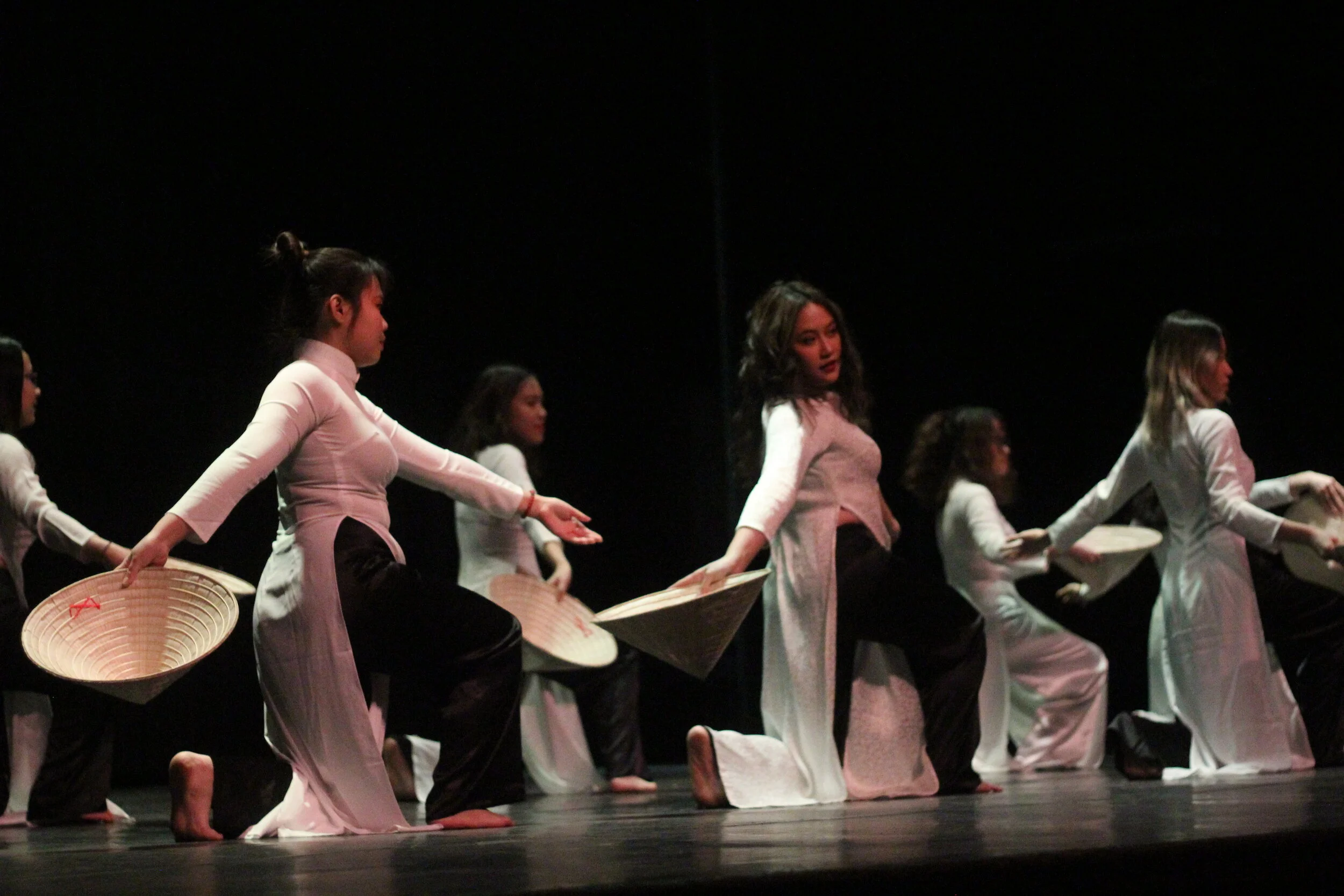
Mount Holyoke’s Vietnamese Student Association (VSA) held their annual Vietnam Night cultural show in Chapin Auditorium on Friday, Feb. 21. Among the guests were faculty members, Mount Holyoke and Five College students as well as local residents.

Afghanistan re-elects incumbent president

Afghanistan re-elects incumbent president

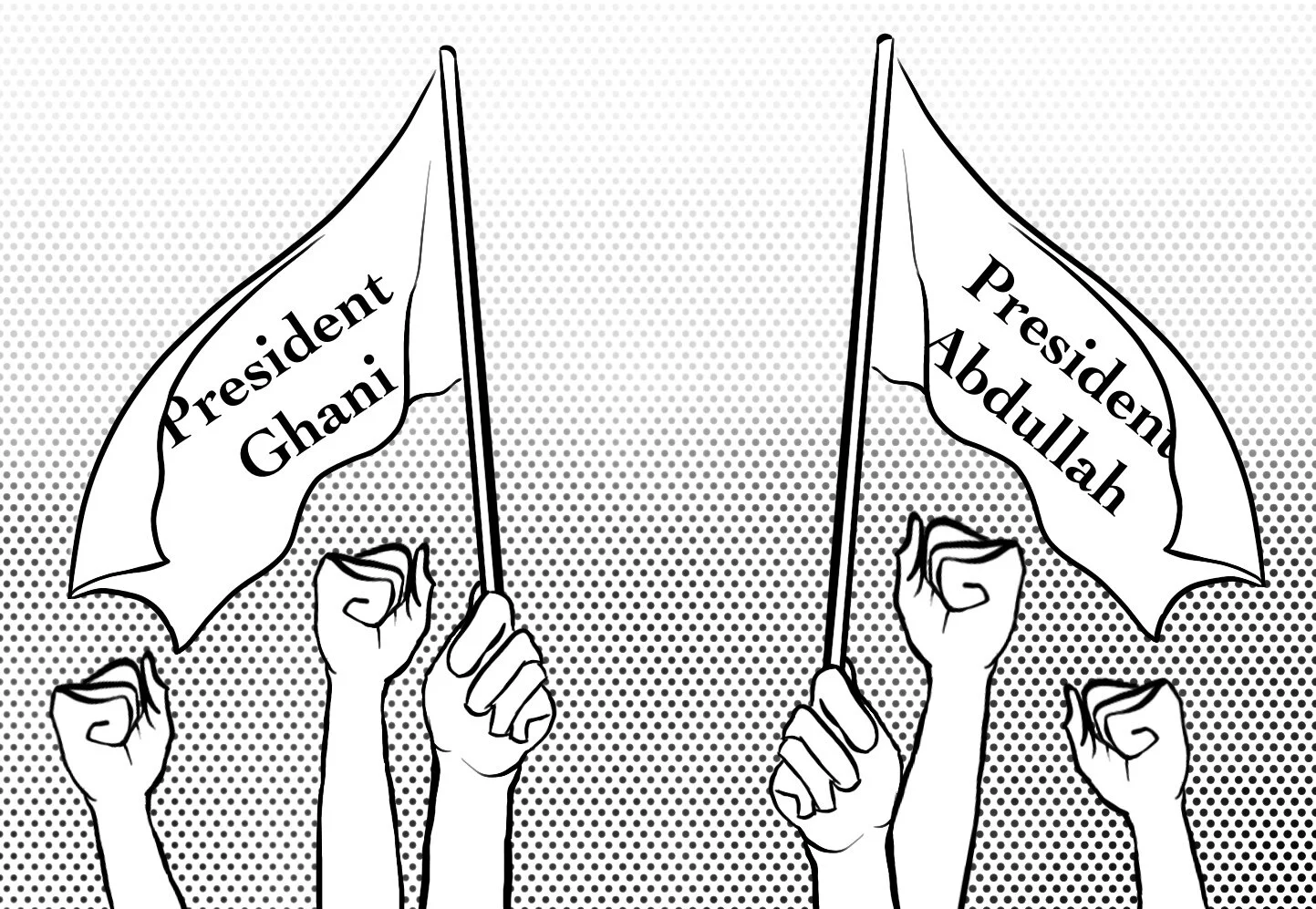
After a five-month election dispute, Afghanistan’s election commission declared incumbent Ashraf Ghani the winner of the 2019 presidential elections on Feb. 18. Ghani won with 50.64 percent of the popular vote. Ghani’s main rival, Abdullah Abdullah, claimed that the results were unlawful. Abdullah declared himself the winner and announced that he plans to form his own parallel government.

Irish election results: Sinn Féin wins popular vote

Ireland’s Feb. 8 general election ended with divisive results as the leftist party, Sinn Féin, won the national popular vote despite its platform of reunification and historic reputation of sectarian violence.

Middle East teach-in discusses U.S. actions

On Monday, Feb. 17, a panel of Five College professors held a teach-in in Hooker Auditorium titled “The Middle East Crisis: How Did We Get Here? What’s Next?”, examining the impact of U.S. foreign policy on the Middle East. The catalyst of the event was the death of Iranian General Qasem Suleimani, who was killed by a U.S. airstrike in early January.

Government shuts down refugee receiving point Stage 2 Transit Camp in Greece

Government shuts down refugee receiving point Stage 2 Transit Camp in Greece

Receiving points for refugees in Greece are being shut down, galvanizing a call from human rights activists in Lesbos to keep the north shore open. Refugee Rescue, a Non-Governmental Organization (NGO) team operating in the country’s North Shore, claimed in a statement that the closure will be devastating for both refugees and local communities.

“Parasite” becomes first non-English Best Picture winner

“Parasite” becomes first non-English Best Picture winner

South Korea’s official submission to this year’s Academy Awards, “Parasite,” won four Oscars on Feb. 10. Its Best Picture win makes “Parasite” the first movie not in the English language to win Hollywood’s highest award in the Oscars’ 92-year history.