
The beauty in ghost-hunting is its simplicity — and the wide availability of the technology it relies on. Take the case of the temperature gun: on a dark, cold night in the spring of 2019, I paraded around campus with a group of students from my Campus Sustainability course. Our mission was to identify buildings on campus that leaked heat due to insufficient insulation. In the tiny window of the temperature gun, we observed spine-chilling temperature changes around window frames and in the mortar between bricks where heat was escaping. The lack of energy efficiency in the College’s ancient buildings was not paranormal, but it certainly gave us a fright. With some extra time and the power of scientific discovery in our hands, we visited the famed “ghost room” on the fourth floor of Wilder Hall.
Nobel Prize in Chemistry awarded to two scientists for their work on asymmetric organocatalysis

While mRNA vaccine researchers received global attention as favorites for the Nobel Prize in Chemistry, according to Chemical and Engineering News, the prize was instead awarded to another field of research that has hugely benefited the pharmaceutical industry. On Oct. 6, the 2021 Nobel Prize in Chemistry was awarded jointly to Dr. Benjamin List and Dr. David W.C. MacMillan for their work on “asymmetric organocatalysis.”
New earth, environment and sustainability studies department to be developed

Earth-loving students of the future will not leave Mount Holyoke College with a degree in geology, geography or environmental studies, but rather earth, environment and sustainability studies. According to Chair of Environmental Studies Tim Farnham, students may join the new major starting in fall 2023.
Climate Activist Spotlight: Autumn Peltier

Autumn Peltier is a 17-year-old clean water advocate. She is Anishinaabe-kwe and comes from the Wikwemikong First Nation located on Manitoulin Island in northern Ontario, Canada. According to The Guardian, Peltier’s advocacy for water rights began at the age of eight when she attended a ceremony at the Serpent River Reservation, where signs in the bathrooms read, “do not drink the water” and “boil advisory in effect.”
California oil spill results in legal action against energy company

Offshore oil drilling is a common practice to remove oil from the ocean, and has led to a series of oil spills. On Oct. 1, the U.S. Coast Guard received a report of a petroleum smell off the coast of Huntington Beach, according to The Guardian. An underwater oil pipeline had cracked and was leaking oil into the ocean. The pipeline is owned by Amplify Energy based in Houston, Texas, who will likely be held as a responsible party. The exact timeline of the oil spill remains unclear, leading to an investigation into its origins by the U.S. Coast Guard.
Miller Worley Center kicks off Campus Waterways Visioning series

The Connecticut River Watershed flows from the New Hampshire-Canada border all the way to where it meets the ocean on the Connecticut coast. Towards its southern border lies Stony Brook, one of the river’s distributaries that flows through the Mount Holyoke College campus. The entirety of the Stony Brook Watershed has only four impoundments, or dams — three of which are located here on campus. The sound of rushing water under spider bridge, grassy slopes leading to trees and flowering bushes along the edge of lower lake, the docks reaching out into upper lake; these are all quintessential parts of the Mount Holyoke campus that are possible because of the dams that transform Stony Brook into its current two-lake form.
Climate Activist Spotlight: Vanessa Nakate
Vanessa Nakate is a 24-year-old Ugandan climate justice activist. Nakate began her climate activism in Dec. 2018 due to concerns around the unusually high temperatures in Uganda. She began protesting on her own outside the gates of the Parliament of Uganda in Jan. 2019 to call for the protection of the Congo rainforest, which is facing immense deforestation. Nakate founded the Youth for Future Africa, now called the Rise Up Movement, which aims to tell African climate activists’ stories. Nakate has also been working on the installation of solar panels and institutional stoves in schools to reduce the amount of firewood the schools are using.
Climate change will bring mosquito-borne diseases to new regions
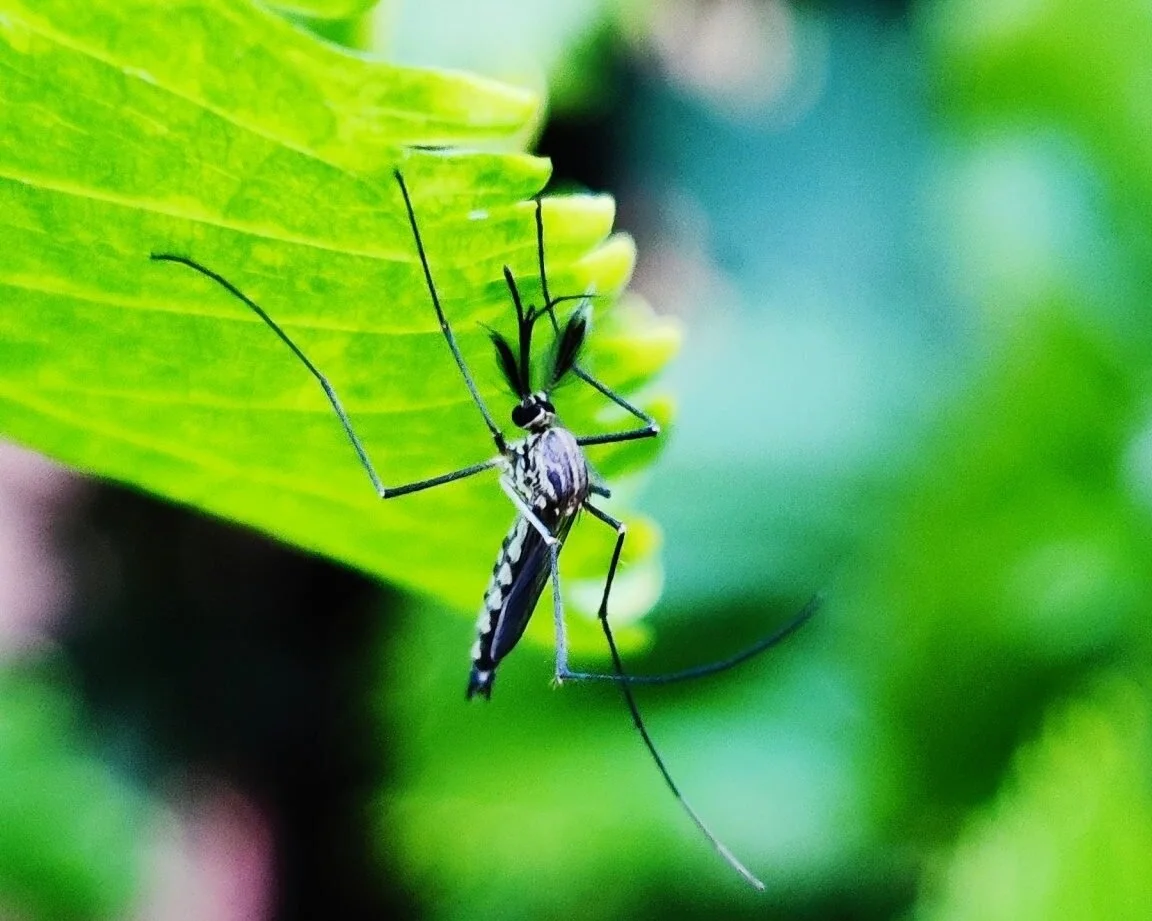
After a season that saw climbing mosquito populations, mosquito presence in the United States is beginning to decline.
As the summer’s record-breaking heat and storms led to above-average rainfall, mosquitoes were able to proliferate successfully. Ideal conditions for mosquitoes feature rainfall that produces pools of water in which they lay their eggs, according to an Environmental Protection Agencies study published in 2021. Mosquitoes also prefer humid conditions, which will intensify as climate change worsens. According to a 2018 release from Climate Central, a climate reporting resource, for every 1 degree Fahrenheit of warming, the humidity will increase by about four percent.