

Reproduce This! All about menopause

Republican pushback stalls ESG initiatives
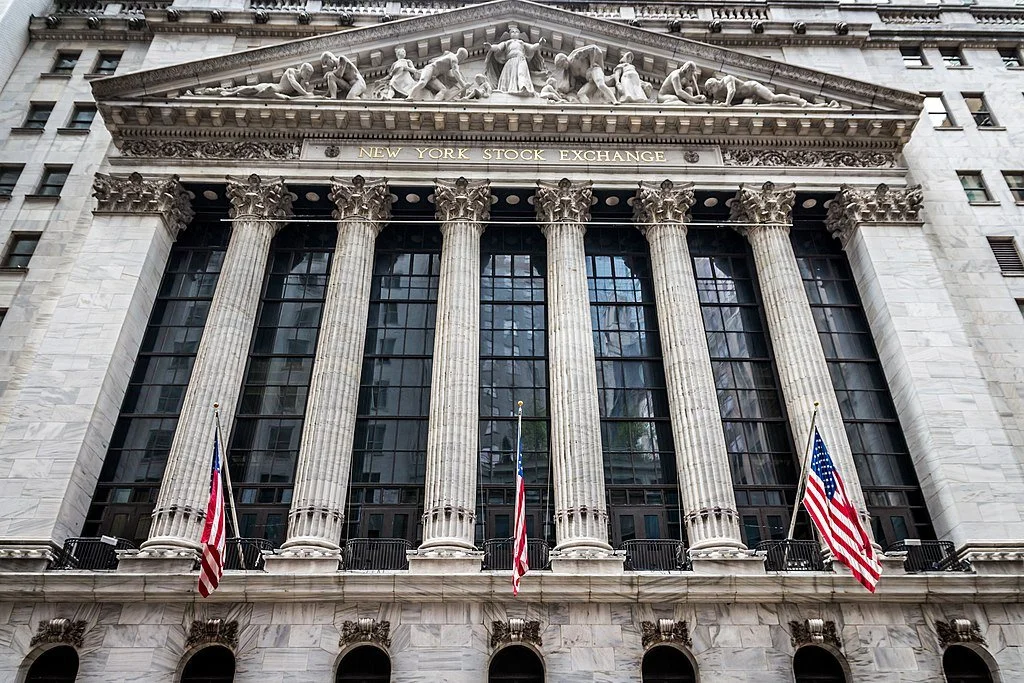
State-level members of the Republican Party have recently accelerated their pushback against Environmental Social Governance considerations in public and retirement pensions, ubiquitously dubbing them “woke” investments, NBC reported. According to NBC, President Joe Biden’s first veto on March 23, which the House failed to override, blocked a bipartisan bill that would have nullified Labor Department rules permitting retirement plans to consider ESG factors.
Leah Penniman speaks about new book at the Odyssey Bookshop

On March 22, the Odyssey was packed with people sitting and chatting in rows of chairs where one would usually find racks of MHC apparel. The group was brought together by an event featuring Leah Penniman, a “Black Kreyol farmer, mother, soil nerd, author and food justice activist from Soul Fire Farm in Grafton, NY,” according to their bio on the Soul Fire Farm website.
Tuvalu becomes the first digital nation in response to climate change

Global temperatures are inching closer to 1.5 degrees Celsius of warming and global greenhouse gas emissions continue to be on the rise, according to the 2022 International Panel on Climate Change report. Of these increases in emissions, the report explains, Small Island Developing States are responsible for a “negligible” quantity. Despite their minimal contributions to climate change, small islands are highly vulnerable to its effects, the United Nations said. As climate change’s worst impacts come closer to being reality, small islands have turned to digital preservation as they face the possibility of being wiped from the physical plane.
California and Texas lead US in green energy

According to a new report by Climate Central, the amount of clean energy produced by the U.S. skyrocketed in 2022, with wind and solar producing enough energy to power “the equivalent of 64 million average American households.” Among the largest renewable energy producers of this dramatic increase are California, Florida, Iowa, Oklahoma and Texas.
Reproduce This! All about endometriosis

According to Johns Hopkins Medicine, the endometrium is the layer of tissue inside the uterus. The endometrium grows during each menstrual cycle to prepare for a fertilized egg. If no eggs are fertilized during the menstrual cycle, the endometrium is shed during what is commonly known as a period, according to Cleveland Clinic.
Activists work to reduce pollution in Louisiana’s ‘Cancer Alley’

Photo courtesy of Jim Bowen via Flickr.
St. Gabriel, Louisiana houses multiple industrial facilities that put residents at high risk of cancer.
By Diksha Batra ’26
Staff Writer
From 2009 to 2016, there was a decrease in air pollution in the U.S., but “the annual carbon dioxide emission rate in the St. James parish [of Louisiana], where St. Gabriel is located, equaled that produced by approximately 113 countries” according to BlackPast. St. Gabriel, Louisiana, is home to what residents call “Cancer Alley,” due to the “plastic plants, oil refineries and petrochemical facilities” that make it one of the most toxic areas in the nation, BlackPast wrote.
Despite the region’s reputation of high pollution rates, the plastic industry continues to grow. “Industrial expansion continues especially in areas with high percentages of poor and Black residents,” BlackPast reported. One example of this expansion was when the St. James Parish Council approved the “Sunshine Project,” which would build a large plastic plant in the area.
According to the British Plastics Federation, there are four major steps in plastic production. First, the extraction of raw materials including “largely crude oil and natural gas, but also coal.” Second, the refining process “transforms crude oil into different petroleum products” which happens when “crude oil is heated in a furnace,” and then sent to a “distillation unit, where heavy crude oil separates.” The next step is polymerisation, a process “in the petroleum industry where light olefin gases (gasoline) such as ethylene, propylene, butylene (i.e., monomers) are converted into higher molecular weight hydrocarbons (polymers),” according to the British Plastics Foundation. The final step is compounding and processing, during which materials are melted and mixed together to form plastics.
The process of making plastics creates byproducts that can pollute the atmosphere and soil, and can cause serious health problems like cancer, according to EcoEnclose. Phthalates, one of the materials needed for plastic, can affect “fertility, endocrine glands and birth defects.” In water, plastic waste can further break down into microplastics. According to EcoEnclose, “the biggest harm associated with microplastics is that they exist not only in the waterways but also the potable water and seafood we eat.” These harmful effects of plastic pollution are felt the most by those living near areas with high levels of plastic manufacturing activity.
EcoEnclose named “Cancer Alley” as one of the areas most impacted by pollutants in the U.S., and cited environmental racism as a driving reason for that. Greenaction defines environmental racism as “the institutional rules, regulations, policies or government and/or corporate decisions that deliberately target certain communities for locally undesirable land uses and lax enforcement of zoning and environmental laws, resulting in communities being disproportionately exposed to toxic and hazardous waste based upon race.” In this part of Louisiana, the majority of the population is Black, and because of the 150 plants and refineries, the “residents are 50 times more likely to get cancer as a result of the polluted air compared to the average American,” according to Ecoenclose.
To put an end to plastic pollution and its health consequences, many residents of “Cancer Alley'' have organized themselves to protest against the injustice. “RISE St. James, a grassroots organization founded in 2018, organized its first protest in response to the St. James Parish County Council approving the ‘Sunshine Project,’ which would build another large plastic plant in the area,” according to BlackPast. RISE St. James has been working to stop industries from increasing pollution levels in Louisiana, according to Inside Climate News. This group was founded by Sharon Lavigne, “a retired special education teacher and grandmother of 12,” She said that her work “was a calling from God,” because she found inspiration from the church where she was baptized. RISE St. James’ victories against the plastic industry include stopping Formosa Plastics from constructing a “$9.4 billion manufacturing complex on 2,400 acres in Welcome, Louisiana, less than two miles from Lavigne’s home,” according to Inside Climate News. Some of Lavigne’s other work includes organizing protests, serving as a plaintiff in lawsuits against the plastic industry and working with local governments as well as nationwide environmental groups. Even though Lavigne gives credit to attorneys and others who have been part of the alliance, she believes her cause gained the upper hand because she “put God first.”
Many other people have been inspired by their religion to fight against the factories. An example is Florence Robinson, a biology professor who lived in the East Baton Rouge Parish, according to Inside Climate News. In 1999, she received an award for her role in shutting down a waste incineration plant, in what was called a “virtual one-woman war against toxic waste,” Inside Climate News reported. In a 2005 article, she told The Advocate that her belief in her actions stemmed from “the Judeo-Christian concept of helping others.” For many of the activists in “Cancer Alley,” faith is what inspired them to fight against the plastic industry.