
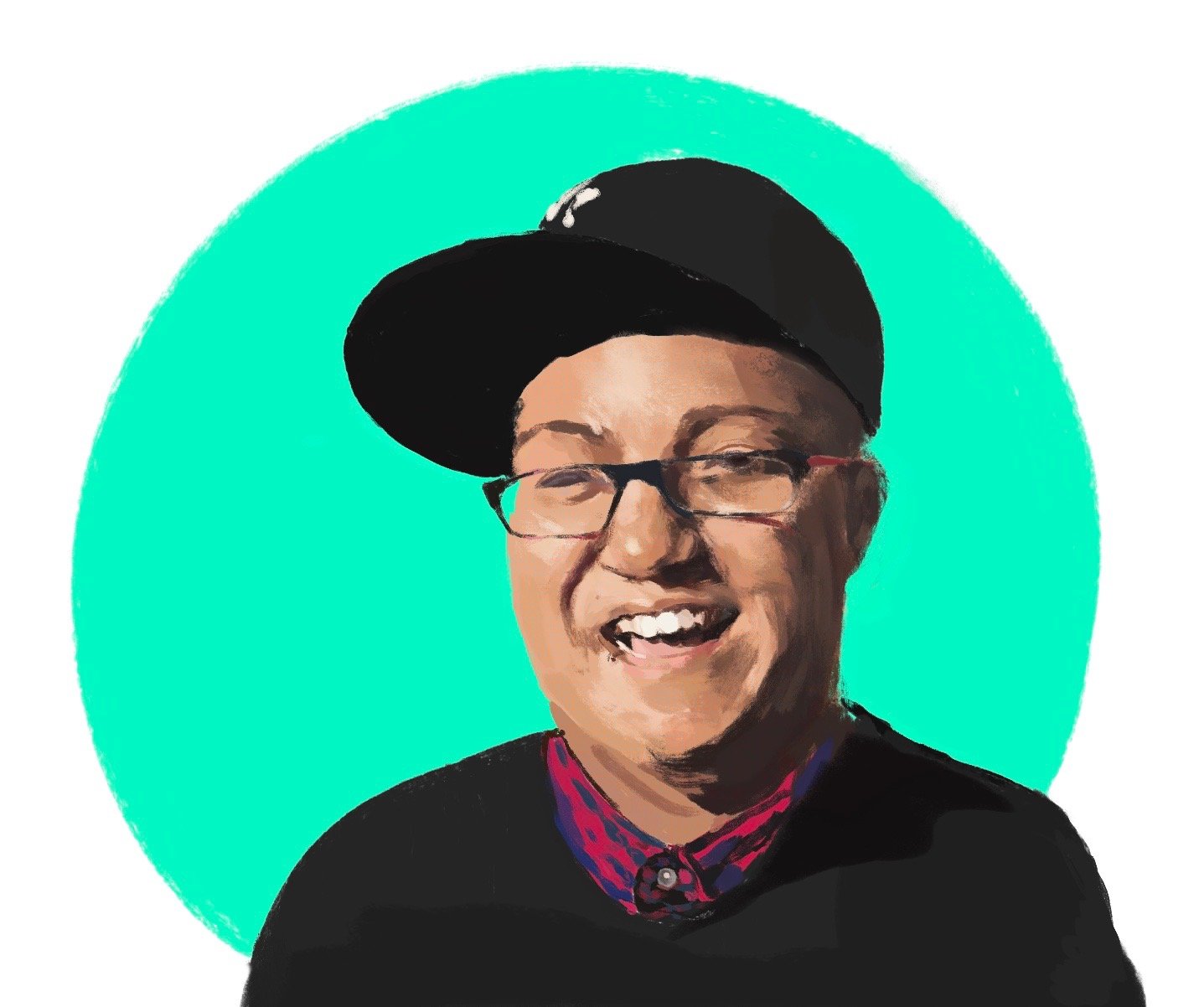
Graphic by Isabelle Peterson ’28
BY ISABELLE PETERSON ’28
HUMAN RESOURCES COORDINATOR
On Oct. 1, Mount Holyoke’s office of Diversity, Equity and Inclusion held its seventh annual “Honoring the Ancestor: Gloria Anzaldúa” lecture series. Named after the self-described “chicana tejana feminist-dyke-patlache poet, fiction writer, and cultural theorist” Gloria Anzaldúa, the event series celebrates the intersection of Latine Heritage Month and LGBTQ+ History Month by highlighting the work of contemporary Latine artists, poets and activist scholars whose work incorporates queer themes.
This year, students and faculty members gathered in Gamble Auditorium to meet with Gabby Rivera, a Bronx-born Puerto Rican novelist, comics writer and host of the “Joy Uprising” podcast. Because Rivera’s work spans across so many different mediums, there are a few different ways that one may have encountered her name before.
You may have spotted her witty debut young adult novel “Juliet Takes a Breath” on the shelves of the Odyssey Bookshop, or in the LITS “Banned Books Week” display. If you discovered N.D. Stevenson’s graphic novel series “Lumberjanes” at a formative age — and have been following the indie publishing company BOOM! Studios ever since — you may already be familiar with “b.b. free,” Rivera’s post-climate-change graphic novel, gorgeously illustrated by Royal Dunlap.
Or, maybe you’re something of a superhero aficionado, in which case you may recognize Rivera as the boundary-pushing writer behind Marvel’s 2017-2018 “America Chavez” series, which stars the eponymous “portal-punching queer Latina powerhouse” as she navigates “pesky” cults from outer space, the interdimensional college experience, and the unexpected reappearance of an old childhood crush.
It’s safe to say that, in the many different realms of creative writing that she can be found in, Rivera is a force to be reckoned with. However, her career as an author wasn’t something that Rivera necessarily planned upon. “Juliet Takes a Breath,” which Rivera describes in her 2018 Ted Talk as being gathered from the “soft threads” of the “wild rambunctious tales” that she would hear while sitting around her grandmother’s dining table, was originally typed up in her mom’s basement and self-published by a small, Bronx-based press.
In “Juliet Takes a Breath,” as with all Rivera’s other works, queer joy, particularly queer Puerto Rican joy, exists as a deeply important element of the story. She defines joy as something that “has tragedy … has violence … has pain … [and] has suffering,” and serves as a form of resistance for communities repeatedly told that they have no right to exist. But joy, for Rivera, isn’t the final piece of the puzzle – especially not now that a Trump 2.0 is looming large in a world where “we’re in a never-ending cycle of absolute rage-inducing, stroke-stoking, AI-backed corruption, like literally the worst game of Monopoly you’ve ever played and no matter what, robots kill us all at the end.”
As absolutely and utterly necessary as joy is in this sort of world, what about rage? How, Rivera wonders, can we learn to harness all the rage we feel, in ways that could potentially make the world a better, kinder, more joyful place? There are many, many places that we can put our rage and our joy: writing is only one of them. Yet, this doesn’t make writing any less essential, as Rivera’s stated, it is important “to write and to be together and to read what others have written about their struggles and triumphs. How they have fought against dictators and fascism and their parents and churches and themselves to find their truths.”
So, if you haven’t already, I hope this piece will inspire you to check out “Juliet Takes a Breath” or “This Bridge Called My Back,” the wonderful feminist anthology edited by Cherríe Moraga and Gloria E. Anzaldúa that started it all. Or, maybe you’ll write something, something that you’ve really been wanting to write for a while. Now, I don’t work for Horoscopes, and can’t claim to have any actual authority over the matter, but if you’re looking for a sign to start writing, well, here it is.
Leah Dutcher ’28 and Whitney White ’28 contributed fact-checking.
