
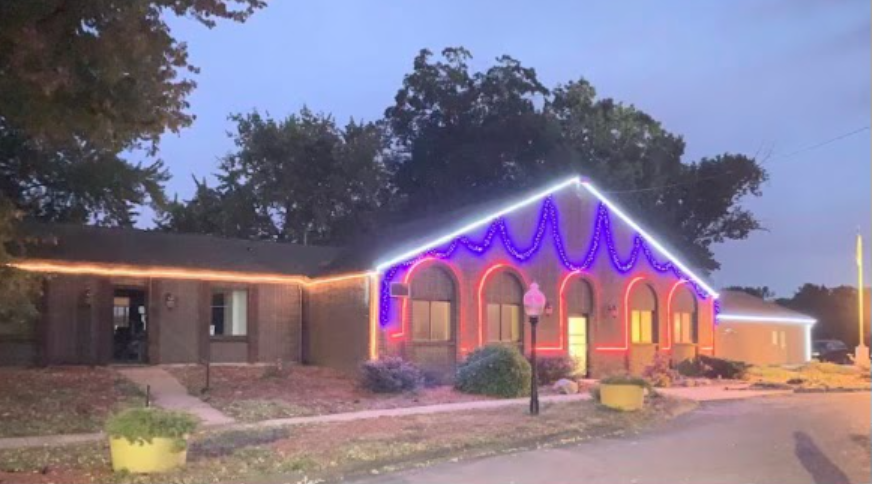
Photo courtesy of Aneet Brar ‘29
On November 5, Aneet Brar travelled to a gurdwara in Connecticut to celebrate Guru Nanak Gurpurab, a Sikh holiday celebrated around the around.
BY ALIA BLOOMGARDEN ‘29
STAFF WRITER
On Nov. 5, around 30 million people celebrated the Sikh holiday Guru Nanak Gurpurab.
Aneet Brar ’29 is a Sikh student at Mount Holyoke College. According to Brar, “Sikhism is an Indic ethno-religion that was founded about 600 years ago in the Punjab region of what is Northwestern India and Eastern Pakistan today. … Actually, Sikhism is kind of like the Anglicized word for the religion. It’s also called Sikhi.”
On Gurpurab, Brar explained that to celebrate she “[goes] to the gurudwara, which is the Sikh temple. Usually, there's a prayer, something akin to a sermon, and then also hymns are sung. We also have a free communal meal called langar. Actually, Guru Nanak Dev Ji, or Baba Nanak, he’s the person who started langar … so we all have a langer together.”
This Gurpurab, Brar went to a gurdwara in Connecticut. “It was really, really nice. In the community, there was really, really accepting, and I felt very happy to go there, especially after not going to Gurdwara in so long,” Brar said.
Moreover, she noticed that whenever she goes to the gurdwara, “People are very quick to help others. If there's someone who's sitting down eating and they need…something else, like…another dish or something, they won't [have to] get up because another person is going to be there to be like, hey, what do you need? I’ll go get it for you.”
She explained that one of the main ideas in Sikhism is “ of one God, or rather this belief in the oneness of God. God is kind of understood as not really like this, this person in the sky who's controlling things or looking over you. It's more of just like this feeling and the oneness of the universe. God can be understood as a benevolent universe.”
This idea is called Ek Onkar.
Brar said, along with Ek Onkar, the most important principles in Sikhi are Seva — service to their community — and “ the idea of being equal under God, that we're all creations of God or we're creations within the universe, and because of that, we're all equal.”
She continued by explaining that there are two smaller, but still important, principles: Kirat, living an honest life, and Vand Chakna, giving to the underprivileged.
Guru Nanak Dev Ji, the Guru celebrated on Gurpurab, is the first of ten Gurus.
“Guru means teachers, so our gurus are some kind of spiritual or religious teacher,” Brar said.
Additionally, the third Guru, Guru Amar Das, created the concept of pangat sangat, which means everybody, regardless of rank, caste, or anything else sits together and eats together as equals, according to Learn Religions, a website dedicated to providing education about different religions and spiritualities.
“Sometimes people also light fireworks, or they'll also light divas,” which are clay oil lamps that are often also lit on Diwali, Brar added.
When asked if Brar’s view of Sikhi changed from growing up to now at college, she said, “When I was a bit younger, I was quite areligious … but I realized that religion or faith or spirituality, whatever it is … It's just something about my identity.”
She reflected further on her Sikh identity, explaining, “I actually wrote my college essay about Sikhism, and after I wrote that essay, I became, I would say, a lot more appreciative of my identity and my family and my ancestors.”
In the Punjab region, there is a lot of religious syncretism, which Brar describes as meaning “we have a lot of different beliefs that are present in Punjab, such as Islam, Sikhism, Hinduism, Christianity. Because of this, a lot of people partake in other religions and other festivals and other holidays, and they follow specific principles or gods or whatever it may be in other religions.”
At Mount Holyoke, Brar says while there are some people who “follow or celebrate certain Sikh holidays” to her knowledge, “it's not like they come from a Sikh family.” According to Brar, “generally being the only person that's from a Sikh family, it's been a little bit isolating at times.”
She grew up with a small South Asian community in Indiana, and they were usually Sikhs.
Here it’s the reverse. “There's a lot of South Asians here, and there's a strong, very vibrant community here, but nobody here is Sikh. So because of that, sometimes I do feel a little bit alone. But I will say that the South Asian community here is still very, very accepting and very, very inclusive, which I really appreciate,” Brar said.
Sophie Francis ’28 contributed fact-checking.