
Graphic by Betty Smart ’26
BY ISABEL DUNN ’27 AND SARAH GRINNELL ’26
BOOK EDITORS
With English consistently ranking among the top five majors on campus, Mount Holyoke College has long had a thriving literary community, and students who apply here are quick to find themselves part of an illustrious legacy of creative writers. As we celebrate Women’s History Month this March, it seems fitting to highlight just some of the great literary names to have passed through the gates, as well as offer some book recommendations to get you in the spirit!
The Mount Holyoke alum lineup boasts no shortage of poets, novelists, playwrights and screenwriters. Perhaps the most famous is Amherst native Emily Dickinson, who attended the College when it was still known as Mount Holyoke Female Seminary. Dickinson actually attended for just one academic year from 1847-48, with historians speculating reasons ranging from homesickness, to a fraught relationship with the College’s strict religious schooling.
As for more recent alums, Suzan-Lori Parks ’85 made history in 2002 as the first African American woman to win the Pulitzer Prize in Drama for her acclaimed play “Topdog/Underdog”, which won the Tony Award for Best Revival of A Play in 2023.
And, while the name “Glascock” is surely familiar to students, due to the iconic annual competition, the legacy of the contest’s namesake is less known. Katherine Irene Glascock ’22 died shortly after graduating from Mount Holyoke, but she left an immense impact as a former editor-in-chief of the Mount Holyoke News and a winner of the 1922 Alumnae Poetry Prize. Her creativity lives on during the annual Glascock Intercollegiate Poetry Competition, the oldest continuously-running undergraduate poetry contest in the nation.
Right now, many Mount Holyoke students are cheering on director and screenwriter Chloe Zhao ’05 in the Oscars race, with her most recent film venture, “Hamnet” — co-written with “Hamnet” author Maggie O'Farrell — scoring eight Academy Award nominations and already having secured other major awards like the Golden Globe for Best Motion Picture - Drama. Zhao previously swept the 93rd Academy Awards in 2021 for “Nomadland,” which scored her a historic win as the first female director to win in the best director category.
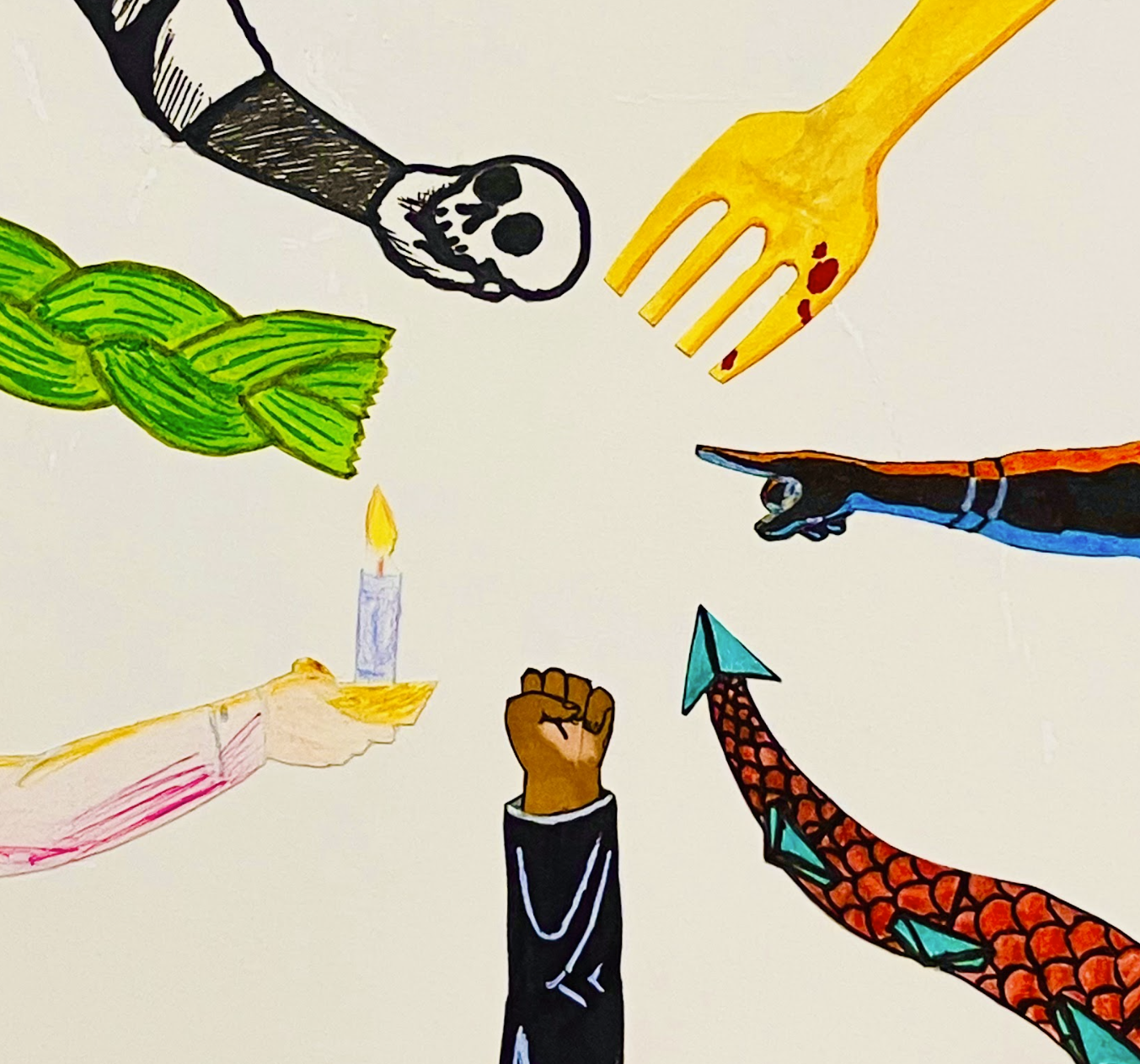
These alums of course can only capture a small fraction of women/femme writers’ achievements, at Mount Holyoke and beyond. If you are looking for more ways to celebrate the creativity and experiences of femme authors this Women’s History Month, be sure to indulge in some of the following MHN-curated recommendations!
“A Wizard of Earthsea” by Ursula K. Le Guin
Writing at a time when fantasy was still a largely male-dominated genre, Le Guin has become one of its most iconic women writers. Her Earthsea Cycle easily rivals the work of high fantasy giants like Tolkien in its richness and intricacy, making it a must-read series. With beautiful prose, complex themes and of course no shortage of dragons, “A Wizard of Earthsea” is the perfect gateway book for anyone new to the fantasy genre.
“The Haunting of Hill House” by Shirley Jackson
This 1959 gothic novel secured Jackson’s legacy as one of the biggest names in horror. Though the horror scene has historically been dominated by men — the likes of Poe, Lovecraft and, more contemporarily, Stephen King — Jackson’s introspective and psychological approach makes her stand out as one of its most complex authors. “Hill House” may be her most famous work, but “We Have Always Lived in the Castle” and her short story collections are also excellent picks for anyone who enjoys multi-faceted and delightfully deranged heroines.
“Assata: An Autobiography” by Assata Shakur
Alongside the work of Audre Lorde and Angela Carter, this is basically the Bible of Black feminist literature, in this writer’s humble opinion. Given Shakur’s death only last September, there is no better way to remember the incredible legacy of this revolutionary than by reading her autobiography. Detailing her experiences with the Black Panther Party and the Black Liberation Army, as well as her conviction and consequential torture for first-degree murder — culminating in a 33 year prison sentence, and her ultimate escape to Cuba — Shakur’s remarkable life story offers a searing indictment of the U.S. prison system, police brutality and the intersecting machines of capitalism, racism and imperialism.
“Braiding Sweetgrass” by Robin Wall Kimmerer
If you are a Red Pegasus, you might remember “Braiding Sweetgrass” as the 2022-23 Common Read. Potawatomi writer Robin Wall Kimmerer’s unique blend of scientific writing and lyrical prose is arresting to read, and over the course of individual but interrelated essays, she explores everything from Indigenous folklore, to botany, to the connection between capitalism and ecological destruction. If you are looking for a book with an environmental focus that does not completely fill you with existential dread, this is certainly the one to read. Kimmerer offers a stunning model of reciprocity, kinship and community care, highlighting the importance of Indigenous knowledge in the fight against climate change.
“Every Dark Cloud” by Marisca Pichette ’19
In this new novella by Mount Holyoke alum Marisca Pichette ’19, a young girl must fight to survive in a horrific world ravaged by climate change. With various dystopian elements, this book is perfect for fans of Octavia Butler’s “Parable of the Sower.” Although the story depicts something we all fear the future coming to, readers will find that it ends with a sense of hope.
“Girl Dinner” by Olivie Blake
Olivie Blake’s latest novel centers internet trends, sorority culture, motherhood and cannibalism. It seems to be a lot to cover, but Blake seamlessly connects every thread. In one perspective, a young mother struggles to stay relevant in her academic field while also struggling to connect with her husband and new baby. In another, a college sophomore joins a sorority rush and finds herself pulled into a much darker world than she could have imagined. Blake brings a fresh perspective to online discussions of “trad wife” culture and what it really means to be a successful woman.
“Hamnet” by Maggie O’Farrell
Regardless of whether you have seen the new movie or not, Maggie O’Farrell’s “Hamnet” is worth the read. The novel follows the family of William Shakespeare without ever mentioning him by name. This de-centering of the historic figure allows for readers to focus instead on the complex dynamics between those he left behind. Much like the film, the novel is powerful and emotional and depicts grief in a raw and unflinching manner. Be sure to read the latter half with a box of tissues nearby.
Abigail McKeon ’26 contributed fact checking.