
By Mia Lewis ’29
Features Section Writer
On Tuesday, April 14, six members of the Mount Holyoke College community gathered together to discuss activism surrounding anti-Asian racism and xenophobia on campus. Angela Kim ’28 and Ivy Zhou ’27 were joined by Professor Joshua Roth, as well as three alums, Addison Beaux ’99, Miki Yamada ’00 and Peggy Chen ’25 to share their experiences with campus engagement and student advocacy. The conversation, hosted by the Office of Diversity, Equity and Inclusion, highlighted both the progress made and the ongoing challenges in fostering a truly inclusive environment.
All panelists emphasized the need for authentic allyship when asked what could be done to improve campus culture. This call to action underscored a recurring theme that performative well-intentioned gestures must evolve into sustained, meaningful engagement to create real change.
“An Instagram repost is not enough, make sure to extend the conversations to the classrooms, the dinner table, even the walk to a party, the harm isn’t just online therefore the allyship cannot stay there either,” Kim said. As a board member for multiple affinity groups on Mount Holyoke’s campus, including Asian American Students In Action, the 5-College Pan Asian Network and the Korean Students Association. Kim recognizes the importance of diversity in community-building. Her involvement reflects a broader trend among students who are redefining advocacy as both a personal and collective effort.
For Kim, this allyship in advocacy creates value in the work being done by fostering a sense of belonging, “Despite the exhaustion that goes into organizing, surrounding yourself with those doing the same lightens the load and creates value in the labor,” Kim said.
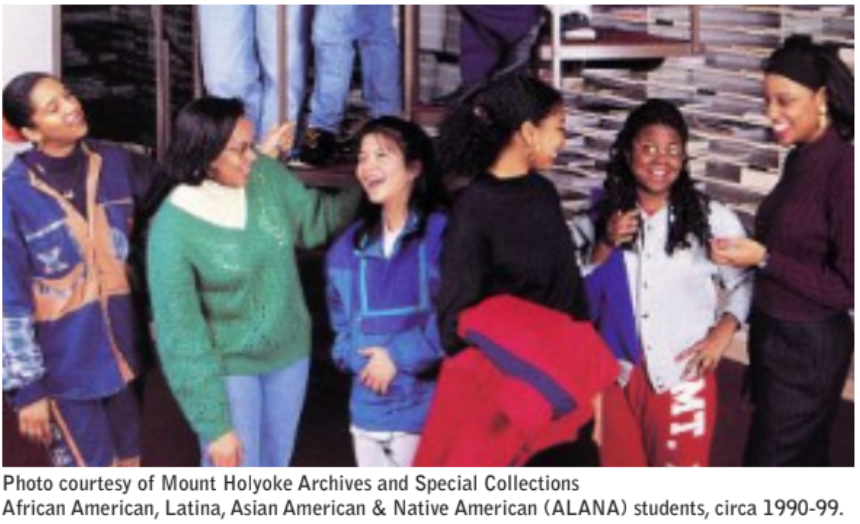
Current students were able to speak with faculty, administration, and alums about the history of the shared advocacy against anti-Asian racism and xenophobia at Mount Holyoke College. Over time, the College has created more opportunities for inclusion, including the creation of cultural centers, “[Cultural centers] are not just symbols of progress; they are also reminders of the exclusion that made them necessary in the first place,” Zhou said.
This reflection was an important recognition of the community that the college has fostered. “Friends should not be afraid of talking with each other about difficult issues. But it should be done respectfully, acknowledging the real pain that others may be feeling, perhaps delaying the difficult conversation until a period of mourning has passed. To fail to do so is to fail to recognize our shared humanity,” Roth said.
“If we only care when an issue is our own, we create a culture where everyone does the same,” Zhou said. That is why it is particularly important to form allyship when there is a level of privilege, because the advocate is not personally in the minority group.
Zhou’s perspective highlighted the role of privilege in advocacy, challenging the community to move beyond passive support. “Even in painful moments, there is still so much possibility for care, solidarity, and love. I know what it feels like to be hurt by discrimination, and I also know what it feels like to be held by the community. Because I have felt both, I want to do what I can so that fewer people have to experience the first, and more people get to experience the second,” Zhou said.
Angelina Godinez ’28 contributed to fact checking