
Madeleine Diesl

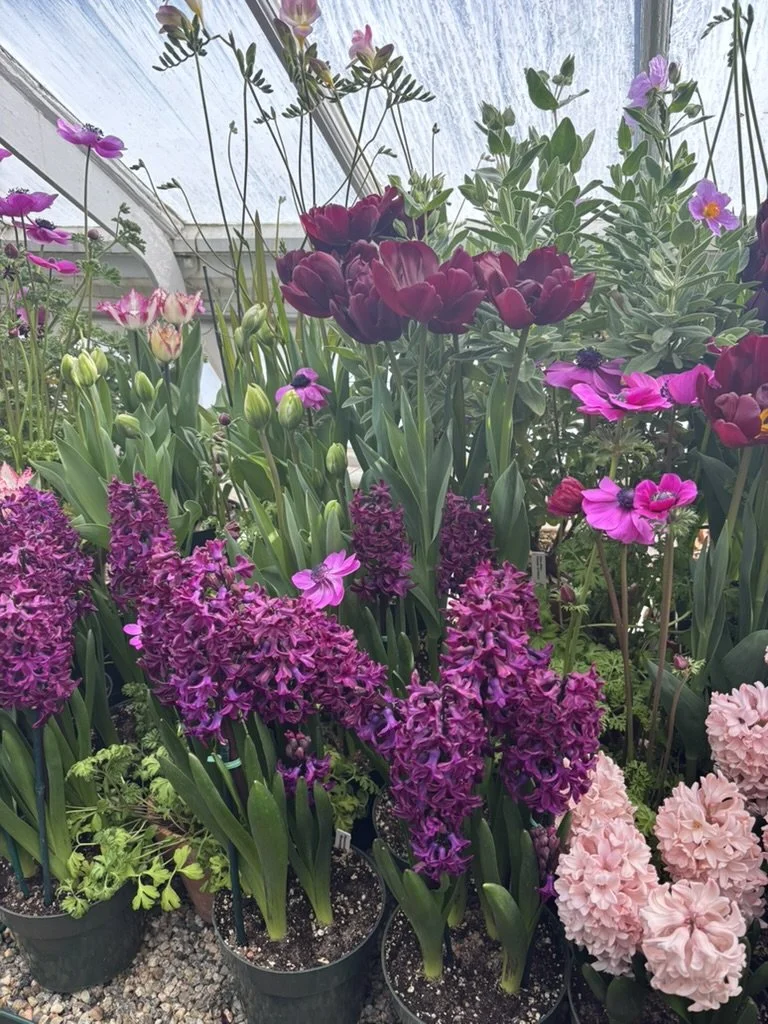
Spring at MHC starts off spring with the 54th annual Spring Flower Show

Photo by Madeleine Diesel ’28

BY MADELEINE DIESL ’28

COPY CHIEF

After an especially long, cold and wet winter, spring has officially sprung at Mount Holyoke College. The snow has melted, the birds are singing and the Mount Holyoke Botanic Garden is holding its 54th annual Spring Flower Show in the Talcott Greenhouse. This year, the show ran from March 7 to 22, open 10 a.m.-4 p.m. daily.

Three types of flowers in particular stole the show: Tulips, daffodils and hyacinths. 

Tulips, a perennial staple, are plants of the genus Tulipa, which encompasses more than seventy-five different species. Even within these species, tulips boast a large diversity of color and form. There were dozens of varieties of tulips at the Flower Show, from velvety purple blooms to spiky orange flowers with petals that looked like fire. 

Daffodils, with their cheery yellow hue, are well known in Massachusetts for being some of the first flowers to bloom in the early spring. The common name for the Narcissus genus, daffodils contain even more species than tulips do. Morphologically, daffodils are unique because of their large corona — the crown-shaped, trumpetlike center of the flower — and hooked stem. Alongside the typical yellow flowers, the Botanic Garden displayed bright white daffodils with contrasting orange coronae. 

Hyacinths are known for their clustered flowers and strong fragrance; if you noticed a floral scent while walking past the greenhouse, that was likely the hyacinths at work. Unlike the previously mentioned flowers, there are only a few species in the Hyacinthus genus, yet there are still a large variety of colors. Most of the hyacinths at the Botanic Garden were a deep purple hue, but there were also pink, white and blue ones. 

The science behind flowers is just as fascinating as their appearance. Flowers serve as the reproductive organs of angiosperms, or flowering plants. In the wild, their large diversity of size, shape and color is partially a result of their coevolution with specific pollinators. For example, a flat, yellow flower might attract a bumblebee, while a long, red flower would be more suited to pollination by a hummingbird. The giant blooms that can be found at the Flower Show and in most American gardens are mostly due to selective breeding by farmers to create the best smelling, biggest, most appealing flowers possible; there is no selective pressure to appeal to a certain pollinator when a human is willing to do all of the work.

In addition to the hundreds of blooms on display, the Botanic Garden was also selling potted bulbs of the Narcissus, Muscari and Scilla genera for $5 each. Though the show is over now, members of the Mount Holyoke community can still stop by the greenhouse any day from 10 a.m. to 4 p.m. to see their vast collection of plants.

Maeve McCorry ’28 contributed fact checking.
The life and legacy of the College’s beloved goose, Jorge

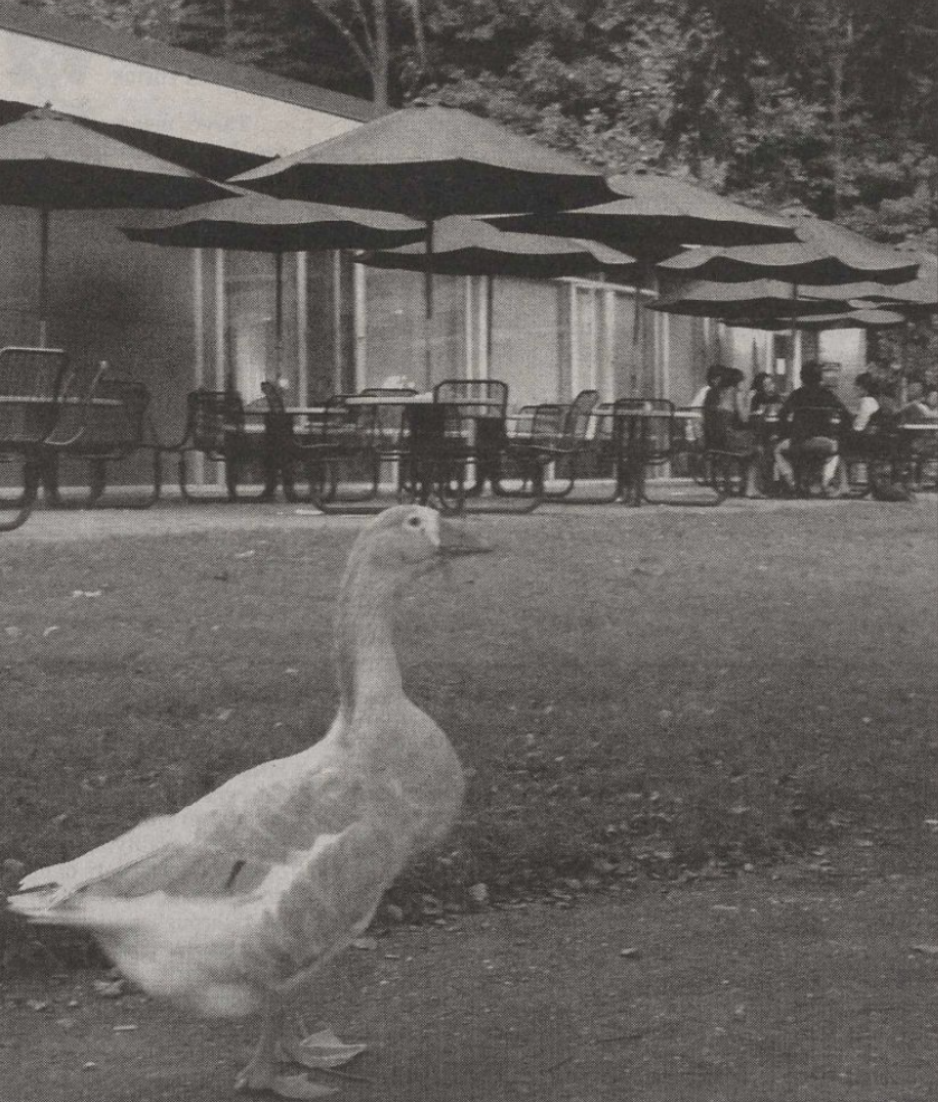
Photo by Caitlin Healey ’09

This is the first known photograph of Jorge the goose to have been printed in Mount Holyoke News.

By Madeleine Diesl ’28

Science & Environment Editor

On Dec. 9, 2024, tragedy struck Mount Holyoke College: Jorge, the campus goose, flew into a Blanchard Hall window and died. Jorge was a feral Pilgrim goose who frequented Lower Lake, but his legacy was much more than that: He was the unofficial mascot of LITS and a large part of the student culture at Mount Holyoke for several decades. Now, a year after this dreadful event, we can remember Jorge by his many appearances in the College’s digital archives, particularly in past Mount Holyoke News articles.

In the Nov. 11, 2004 issue of MHN, Rachael Robins ’07 claimed that they liked to “feed the goose granola from [their] own mouth,” perhaps referring to Jorge. A year later, in the Sept. 29, 2005 issue, Katie Adler ’08 wrote an article detailing a day in the life of the “Mangled Goose,” which is described as having a “strong and thick orange beak” and “[lurking] along the shoreline near Prospect [Hall], stalking its next victim.” Though he remains unnamed, it can only be assumed that Adler is describing Jorge. 

One of the first references to Jorge by his name, “Jorge,” appears to be in the 2007 April Fool's issue, in a joke article by “Anonymous Samanta ’10” about him relocating from Lower Lake to Wilder Hall. However, the writer also refers to him as “Hubert,” a name that never shows up elsewhere in the digital archives. In fact, over the course of the past 20 years, Jorge has been called “Hubert,” the “Mangled Goose,” the “Prospect Goose,” the “Lower Lake Goose,” and even the “Big White Ugly” in a photo caption in the Sept. 18, 2008 issue. This photo, which depicts Jorge walking next to an outdoor dining area, is actually the earliest known photograph of Jorge in an MHN article. 

Current students have a lot to say about Jorge, as well. When asked about his death, Yan Hernandez ’28 said, “Jorge has left an intersex grey pilgrim goose shaped hole in my heart. I miss seeing him lord over Lower Lake and eating bugs in the grass. He was truly the best of us. #Latinopride.” 

Amy Gingras ’28 referenced the fictional character Eggman from one of SnapCube’s Sonic the Hedgehog fan dubs on YouTube:  “I miss my goose. I miss him a lot. I’ll be back.” 

Missing Jorge’s presence has been a common theme amongst students, as Nicole Lasko ’28 commented: “He was well loved and he is universally missed … there's never going to be another like him.”

If you’re interested in learning more about Jorge and Mount Holyoke News’s history in general, pay a visit to the Five College digital archives website or Mount Holyoke’s Archives and Special Collections and search for the Mount Holyoke College student newspaper collection – the yearly April 1st articles are particularly entertaining!

Quill Nishi-Leonard ’27 contributed fact-checking.