
Graphic by Betty Smart ’26
BY BETTY SMART ’26
GRAPHICS EDITOR
What’s in a name these days? Increasingly, it depends on who you ask. With our country again at war — after months of domestic unrest over immigration, arguments about trans rights and a further economic tailspin — we are long overdue for a hard reset on understanding, particularly around slogans.
All over campus, social media, even clothes and bags, are statements like “ICE Out,” “Free Palestine,” “Black Lives Matter” and “Protect Trans Kids,” just to name a few. While I understand perfectly what these slogans represent, I’ve begun to question what’s really at the core of conservative backlash to the causes, and if the burden might be on us to clear the air.
Before I start, I want to make it perfectly clear that I am not trying to say liberal causes need to be more “palatable” to conservatives, nor am I naively pleading, “Can’t we all just get along?” I draw a hard line at compromising with people who have nothing but pure hatred at the core of their beliefs; these people are not the ones I am asking you to try to understand. The people I’m talking about are the conservatives, center-right or moderate and undecided people who could be open to discussing and changing their views on certain topics, but haven’t had exposure to them beyond right-wing urban legends.
So many words and concepts have developed radically different meanings depending on who’s using them. It’s insane to see how liberal causes are twisted in headlines on conservative outlets like Fox News, Breitbart, Town Hall or Red State. To borrow a concept from a Monty Python sketch, it’s like someone has replaced all the polite sayings in our translation books with dirty jokes.
Slogans are a convenient way to sum up a cause, and their intended meaning is crystal clear to others who believe in that cause. Some people on the right know full well what these liberal slogans mean, and oppose them for exactly that reason. Other people, however, have been sorely misinformed by these distortions, which are deliberately amplified by public figures, and locked in by primal fears or resentments.
“Protect Trans Kids” has become “Give Five-Year-Olds Surgeries and Hormones”
“Abolish ICE” has become “Let Criminals In.”
“Free Palestine” has become “Hamas Rules.”
“Anti-Israel” has become “Kill All Jewish People.”
“Pro-Choice” has become “Abortion Always.”
“Gay Rights” has become “No Straight Couples.”
“DEI” has become “Unqualified Minorities over Anyone Qualified.”
“Black Lives Matter” has become “White Lives Don’t Matter.”
“ACAB” has become “Death to Law and Order.”
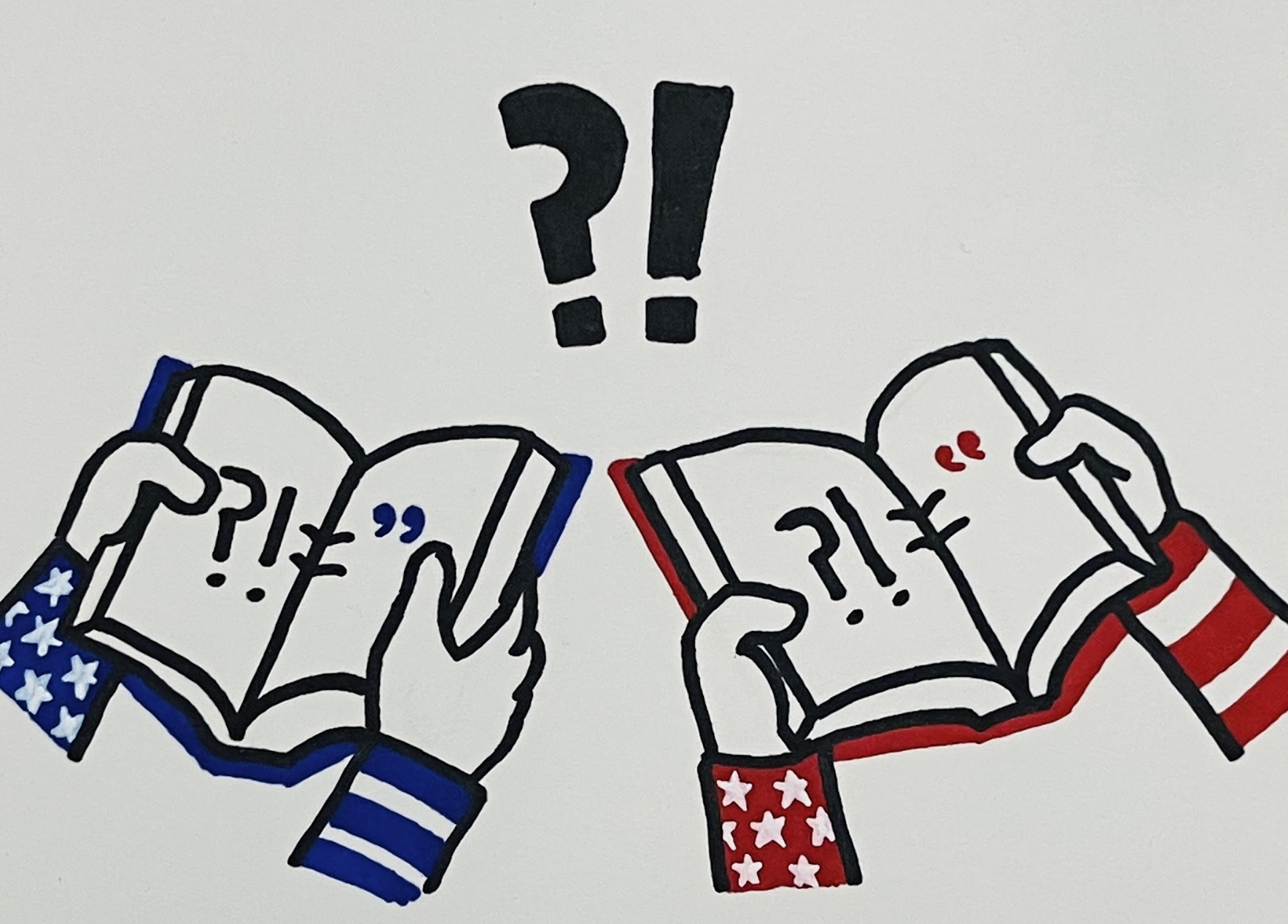
It makes me wonder if we’re even speaking the same language. In an age of incredibly harsh division, while certain causes are non-negotiable, sometimes boiling them down to slogans like these leaves them open to misinterpretation by people who might actually want to join them. America is not going to get any better if we don’t make more of an effort to make ourselves understandable to those on the other side of the divide.
In this case, reaching across the aisle would NOT mean compromising your principles, especially around issues concerning human rights. What it should mean is being more proactive at explaining what these causes actually stand for and against, as well as why we believe in them.
The other thing we need to do, if we want to get the other side to understand us, is to keep an open mind as to what is actually behind a person’s resistance to these causes. For some people, it may be a matter of clearing away the poisonous fog of misinformation, a big example of this is around issues concerning trans rights and queer children.
I would also argue that some non-malicious opposition may not even stem from ignorance, but a genuine concern in the practice or ideology behind a slogan. A person who cringes to see police officers generalized under “ACAB” may also believe that police brutality is a real problem and the police force needs to be reformed.
In a more global example, the double meanings that have become attached to numerous slogans related to the Israel-Palestine conflict has made dialogue incredibly difficult to have. People who attach different meanings to “Zionism” or “from the river to the sea, Palestine will be free” might actually find they share the same goal of a peaceful end to the conflict, with neither holding antisemitic or Islamophobic intentions.
So what can be done about this? I urge readers to think about the conservatives in their lives; maybe they’ve voted red but are unhappy, maybe they say they don’t like to get involved, or maybe they’re set in their ways because they’re afraid to change tents after so long and haven’t heard good things about the other one. Of course, the folks we’d be reaching out to would have to meet us halfway, and be willing to explain their own beliefs in the first place, beyond a like or dislike of a slogan or title.
A lot is at risk in America right now, and I reiterate that we should not compromise with any hateful ideology. But at the end of the day, we can’t afford to keep writing so many people off as the enemy just because of a hesitance surrounding certain causes. Hesitance is not the same as hatred. If you know someone who doesn’t support a slogan you agree with, or vice versa, don’t jump straight to condemning them. Ask them why. Learn what information spurred their choices, and see if you can’t set the record straight. You might be surprised what a little clarity brings.
I’m not saying this would be easy. Political causes are very emotional for a lot of people regardless of affiliation, and the sad truth is plenty of people aren’t going to listen. But I believe there are plenty more people out there who will listen, if they were to actually see the cause behind a three-word slogan. We are the United States, and it’s about high time we started acting like it.
Whitney White ’28 contributed fact checking.
