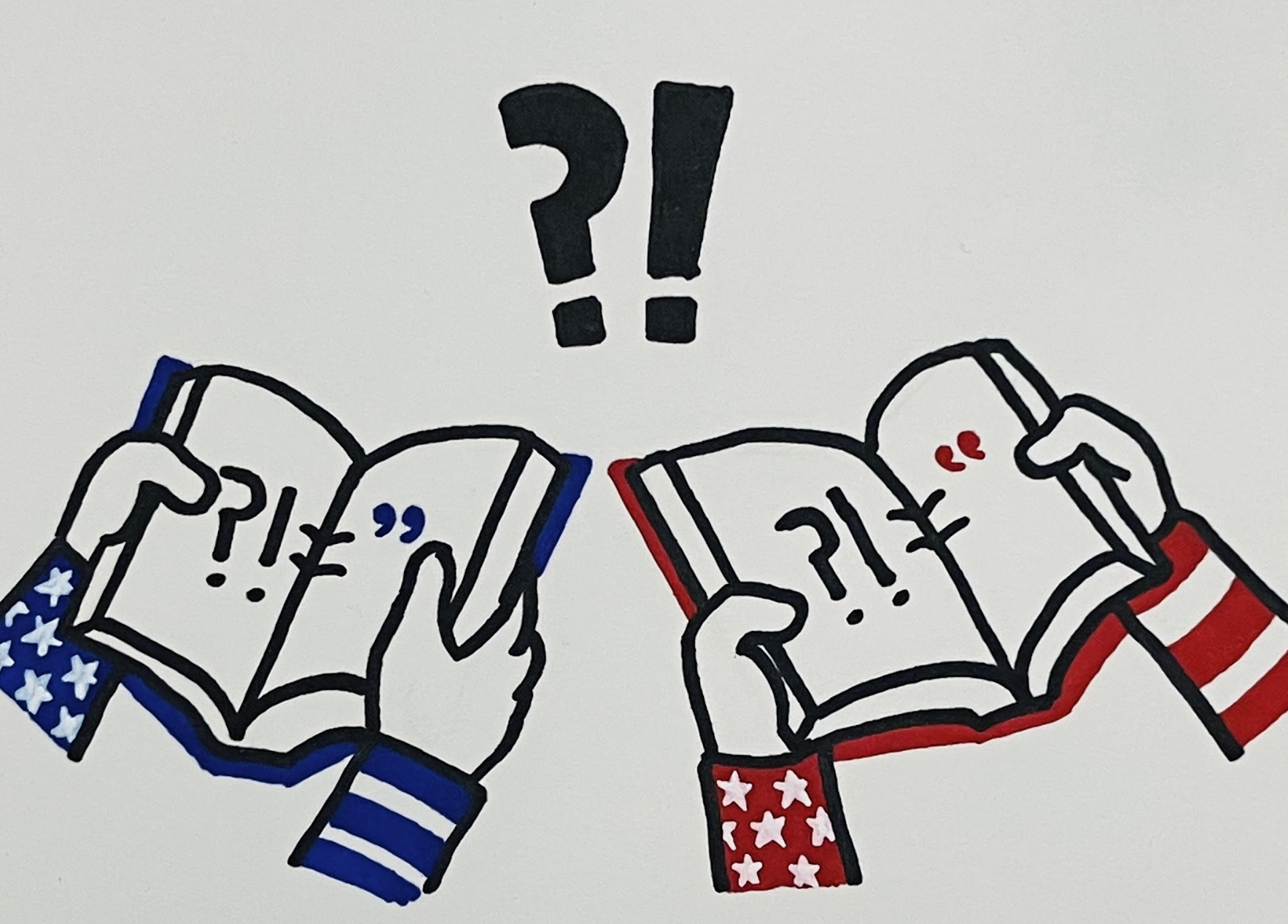
Graphic by Quill Nishi-Leonard ’27 via Canvas
BY SACHIKO ARAI ’29
STAFF WRITER
Don’t leave your food, it’s mottainai.
As an international student from Japan, I grew up constantly hearing the word “mottainai” repeated to me at home, at school and in workplaces.
While it is impossible to properly translate the profound meaning this word
carries, it ultimately expresses the regret of wasting something: Feelings, time and, of course, resources such as food.
From a young age, my parents would admonish me if I left even a little rice on my plate. Therefore, I experience culture shock daily in the Dining Commons. Every time I see plates with heaps of food, perfectly untouched, being shoved onto the dishrack, I feel both shock and disappointment.
The food waste in Blanch is problematic for multiple reasons. Of course, the most obvious harm it causes is the severe environmental waste. However, it also insinuates that many students do not acknowledge and respect the endeavor that the dining hall workers and other community members pour into creating their dishes every day. As a student who works at the dining hall and sees the dedication the workers put into each dish, the latter is an equally important issue.
Luckily, this issue has not gone unnoticed. Many members of the Mount Holyoke community have been continuously standing at the frontlines of solving the food waste issue. One of those people is Shawn Kelsey. Kelsey is the associate director of culinary operations at Mount Holyoke, in charge of overseeing all the operations in the dining area.
“Food waste on campus is a major problem,” Kelsey stated, when I had the opportunity to interview him.
According to Kelsey, there are two types of food waste: Pre-consumer food waste and post-consumer food waste. Pre-consumer food waste refers to waste such as kitchen scraps, which are often unavoidable parts of the cooking process. The problem, he notes, is that the majority of food waste falls into the latter category, post-consumer food waste. Food waste that people throw away, despite the fact that their trash is “edible, usable, and completely fine food.”
“Some people are just unaware of what it adds up to, what it means and that our daily choices make an enormous impact,” Kelsey said, “It’s pretty astounding when you realize that you can feed over three hundred people a day with the food that we’re wasting.” He pointed out how post-consumer food waste does not simply imply a waste of the food itself, but also the waste of the energy and natural resources that were used to create it.
However, Kelsey also mentioned that the food waste issue has been gradually improving. He credits this accomplishment largely to an educational program that was initiated in 2024, in collaboration with Mount Holyoke students in the Food Recovery Network. The program is a food waste module that informs students about the food waste issue on campus, covering every necessary aspect regarding the issue. This module is presented mandatorily during all first-year seminars.
“The numbers [that indicate improvement] are there,” Kelsey said. He shared his hope that by continuing the project, awareness of food waste would continue to spread, “moving the needle in the culture here on campus of understanding and awareness of what our food waste issue is.”
Kelsey’s visions are indeed coming true. While the program has been in use for only two years, it has transformed the way students view and consume food at Blanch. One of those students is Vitalina Nam ’29, who took the food waste module during her first-year seminar. Even before taking the module, she was aware of the major consequences food waste had. Yet, she confessed that despite holding such knowledge, she and many other first-year students tended to waste food. “I’m not proud of it, but still I think it happened to a lot of first-year students,” Nam stated, mentioning how many Mount Holyoke students, especially first years, tended to throw food away after first arriving on campus while discovering their favorite dishes.
After taking the food waste module, Nam’s attitudes changed. Not only did it deepen her understanding of food waste, but learning about it from a person who actually works at the dining hall made her feel more responsible for the issue.
“After meeting a person who sees food waste, who sees my food waste every day, I felt even more responsible than before,” Nam mentioned. Now, she always makes sure to circle around all the food stations before selecting her dish, putting time and thought into the food she chooses to eat.
As more students are deciding to participate in the reduction of food waste, more innovative ways to approach the issue have emerged as well. One of those people who is part of this movement is Violet Tedesco ’28, the social media coordinator of the Food Recovery Network. Tedesco, who has always been passionate about food justice and access, decided to join FRN in her very first year at Mount Holyoke. She described how members of FRN are always brimming with countless innovative ways to tackle the issue. They are planning to implement accessible composting on campus, create a campus food bank, and start a system to donate leftover food from Grab ’n Go areas, which she asks us to “stay tuned” for. She spoke on behalf of all the FRN members, saying that through such activities, they hope to encourage others to strive “for progress rather than perfection” when facing this issue.
In the end, both Violet and Kelsey mentioned that while solving food waste appears to be an insurmountable goal, it’s really the small steps that matter. In other words, it’s crucial for each and every one of us to hold the mottainai mindset when eating at Blanch every day.
“We just ask that people are mindful when they’re putting food on their plates,” Kelsey stated. “I know there’s a lot of really delicious food, and maybe you want to try many things,” he added with a little laugh. “Remember that those menu items come up again. So choose what you know you’re going to eat, and then you have an opportunity to try that other food the next time it comes up on the menu.”
Whitney White ’28 contributed fact checking.