Bookworms, keep calm: Dystopian YA has returned

Bookworms, keep calm: Dystopian YA has returned

Maybe you spent countless hours scouring YouTube for the most recent compilation video of Jennifer Lawrence and Josh Hutcherson, either in press interviews or sorrowful “Hunger Games” edits set against the song “Just A Game” by Birdy. Or, if you felt a need to categorize yourself with a fictional group as the basis of your prepubescent personality, perhaps you took the same “Divergent” faction quiz multiple times until “Dauntless” shined through your laptop screen, hidden under the covers on a school night.

“Before and after” weight loss content is problematic

“Before and after” weight loss content is problematic

Saying that TikTok promotes an unhealthy standard for young women and their body image is about as uncontroversial a take as you can get. Between videos touting buccal fat removal surgery and recommending Botox™ injections for teenagers, the platform is rife with content that could leave even the most conventionally attractive person in shambles after just a cursory scroll of their For You page. However, a special kind of damage is dealt by a prolific genre of “glow-up” videos: ones that show people, nearly always women, in a “before” and “after” side-by-side of their weight loss journeys.

The Hollywood labor strikes are over, but what has changed?

The Hollywood labor strikes are over, but what has changed?

The Screen Actors Guild-American Federation of Television and Radio Artists strike recently came to an end after 118 days, with actors celebrating the prospect of returning to work. The union came to a historic deal with the Alliance of Motion Picture and Television Producers, with the largest increase in minimum wage in 40 years, according to The Washington Post. However, because the deal is so new, it remains to be seen if it will be honored and if actual change will occur in the industry.

Instagram’s algorithm undermines smaller creators

Instagram’s algorithm undermines smaller creators

For a platform that markets itself on building connections and sparking inspiration, Instagram isolates and exhausts its smallest and most vulnerable creators. 

By destroying the visibility needed to survive on the platform by demanding that users follow trends just to be seen, the platform crushes creators’ efforts to reach new audiences and share their work. Instagram’s algorithm also rewards content theft in the form of video reuploads.

Why we need to read archaic literature: the value of studying original texts

Why we need to read archaic literature: the value of studying original texts

Opening a play — or any literary work — that was written hundreds of years ago can be a tremendously daunting task. The English language is incredibly dynamic and has evolved so much over the centuries that old texts might seem indecipherable through a modern lens. However, by reading these texts in their original forms, we can better appreciate the artistry of their creators and gain insight into the past.

What is an athlete but a tool of the state?: The Russian ban must stay

What is an athlete but a tool of the state?: The Russian ban must stay

A few months back, Italian figure skater Daniel Grassl announced his aim to change coaches. He was to leave Italy and train in Russia under arguably one of — if not the — most infamous coaches in that country: Eteri Tutberidze.

Amplifying trans histories is essential and liberating

Amplifying trans histories is essential and liberating

Efforts to amplify trans histories are essential for the self-affirmation and empowerment of trans people. They are also vital for opposing the conservative rhetoric that being trans is a novel trend that owes its existence to contemporary media.

How the WGA resolution will weather the streaming economy

How the WGA resolution will weather the streaming economy

In a critical new development, the Writer’s Guild Association reached a tentative agreement with the Alliance of Motion Picture and Television Producers, putting an end to the 148-day strike. While this is good news, the fight is far from over. The Screen Actors Guild’s labor union is still on strike, and writers have yet to see whether or not AMPTP will honor this new agreement.

What the Vassar lawsuit reveals about wage discrimination in academia

What the Vassar lawsuit reveals about wage discrimination in academia

Five current and former female professors at Vassar College, another member of the Seven Sisters, have filed a wage discrimination complaint against the college. The class action complaint, which was filed on Aug. 30, 2023 alleges that Vassar has been paying them less than their male counterparts for decades.

Mount Holyoke needs to do better by its students of color

Mount Holyoke needs to do better by its students of color

Mount Holyoke is a predominantly white institution, and it is undeniable that white people make up a majority of the student population, as well as the administration. While one could argue that none of this treatment was intentional or race-related, intention does not matter as much as the impact on students of color.

Mount Holyoke fails its principle of intellectual diversity

Mount Holyoke fails its principle of intellectual diversity

If Mount Holyoke is a flavourful dish, then we the people on this campus would be its rich ingredients. Our diversity is what makes Mount Holyoke unique. Unfortunately, I have found that this richness is not welcome in all spaces, specifically our intellectual spaces.

Defunding humanities departments is hazardous for democracy

Defunding humanities departments is hazardous for democracy

On March 30, Mount Holyoke announced it had placed the Russian & Eurasian Studies and German Studies departments on a “sunset” timeline. This announcement has sparked backlash among the student body, with some arguing the importance of foreign linguistic, cultural and historical study for broadening personal perspectives. These departments provide not only linguistic capabilities that increase travel and employment opportunities for graduates, but also critical analyses of historical events and structures that inform current political and social climates.

The Nita Mukesh Ambani Cultural Center's opening ceremony in India reveals the country's continued need for Western validation

The Nita Mukesh Ambani Cultural Center's opening ceremony in India reveals the country's continued need for Western validation

The opening ceremony, through both its obsession with its new Western guests and its mimicry of Hollywood galas, reflects how Western validation still forms an integral part of South Asia’s identity formation and reach for global recognition. In this preoccupation with catering to global, or more specifically Western validation, indigenous art suffers the harm of reductive promotion that does no justice to the “rich cultural history” that Ambani boasts of promoting.

The lighting at Mount Holyoke is due for an update

The lighting at Mount Holyoke is due for an update

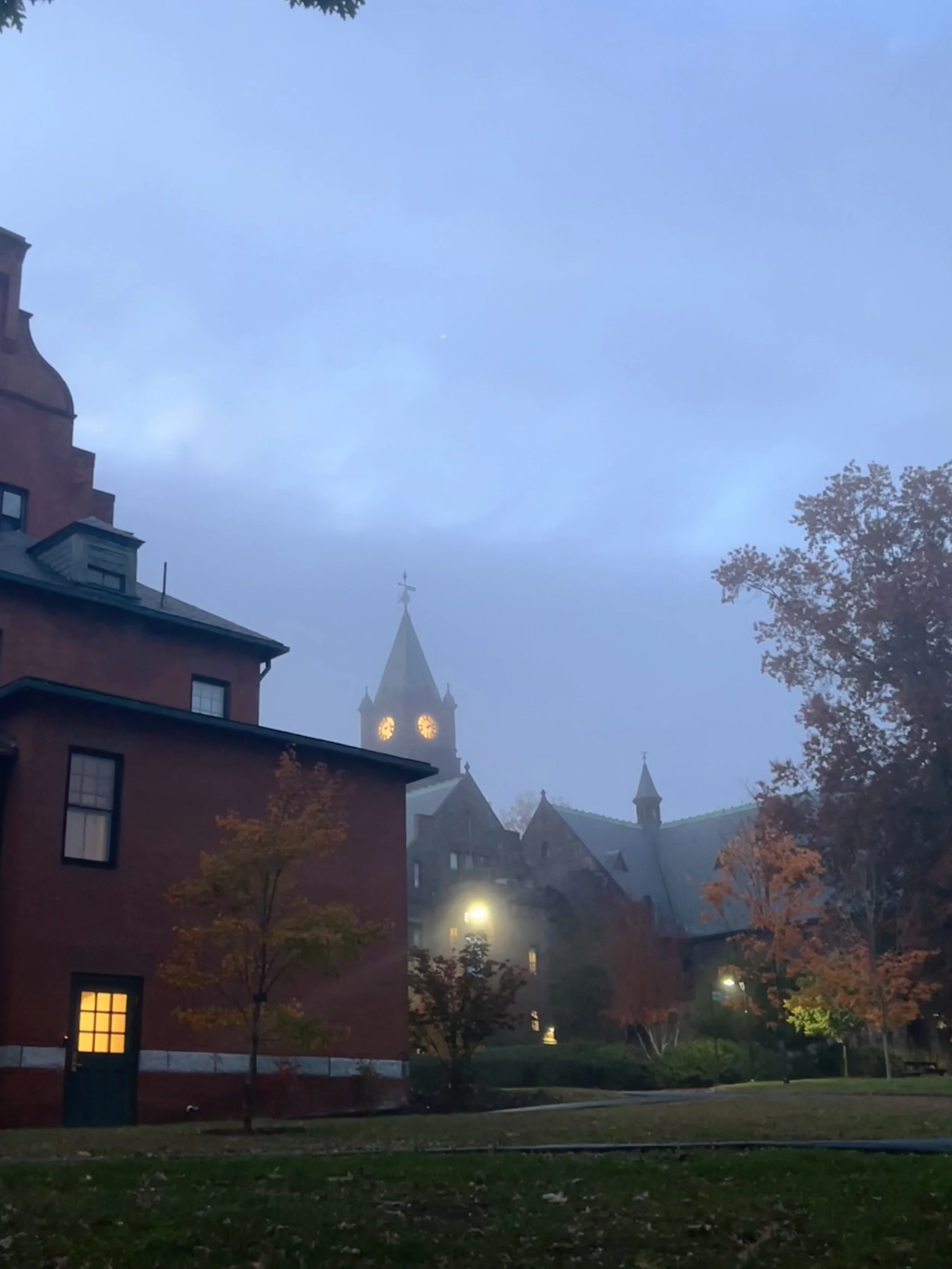
Sitting in my dorm room in 1837 Hall, I’m always struck by the lovely view of Lower Lake, especially at night when it is brightly illuminated by the lights of Blanchard Hall — lights that seem to remain on 24/7. Mount Holyoke College feels like a community within itself. There’s little one would need outside of the campus grounds, and it’s a pastoral picture of campus living — during the day that is. At night, the campus is lit up like a star by street lights and uninhabited buildings whose lights appear to remain on all night long.

Stringent regulations could have prevented Ohio train derailment

Photo courtesy of Linda Thomas via Public Domain Pictures.

The 2023 train derailment that took place in East Palestine, Ohio, nods to how lack of federal regulation in railroad industries impacts communities.

By Silas Gemma ’26

Opinion Editor

The catastrophic Feb. 3 train derailment in East Palestine, Ohio, has led to concern, uncertainty and rage as a host of highly toxic chemicals were released from the combustion of the cars. Residents and outside observers alike have voiced their preoccupations about the immediate and unknown long-term health effects of exposure to these substances. Many cite a lack of coordinated and accurate measures by government and environmental agencies to test for levels of the compounds in the air, water and soil. The wider online conversation between organizations, experts and citizens has incited calls for structural changes in the railroad industry and its government oversight. Ultimately, resistance against business regulation can be implicated in this disaster, as fewer safety measures were mandated and less oversight was provided to ensure the proper functioning of the train.

An article by The Washington Post explains that a train belonging to the railroad company Norfolk Southern derailed at approximately 9:00 p.m. on Feb. 3 in the Pennsylvania-Ohio border town of East Palestine, igniting a massive fire that engulfed the remainder of its cars, generating massive plumes of chemical-laden smoke. The same article explains that a security camera captured sparks underneath one of the cars 20 miles west of the derailment site, a foreboding sign of what would ultimately occur. Weeks after the derailment, residents, scientists and government officials are still trying to ascertain what happened, what chemicals were released and whether the residents have been, or are still being, exposed to toxic substances. 

A Feb. 21 Stat News article by Jill Neimark explains that much of the immediate aftermath of the derailment, particularly the citizens’ possible exposure to concentrated levels of toxic substances, remains unknown. Although an Environmental Protection Agency administrator, Michael Regan, gave a statement on Feb. 16 trying to placate the residents’ fears and assure them of the safety of the surrounding environment, many remain concerned. Neimark draws from statements by American University chemist Matt Hartings to remark that “air monitoring right now doesn’t answer questions about acute exposure that first night after the train derailment and the following day,” adding that the low temperature could be attributed to keeping the toxins lower to the ground throughout the first evening. These concerns are supported by Harting’s comments that vinyl chloride, one of the primary substances of concern, has a short half-life. In other words, the concentration of vinyl chloride in the air likely plummeted as time went by, but the initial concentration of it before tests were undertaken may never be known. This complicates the ability of scientists to forecast exactly what long-term effects residents may experience.

One of the primary efforts undertaken in the aftermath of this catastrophe has been to determine and record the substances generated and emitted not only immediately after the derailment, but also during the process of diffusion. Vinyl chloride has been a widespread concern because, as Neimark explains in the same article, it can decompose into other substances that pose health risks, such as hydrogen chloride and phosgene. The Washington Post article adds that two days after the disaster, there was a “controlled release of vinyl chloride,” coupled with a mandatory evacuation, due to concerns about a possible explosion. Neimark cites the National Cancer Institute to state that long-term exposure to vinyl chloride is associated with various forms of cancer, including leukemia and neurological cancers. The correlation between exposure to these substances and such chronic, sometimes lethal ailments necessitates a more thorough analysis of the initial and continuing environmental conditions. 

The continuing uncertainty as to the chemical composition of the air and soil raises concerns as to whether the residents are still being exposed to substances that may have chronic health implications. Neimark cites an Ideastream Public Media article to point to the EPA’s claims that there is a lack of evidence that toxins are present in dangerous amounts in the area. This article, published two weeks after the derailment, confirms the EPA’s statements that throughout the testing of 480 houses in the area, neither the presence of hydrogen chloride nor vinyl chloride has been indicated. The same article cites additional comments by the EPA that tests of the water have not detected hazardous substances, although the Ohio Department of Health still advised residents to drink bottled water at the time of the article’s publication on Feb. 17. An EPA article demarcating the timeline of its response to the disaster confirms that, as of Feb. 20, over 550 homes had been tested “with no exceedances for residential air quality standards.” An update to this timeline on Feb. 21 announced that the EPA ordered Norfolk Southern to bear all of the costs of the disaster it is responsible for and oversee restoration efforts, which will include the clean-up of local homes and businesses. While this represents substantive action on the part of the EPA, it is also important to consider ways in which they have been negligent in their management of this crisis, particularly in relation to their testing procedures. 

Although government agencies have tried to assuage local residents’ fears, some continue to present symptoms indicating a continued presence of toxins. Despite the EPA’s claims, there is evidence that their testing has not been thorough or comprehensive. A Vox article by Jariel Arvin states that much of the equipment they are using is not sensitive enough to detect low levels of these substances that could still possibly have grave long-term impacts. Neimark lists other chemicals that the train was carrying, such as butyl acrylate, ethylene glycol, isobutylene, ethylhexyl acrylate and benzene, that could lead to symptoms including nausea, dizziness, vomiting and skin irritation. A major concern, however, is the possible existence of dioxins, compounds emitted when polyvinyl chloride, or PVC, which was present on the train, combusts. Neimark highlights these dioxins because the EPA has not yet tested for them, and a train derailment in Germany in 2000 involving PVC yielded high concentrations of these highly carcinogenic compounds. Additional concerns have been raised about PFAS, or perfluoroalkyl substances, because of their resistance to natural decomposition. Evidently, the testing being conducted cannot ensure the absence of all possible dangerous chemicals in the air, water or soil. The reassuring statements by government agencies are based on limited testing and may not truly reflect the safety of the environment, creating a need for more granular and targeted testing. 

Immediate panic has spawned growing outrage at the lack of regulation enjoyed by Norfolk Southern and the railroad industry as a whole. This debate about railroad regulation, associated legislation and lobbying groups has translated into a partisan debate, with Republicans and Democrats placing reciprocal blame. Arvin explains that Democrats, particularly the Biden Administration’s Secretary of Transportation Pete Buttigieg, look to the Trump Administration’s rollback of Obama-era policies that mandated more effective braking systems for trains transporting hazardous substances. In particular, Electronically Controlled Pneumatic, or ECP brakes have been proposed as effective preventative technology for disasters such as this one, as they can drastically reduce braking times. The Stat News article adds that the hydraulic brakes currently used may amplify the danger of derailments, as the derailment of one car can incite a domino effect, veering the entire train off the track. Meanwhile, as the Guardian article mentions, Republicans such as Ted Cruz (TX-R) have suggested the lack of expeditious action by people such as Buttigieg as evidence of the shortcomings of Democrats in the response. The political norm of deflecting and placing blame on opposing parties continues even in the midst of a potentially life-threatening event, reflecting the precedence political agency is given over the health of constituents. 

Other underlying structural issues in the railroad industry, or more specifically Norfolk Southern, can be attributed to the risk factors of this incident. As per a Guardian article, Senator Sherrod Brown (D) of Ohio has been particularly vehement in calling out the culpability of Norfolk Southern in this disaster, citing its recent widespread lay-off of workers to reduce costs. An article by The Independent elaborates upon this, pointing out the elevated risk of the precision scheduled railroading approach used by Norfolk Southern. According to this article, this strategy entails increasing the number of cars on each train, with the weight of the cargo often disproportionately distributed. It may also include less monitoring by employees. The railroad industry is willing to risk grave environmental disasters that put the lives of people and animals at risk for the prospect of ever-increasing revenues, representing a danger that often comes with monopolistic firms’ placement of profits over safety.

Over three weeks after the disastrous train derailment in East Palestine, Ohio, residents and politicians are still seeking answers as to the potential chronic health and environmental impacts of the chemicals emitted, as well as the causes of the crash. Underlying issues of corporate lobbying groups and anti-regulation policies have politicized an issue that is truly about serving and ensuring the safety of communities. In the aftermath of this disaster, we must consider the role of monopolistic business practices both in the endangerment of citizens and communities, as well as the accumulation of wealth for corporate figures. We must resist the lack of corporate regulation that allows businesses to amass revenue by circumventing practices essential for safety.

Recent edits to Roald Dahl novels don't undo his history of bigotry

Roald Dahl Story Company and Puffin Books partnered with Inclusive Minds to edit Dahl’s stories. Photo courtesy of solarisgirl via Flickr.

By Jahnavi Pradeep ’23

Opinion Editor 

Content warning: This article discusses antisemitism and racism and mentions fatphobia. 

Roald Dahl is a celebrated British storyteller best known for his works in children’s literature, adult fiction and screenwork. His forays into children’s literature include 16 stories, such as “Charlie and the Chocolate Factory,” “Matilda” and “The Witches.” These books gained popularity for their peculiar sense of humor that accompanied heroic stories of children who combat the adult world. They have been translated into 68 languages, adapted for the screen and the stage and remain as must-reads on the bookshelves of homes, libraries and schools worldwide. 

More recently, Dahl has become the center of a literary debate over the derogatory language coloring his books’ contents. The Telegraph reported on Feb. 17, 2023, that Dahl’s works were undergoing content revisions by Puffin Books and the Roald Dahl Story Company. Per the article, “the publishers have given themselves license to edit the writer as they see fit, chopping, altering and adding where necessary to bring his books in line with contemporary sensibilities.” Puffin Books and the Roald Dahl Story Company partnered with Inclusive Minds, an organization aimed at, according their website, “authentic representation” in children’s literature by supporting diversity, inclusion, and accessibility to tackle offensive vocabulary in Dahl’s literature and adhere to what the Telegraph terms as “contemporary sensibilities.” With over a hundred edits to his works, their joint efforts aim to undo Dahl’s insensitivity toward gender, race and physical appearances, among others. 

On the one hand, the revisions to Dahl’s texts are a welcome maneuver that works toward making children’s literature decreasingly stereotyped in its content and more sensitive to ideas of diversity and inclusion. However, while it can be lauded as a way to make a cherished anthology of books less offensive, simply modifying the text’s vocabulary does not undo the history of stereotypes, bigotry and hatred that Dahl’s texts have perpetrated. Rather than focusing on the prose of the past, our priorities in supporting inclusive children’s media should focus on contemporary work that better represents today’s goals for literature. 

According to The Telegraph, changes have been implemented in ten of Dahl’s books: “Charlie and the Chocolate Factory,” “Esio Trot,” “Fantastic Mr. Fox,” “George’s Marvellous Medicine,” “James and the Giant Peach,” “Matilda,” “The BFG,” “The Enormous Crocodile,” “The Twits” and “The Witches.” One of Dahl’s most notable works, “Charlie and the Chocolate Factory” follows the story of Charlie and four other contestants, children meant to contrast our earnest protagonist, who win a golden ticket to tour Willy Wonka’s chocolate factory. Augustus Gloop is one of the contestants. In the original text, Dahl describes Gloop as “enormously fat.” After revisions, he is simply an “enormous” nine-year-old. 

Another Dahl story, “Matilda,” follows the story of child prodigy Matilda as she navigates home and school life. In her story, the constant mention of “mothers” and “fathers” in the text has been changed to “parents.” As an avid reader, Matilda now reads the books of Jane Austen instead of Rudyard Kipling. A third story, “The BFG,” follows young Sophie’s encounters with, as the title suggests, a big friendly giant whose characterizations have also been rewritten. In the text, the “tall black figure” is a “tall dark figure,” and the “long pale wrinkly face” is now a “long wrinkly face.” The Telegraph notes that tweaks to Dahl’s texts have been common in the past as well. For example, the Oompa Loompas in “Charlie and the Chocolate Factory” were “extensively reimagined over the years.” Still, the current set of revisions is the first large-scale change to his works. 

These changes are imperative — they undo the harm of offensive language that has permeated widely read literature. These alterations become increasingly pertinent when noting that the primary audience of Dahl’s books is comprised of children. Children’s literature has the potential to educate and impact its young readers. Reading habits in children help them learn about themselves, the world and how to communicate with others. Here it becomes crucial to evaluate the types of books kids read, the content of these books and how they might influence children’s critical thinking processes. In my own childhood, I grew up reading several of his books, including all those that Puffins Books and the Roald Dahl Story Company are now revising. While I loved Dahl’s catchy stories and inspiring young protagonists, as a child I was not fully aware of the harm of the texts. Revisiting them as an adult, I immediately realized the blatant bigotry that underlined the stories. Offensive language, as seen in Dahl’s books, can be incredibly harmful in this process, further emphasizing the importance of edits. After all, Dahl is one of the most famous and beloved children’s authors, and it is only right to make his works more conscious in their portrayals. Aware of the popularity of Dahl’s books and the potential for their content to impact young readers, the Roald Dahl Story Company and Puffin Books’ endeavors align with making children’s literature more sensitive in content and are more conscious of its ability to influence readers. In an article for The Guardian, a Roald Dahl Story Company spokesperson discussed the revisions: “Our guiding principle throughout has been to maintain the storylines, characters and the irreverence and sharp-edged spirit of the original text. Any changes made have been small and carefully considered.” Herein, revising Dahl’s language helps future young readers engage with his widely popular stories without allowing implicit biases to form through their reading habits.

Nonetheless, censoring Dahl’s language does not do enough justice to the history of bigotry that both the author and his works carry. Dahl, while celebrated for his gift of writing, was guilty of racism, antisemitism and misogyny. A New York Times article from 2020 discusses how Dahl’s family had to publicly apologize for the author’s outspoken antisemitic comments in his career as a public figure and author. The Roald Dahl Story Company's website features the joint apology of the company and Dahl’s family for the “lasting and understandable hurt caused by Roald Dahl’s antisemitic statements.” The apology goes on to state that “those prejudiced remarks are incomprehensible to us and stand in marked contrast to the man we knew and to the values at the heart of Roald Dahl’s stories, which have positively impacted young people for generations.” 

However, Dahl’s family’s apology does not erase the harm of his hatred, and continuing to celebrate this author erases his problematic past without holding him or his works accountable. Dahl’s sentiments cannot be separated from his work, and this becomes increasingly evident in the manifestation of his bigoted ideas in his literature. In an article for CNN, David M. Perry discusses how Dahl’s antisemitism shows through in his books, such as “The Witches.” Perry discusses how “Dahl created a caste of hook-nosed women who can literally print money and who like to kidnap and murder innocent children. The characterization appears to draw directly from the blood libel slander, the medieval and modern conspiracy theory that Jews annually kidnap and murder Christian children.” Simply editing language that reflects bigotry does not undo the underlying sentiments of the stories and characters. If publishers are committed to inclusion and diversity, they must do better than continuing to champion Dahl’s work. The company spokesperson’s claim of revising texts to “maintain the storylines, characters, and the irreverence and sharp-edged spirit of the original text” is incongruent with their desire to do right by ideas of inclusion and sensitivity. 

A Time article similarly builds on the idea that Dahl’s works reflect his obvious racism. The article explores how the Oompa Loompas in “Charlie and the Chocolate Factory” were meant to be members of an African Pygmy tribe and describes other instances of bigotry and stereotypes in Dahl’s work. For example, in “James and the Giant Peach,'” as per the Time article, “the Grasshopper declares at one point: ‘I’d rather be fried alive and eaten by a Mexican.’” Dahl’s misogyny, ableism and fatphobia are similarly ubiquitous in his books. Characters across books are ridiculed for being fat, Augustus Gloop being one of many. A 2016 article by The Irish Times discusses how Dahl wrote about women, specifically in “The Witches,” where “the witches themselves are terrifying and vile things, and always women.” Here, it is clear that mere revisions are not enough to tackle the hate that pervades Dahl’s literary canon. Simply editing the language used to describe the Oompa Loompas that makes their tribal roots obvious doesn’t erase the problematic root of these characters’ creation. The Telegraph notes that if the publishers had to carry out more than 100 edits, the rampant nature of offensive content in the books is already established in its framework, and simply removing the obvious bias does not undo its place in the work. 

The current drive toward revising Dahl’s work allows us to evaluate whether or not we want to continue heralding his works as essentials of children’s literature. While Dahl may be considered a classic for his excellent penmanship, we cannot easily pardon the bigotry and hatred packed within his novels. Removing Dahl from the literary canon is not easy, but we can treat him as a product of his time and move him to the back of the shelf instead of continuing to actively promote his work. With this, we have an opportunity to make space for new prose, instead of revised literature, that carries the potential to educate children on diversity and inclusion over bias and stereotypes. While revisions are a step toward addressing and changing the problematic past of the writer, publishing houses and agencies can do better by their promise of diversity and inclusion by focusing on the creation of new literature.

Selective provision of new menstrual products on campus reflect the College’s lack of understanding regarding gender

Graphic by Sunny Wei ‘23.

Hope Frances Simpson ’24

Staff Writer 

Content warning: This article discusses transphobia. 

Students on the Mount Holyoke College campus may have noticed something shiny and new in various bathrooms around campus: vending machines for menstrual products. Based on my observations, machines have appeared in buildings such as Auxiliary Services and the library. There is a problem with this initiative. Although the menstrual vending machines in these buildings have been installed in women’s and gender-neutral bathrooms, they haven’t been installed in men’s bathrooms. Upon discovering this, I also learned that there is no proper menstrual product disposal in the men’s bathrooms either. This absence of menstrual vending machines or disposals makes it seem as though Mount Holyoke does not harbor as much respect for non-cisgender students as it does for others. 

Menstruation has historically been associated with women, but in my time at Mount Holyoke, I have seen that this is not the case. I have acquaintances who menstruate and don’t identify as cisgender women. I myself use she/they pronouns, and I menstruate. Attending a gender-diverse women’s college has exposed me to all kinds of people who do not fit into the binary of male and female. Mount Holyoke is a gender-diverse historically women’s college, but it accepts a variety of students besides cisgender women, including transgender and nonbinary students. However, by not providing menstrual products and proper disposal for everyone, the school is reinforcing the idea that it is only cis women who menstruate. 

In speaking with the Mount Holyoke Planned Parenthood Generation Action Treasurer Ally Contrini ’25, I got a better picture of how the menstrual product vending machines came to be. The initiative was brought to fruition by the Student Government Association and PPGA E-Boards. “This has been put into action by the current SGA E-Board and our menstrual product outreach coordinators, Nina Brothers ’24 [in] fall 2022 and Nina Baran ’25 [in] spring 2023,” Contrini said. Although they supply free menstrual products to students, PPGA is not in charge of the menstrual product vending machines, which are provided and stocked by a company called Aunt Flow. 

On the matter of the machines only being present in women’s and gender-neutral restrooms, Contrini said, “This initiative is in its early stages, and at all stages of growth MHC PPGA will encourage the College to include access to people of all genders.” 

While Contrini’s explanation addresses the lack of machines in men’s rooms, it does not account for the lack of proper menstrual waste receptacles. This unavailability forces students using men’s restrooms to dispose of their menstrual products in normal trash bins, which is a biohazard or resort to flushing them down the toilet, which could result in major plumbing issues.

Contrini affirmed that “The MHC PPGA believes that proper disposal options for used menstrual products should be available in all bathrooms for students and the safety of college janitorial staff.” However, it is important to note that the PPGA has no control over this particular matter. 

Overall, this is an issue that could be easily resolved with time and effort. The school could show its respect for its non-cisgender students by installing the Aunt Flow vending machines in the men’s rooms around campus. More importantly, it should expediently install proper menstrual product receptacles in men’s rooms for the health and safety of janitorial staff and students.