Opinion

Who’s watching us? Campus cameras, Flock and ‘Primetime’

Photos by Quill Nishi-Leonard ’27

By Leah Dutcher ’28

Opinions Editor

Who exactly is the man behind the camera? “Primetime,” directed by Lance Oppenheim and written by Ajon Singh, seeks to answer that question through a dramatized behind-the-scenes retelling of the 2004 show “To Catch a Predator.” 

“Primetime” follows Chris Hansen, played by Robert Pattinson, as he grows more obsessive with his line of work: Luring sexual predators in online chatrooms, bringing them to decoy houses and filming it all for television. The audience is pulled in as new Actor Dan Plum, played by Skyler Gisondo, is slowly roped into this life. We watch as Plum slowly learns that Hansen might not be as good of a man as the show portrays him to be. We watch as Hansen breaks down, but we also watch and react alongside Plum to Hansen’s breakdown. 

In one contentious scene early in the movie, we see Hansen on a plane talking to a man. The man begins to speak about the work Hansen is doing and commends it as incredibly important. The angle and intense lighting make it seem as though the man might do more than just sit there and praise Hansen. The actor grows very intense as the monologue continues. Even Hansen seems unsettled by what the man is saying. We’re given a look into the intense mindset people had — and potentially still have — around the show “To Catch a Predator.” We’re also given a look into what Hansen could become: Someone overtaken by their thirst for so-called justice. 

While in the plane scene we see Hansen resistant to this mindset, external factors begin to drive him closer and closer to the breaking point. As “To Catch a Predator” gains traction, the NBC executive Jeff Zucker, who plays himself, pushes Hansen to look for more controversial predators in order to drive up ratings, to find his “white whale.” At the same time, Hansen is withdrawn from his family life, his sons are disinterested in his work and his wife, played by Anna Faris, doesn’t like his constant absence from his family. Whilst on the road, Hansen has an affair which a reporter takes photos of and uses to goad Hansen into a reaction. This plot point ultimately mimics the hyper-surveiled situation Hansen is creating for the people he catches. He feels the burden of his wrongdoing and feels it unjust to have such a personal story blasted to the public. 

The professional and familial pressure lead Hansen to a breakdown. We watch as the public praises what he’s doing while he’s lashing out at those around him, even almost alienating his own producer Andie Bender, played by Merritt Wever. The movie culminates with the suicide of Assistant District Attourney Bill Conradt, played by Alex Winter, which was based on actual events. Suddenly, the audience is taken out of the production of it all, right alongside Plum. It’s no longer about a TV show, but a man’s life. The only character we see deeply affected by the man losing his life is Plum. Hansen is seen affected, but one has to wonder if he’s more affected by a man losing his life or how he just lost his show.

I left the theater asking myself, how could a man like Hansen be allowed to run a show policing the behavior of others? While being obsessive about work and detached from reality isn’t as severe of a crime as sexually preying on children, it still feels incorrect to assign Hansen this moral superiority and authority. 

Granted, this film was an overdramatized account of events and doesn’t speak to the actual character of the real Chris Hansen. Even if it did, the general population wouldn’t have been aware of the mental state that Hansen had at the time of filming. This begs the question, how much do we know about the integrity of the people who watch us?

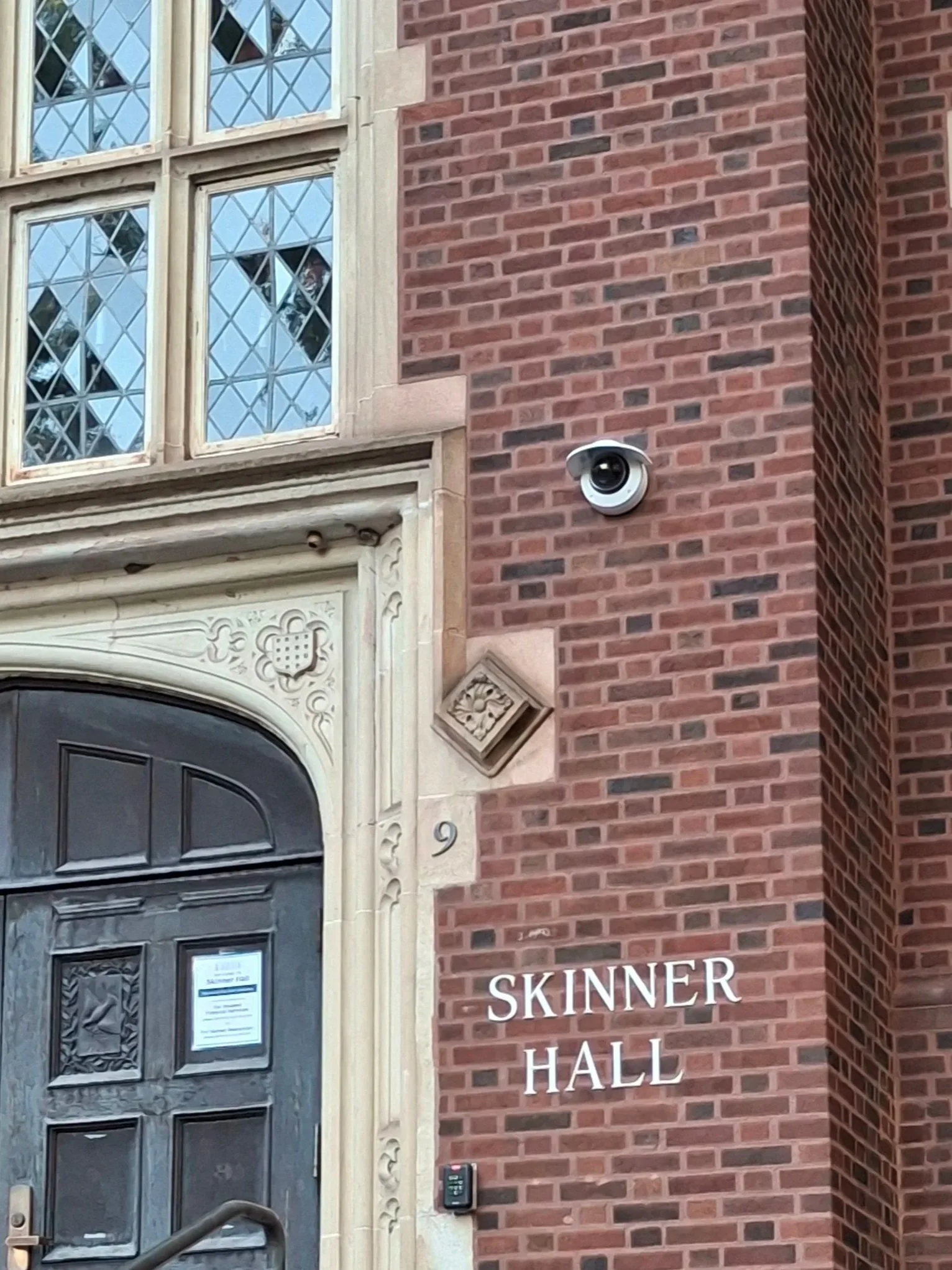
Recently, the topic of security cameras on campus has been one that’s been talked about extensively. Mount Holyoke News has published many articles about it in the last few years. One thing that has left me reeling about the entire situation is the lack of transparency on behalf of the administration in regards to who accesses the footage. 

In the College’s Security Camera Acceptable Use Policy it states that all use of camera footage for investigative purposes must pass through at least through the Director of Public Safety and Service or another appointee, sometimes a Human Resources representative if a staff member is involved. However, nowhere does it say who exactly has access to the footage or how the footage is stored to ensure security. I don’t wish this to come off as me relating any specific person working for this campus to Robert Pattinson’s Chris Hansen. My argument isn’t about who currently has access to this footage but who could potentially have access to it in the future.

One could argue that it’s unlikely that the footage could fall into the wrong hands, but it’s difficult to trust this point after being bombarded with examples of professionals using Flock cameras incorrectly. Flock is a company that produces automatic license plate reader cameras, or ALPRs. These are cameras that are constantly on and use artificial intelligence to read every license plate that passes by, unlike other traffic cameras that only record after a specific incident. Police officers in North Carolina, Ohio and Arkansas have been indicted, arrested and fired in the past week for misuse of Flock cameras. That’s not to mention the endless examples that have been written about for the last few months. And these instances can only be written about since they were found out and publicized. The company Flock continues to state that the only people who can access the data and information from their cameras are the companies that purchase the cameras. Similar to the Mount Holyoke College’s security cameras, Flock promises on their website that all information is encrypted and solely accessible to the contractors who work with Flock. But no digital encryption is infallible, so how much trust can we put into these cameras that have the potential to reveal intimate details of people’s lives without their explicit permission?

It feels dramatic to equate AI cameras that have been weaponized to hunt people down, stalk people and other heinous actions to campus security. Flock cameras and campus security cameras are different byproducts of the same problem: The idea that increased surveillance solves and prevents crime. It also shows the different ends of the spectrum of an over-watched world and how cameras that are constantly recording, even if they don’t go anywhere, are normalized and have the potential to lead to the implementation of other security devices such as ALPRs. Similarly, how Hansen can go from a man that wishes to mitigate crimes against minors to a man obsessed with hunting and capturing morally corrupt individuals. Plus, Flock cameras are incredibly relevant to campus, as the closest one is about half a mile away, and there’s 17 cameras within a five mile radius of campus. 

The College administration’s justification for security camera usage is a safety evaluation entitled “Summer 2023 Campus Safety and Security Assessment” that was completed by a hired outside group called GoodIvy Safety & Security Consulting. They paid to have this consulting group come in and then they paid for the installation of security cameras. Someone is directly profiting not just from the implementation and purchasing of the cameras, but also from the assessment that led the College to believe it needed cameras in the first place. This assessment hasn’t been made readily available to the community. 

Flock itself is an independent company that sends their technology out to be used by the people they work for. The more successful the company looks, the more schools, police departments and other contractors want to purchase their technology. Much like other companies, they have a public image to uphold in order to properly sell their product. Flock markets on their page that they don’t have contracts with ICE. However, this is deceitful as they have contracts with police departments that have knowingly used the cameras to conduct searches on behalf of ICE. Flock requires that users provide information as to why searches are taking place, and many such cases where they are used for ICE are labeled as such. 

Flock is trying to rid themselves of the blame regarding this politically contentious topic in order to appeal to a broader audience of people, to sell more cameras. However they are not canceling these contracts as they continue to make the company money. Similarly, in “Primetime,” Hansen is driven further into his spiral when Zucker pushes him to find a larger target in order to usurp the competition on other networks. This increased stress and more intentional searching leads to the assistant district attorney’s house, where Hansen’s downward spiral reaches its peak. In all three cases, profit is intrinsically linked to security.

One point the film barely touched on was just how unsuccessful Chris Hansen was in real life. Almost every single person who was shown on the show was arrested, but rarely were they actually convicted of any crime. While the security cameras on campus have led to two different men being identified on campus and eventually given trespassing notices, there is no comparison published of how many dangerous events went under-investigated or not closed because the event took place in an area without cameras. There is no way to know how either of those events would’ve happened had the cameras not been in place, so there’s no way to tell if cameras are the only option. 

Not to mention that the majority of the time in violent crimes, the victim knows the perpetrator, so identification isn’t the only issue in people’s cases not being properly investigated and solved. The only crimes where it’s more likely to be a stranger are crimes against property. It would be interesting to see the statistics on reporting incidents before and after the implementation of the security cameras, especially on how many reports they’ve resolved in that time. But, much like the original campus safety and risk assessment, that information isn’t available publicly. 

On Flock’s website they boast about how over 1 million investigations have been assisted using Flock cameras and, in jurisdictions where Flock is deployed, 20% of cases were aided by the Flock cameras. The immediate thought I had after reading was that there’s no definitive way to prove whether or not the use of cameras was essential to those cases, much like the College’s security cameras. Upon further research, there are also some issues with the numbers that Flock provides. 

Both the over 1 million statistic and the 20% statistic are rough estimates based on data collected and shared using various different methods from the outside contractors, not data collected by Flock itself. Not only that, but every 1 in 10 license plate readings gets the state of the plate incorrect. And the license plates used in open investigations amount to less than 1% of all the license plates scanned.

There’s a continuous rhetoric out there that if you don’t have anything to hide, you shouldn’t be worried about these matters. However, in an increasingly digitized world, it’s difficult to not feel overanalyzed in a way that leaves very little room for personal autonomy and guaranteed privacy. After leaving the screening of “Primetime” I was left reeling as to what Hansen’s breakdown ultimately represented in the context of surveillance. Perhaps, it was about how capitalism pushes us to remove privacy and put it on display or how being watched, no matter what your sins are, weighs on you. Either way, it leaves one contemplating the current state of surveillance. “Primetime” gives a warning to audiences that sometimes the person behind the camera is more scary than what the camera’s catching. And who, exactly, is watching us?

Madeleine Diesl ’28 contributed fact-checking.

To increase campus safety, students need to be informed

Graphic by Madeleine Diesl ’28 via Canva

Sarah Berger ’27 

Arts & Entertainment Editor 

During the afternoon of Sept. 28, Mount Holyoke students received an email with the headline “Timely Warning Bulletin: Campus Crime Alert.” The email contained several photos of a man that seemed to be taken from cameras and social media, as well as two photos of a car that appeared to be from a security camera. Also provided was the man’s name, birthday, physical characteristics and an additional car associated with him that was not pictured. There was no context included in the email beyond, “This Timely Warning is being issued to our campus community relative to a Clery Act reportable crime in accordance with federal law and safety protocols. The purpose of this warning is to keep the campus community informed and vigilant.” There was additional information asking community members to report sightings of the man and exercise extra caution when moving around campus. 

As a result of the email, student speculation on the man identified in the email abounded. Identifying the crime as “Clery Act reportable” did little to limit the speculation. The Clery Act was created in 1990 due to advocacy around the rape and murder of Jeanne Clery, a Lehigh University student. It applies to almost all crime on campus or near campus, including but not limited to arson, vehicle theft and dating violence. Identifying the man does not provide any information regarding what prompted the warning to begin with.

Of course, anyone who may have been a victim of a crime deserves to have their privacy respected. However, there is a way to keep victims protected while ensuring that students have the information they need to stay safe. In future reports, it would be helpful for campus security to include information like if the person was seen on campus, where they were seen, if they may be planning on returning to campus, if they may have had a motive for visiting campus, what they are accused of doing, and to what degree there is a threat to students in the moment. 

On Sept. 29, an updated email was sent out. It stated that the person of interest was “issued a trespass notice at an off-campus location and is legally prohibited from entering or remaining on any Mount Holyoke College property.” Additionally, “Public Safety is actively working in coordination with law enforcement partners on this matter.” This seems to imply that the threat has subsided, but more information is needed here as well. Was this person ever present on campus? Is there reason to believe that he will return? 

I’m not writing this article in an attempt to fearmonger. Mount Holyoke is one of the safest places I’ve ever lived, and I’m deeply grateful to the staff and community members who make it this way. However, the way to maintain safety is not by keeping students in the dark. That creates untrue rumors and leads to a culture of fear, not empowerment. 

Sofia Ramon ’27 contributed fact-checking.

Understanding borders: Kazakhstan and the language of independence

Photo by Sachiko Arai ’29

The flag of Kazakhstan flies high over Kolsai lake, with green mountains visible in the background.

By Sachiko Arai ’29

Managing Editor of Web

This summer, I decided to travel to Almaty, Kazakhstan to visit my friend from college. Once I got there, I immediately noticed how relics of the Soviet era still haunted the city. In the corner of a vintage shop I visited, Soviet rubles bearing Vladimir Lenin’s face were being sold for approximately $1. The train station where I got off was painted entirely in red and was titled the “Moscow Station.” Most of the residential buildings were Khrushchevkas, gray concrete apartment buildings mass-produced during the Soviet era. 

Yet, the most enduring relic of the Soviet Union was not something I could see at all. It was something I could hear: The Russian language itself, passing back and forth between people in their everyday lives.

Kazakhstan has long held inseparable ties with its neighboring country, Russia, as well as with its language. Especially during the Soviet era, Russian became widely spoken among citizens alongside Kazakh. Even today, according to BBC News Russian substack, many people in Kazakhstan continue to learn Russian even above Kazakh, because it is more commonly used in educational and professional settings and therefore a  tool for career and social advancement.

I was able to observe this linguistic culture on my second day in Kazakhstan. Together with a friend who was a local Kazakh, I joined a tour group and camped at the Assy Plateau, a mountain valley located far from the city of Almaty. The tour was conducted entirely in Russian, so I constantly relied on my friend to understand what was happening. When we encountered nomadic people living near the campsite, I noticed a subtle shift in the sound of the conversations around me.

“We’re switching to Kazakh because the nomadic people can’t really speak Russian,” my friend, who was standing beside me, explained.

During that night, underneath the stars, the tour guide strummed chords on his guitar while the tour group sang in unison, sometimes in Russian, sometimes in Kazakh. As a person who couldn’t speak either, I couldn’t necessarily distinguish the language of the songs. So I simply sat in my seat and closed my eyes, letting my mind roam wide free and across the mountainous  lands that surrounded me. 

From this unforgettable experience, I was able to realize the unique role and influence Russian has in Kazakhstan. On one hand, it continues to be a crucial language that most people in the country use to connect and communicate with one another. At the same time, it could potentially separate and marginalize certain people, depending on the social group or region they come from, and continues to cement Russian influence over the country. 

However, beneath the watchful gaze of Russia, the linguistic landscape of Kazakhstan is now slowly changing. As Kazakhstan seeks greater independence from Russian influence, there have been movements to strengthen Kazakh as the country’s dominant language. In fact, Kazakhstan’s new constitution specifies that Russian “exists ‘alongside’ Kazakh rather than ‘on par’ with it,” signaling a change in the status of Russian. This movement has gained additional momentum amid Russia’s ongoing war in Ukraine. Nationalism has risen among some Kazakhs, accompanied by efforts to strengthen the presence of their own language.

I remember one particular encounter with a Kazakh woman while hiking through the mountains. Although she was Kazakh, she was also fluent in Russian and had even lived in Russia for several years during her childhood. Still, she had become critical of the language and the culture associated with it. She told me, “If I had children, I don’t think I would want to teach them Russian. I don’t agree with what the country is currently doing. And I presume that as the years pass, a divide among the young and elderly will occur because of language separation.”

Of course, it remains unclear whether Kazakhstan's attempt for greater independence could truly carry. For one, the issue carries geopolitical risks. The Jamestown Foundation, for example, argues that Russian commentators see this attempt as hostile and “moving along the same path as Ukraine [that]  may require a similar and equally harsh Russian response to maintain Russian President Vladimir Putin’s ‘Russian world.’” Others also argue that Russia’s linguistic influence over Kazakhstan may eventually be replaced not by Kazakh alone, but increasingly by English.

Regardless of what the linguistic politics in Kazakhstan will eventually lead up to, they shed light upon a crucial lesson. In an age where borders between communities are becoming increasingly complicated and disputed, it is not enough to understand communities through the thin lines drawn on a map. Borders are also equally shaped through cultural narratives — language, history, religion and so forth — that overlap or conflict with each other. In other words, understanding the present chaos undertaking our world is a similar attempt to solving a complex puzzle: Every piece is essential in order to understand the whole picture. 

Sofia Ramon ’27 contributed fact-checking.

We need to talk about the chaos of course registration

We need to talk about the chaos of course registration

Course registration brings on a wave of both excitement and panic for students at Mount Holyoke. Some students are thrilled to finally select classes that they have been waiting months or even years to take. Others frantically race to see what they can fit into their schedule. However, with some students receiving earlier times than others, this creates inequity.

Is modern journalism losing to clickbait?

Is modern journalism losing to clickbait?

With many news stations relying on viewer engagement to support their newspapers, online journalism has seen an overwhelming prevalence of clickbait and paywalls, so much so that it has become the new norm for online newspapers. As journalistic standards are an expense, what happens to those who can’t afford it?

Taking away dislikes is not enough to stop social media harassment

Taking away dislikes is not enough to stop social media harassment

In concept, removing “dislikes” from social media platforms seems like a good idea and a practical way to reduce harassment and negativity, but it might not be in practice. In reality, this is more superficial than it seems because rampant harassment persists. While there may be no public like-to-dislike metric anymore — having since been removed on platforms like Facebook and YouTube — this change is not enough. Many times, it seems that the most that any platform does is advise members to be respectful of community guidelines, with a possibility of flagging spam comments. Due to the popularity of sharing material, moderation of sensitive material or anything that violates community guidelines is often difficult.

What a broken bridge has taught us about anti-Blackness

What a broken bridge has taught us about anti-Blackness

On March 26, the Francis Scott Key Bridge in Baltimore, Maryland, collapsed after a container ship collided with it in a tragedy that led to six deaths. However, after a clip of the city’s mayor, Brandon M. Scott, speaking about the tragedy circulated online, users quickly began attacking him. 

Mount Holyoke College: the land of laptops left behind

Mount Holyoke College: the land of laptops left behind

Mount Holyoke College is known for its friendly, welcoming student body and safe campus — but does our attitude towards “MoHome” prepare us properly for the real world? More specifically, does our approach to community let us build bad habits?

Bookworms, keep calm: Dystopian YA has returned

Bookworms, keep calm: Dystopian YA has returned

Maybe you spent countless hours scouring YouTube for the most recent compilation video of Jennifer Lawrence and Josh Hutcherson, either in press interviews or sorrowful “Hunger Games” edits set against the song “Just A Game” by Birdy. Or, if you felt a need to categorize yourself with a fictional group as the basis of your prepubescent personality, perhaps you took the same “Divergent” faction quiz multiple times until “Dauntless” shined through your laptop screen, hidden under the covers on a school night.

“Before and after” weight loss content is problematic

“Before and after” weight loss content is problematic

Saying that TikTok promotes an unhealthy standard for young women and their body image is about as uncontroversial a take as you can get. Between videos touting buccal fat removal surgery and recommending Botox™ injections for teenagers, the platform is rife with content that could leave even the most conventionally attractive person in shambles after just a cursory scroll of their For You page. However, a special kind of damage is dealt by a prolific genre of “glow-up” videos: ones that show people, nearly always women, in a “before” and “after” side-by-side of their weight loss journeys.

The Hollywood labor strikes are over, but what has changed?

The Hollywood labor strikes are over, but what has changed?

The Screen Actors Guild-American Federation of Television and Radio Artists strike recently came to an end after 118 days, with actors celebrating the prospect of returning to work. The union came to a historic deal with the Alliance of Motion Picture and Television Producers, with the largest increase in minimum wage in 40 years, according to The Washington Post. However, because the deal is so new, it remains to be seen if it will be honored and if actual change will occur in the industry.

Why we need to read archaic literature: the value of studying original texts

Why we need to read archaic literature: the value of studying original texts

Opening a play — or any literary work — that was written hundreds of years ago can be a tremendously daunting task. The English language is incredibly dynamic and has evolved so much over the centuries that old texts might seem indecipherable through a modern lens. However, by reading these texts in their original forms, we can better appreciate the artistry of their creators and gain insight into the past.

Amplifying trans histories is essential and liberating

Amplifying trans histories is essential and liberating

Efforts to amplify trans histories are essential for the self-affirmation and empowerment of trans people. They are also vital for opposing the conservative rhetoric that being trans is a novel trend that owes its existence to contemporary media.

What the Vassar lawsuit reveals about wage discrimination in academia

What the Vassar lawsuit reveals about wage discrimination in academia

Five current and former female professors at Vassar College, another member of the Seven Sisters, have filed a wage discrimination complaint against the college. The class action complaint, which was filed on Aug. 30, 2023 alleges that Vassar has been paying them less than their male counterparts for decades.